White House AI Accord Features Spelling Error in ‘President of the United States’

The White House made headlines recently when a misspelling occurred on a formal document signed by Donald Trump and several prominent tech leaders. The document, which relates to artificial intelligence, mistakenly referred to the president as the “President of the Unites States” instead of “United States.”
This document, dubbed the accord on “Super Intelligence,” is a response to rising concerns about the rapid evolution of AI technology. The significance of the misspelling raises questions about attention to detail in official matters and how it might be perceived in future legal contexts, particularly if it appears in the Federal Register.
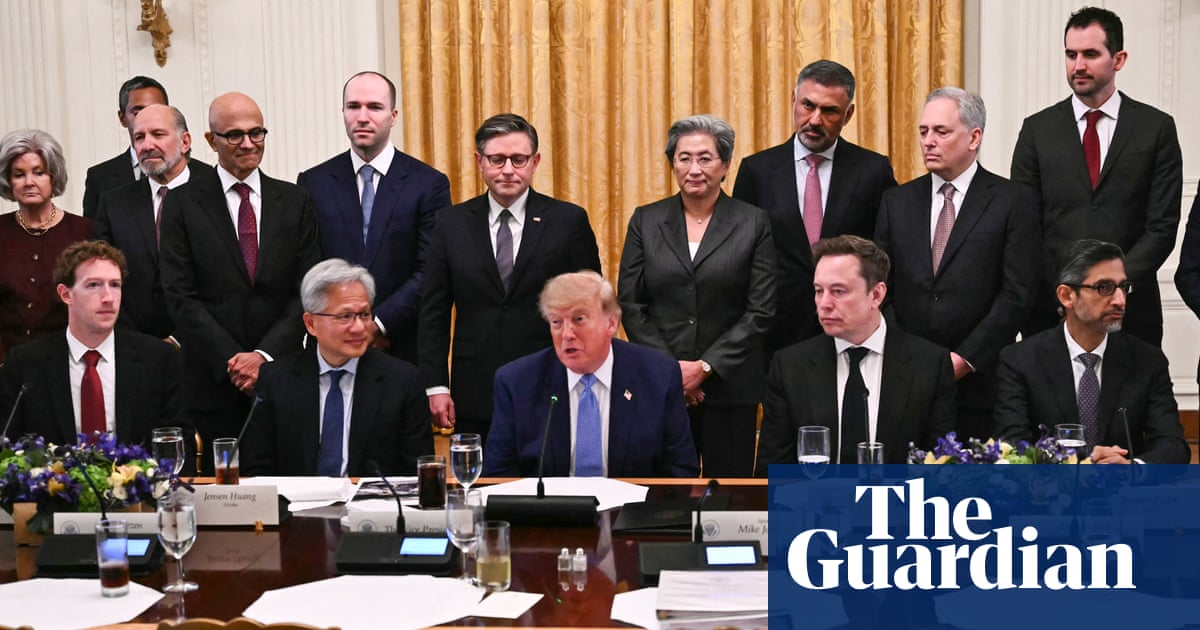
Despite the blunder, Trump, alongside six key technology executives, voluntarily committed to developing AI safely in the face of escalating worries highlighted by industry leaders. The agreement seeks to address the challenges posed by AI’s rapid advancements.
Trump has been largely dismissive of the fears surrounding AI’s potential negative impacts, advocating instead for continued technological progress. While signing the accord, he reiterated his support for business development in the hope that the United States can secure its position as a global leader in AI.
After signing, Trump shared the document, complete with its spelling error, on Truth Social, while the White House Communications Team distributed it shortly thereafter. The first public notice of the typo came from David Gura, a correspondent with Bloomberg News.
The accord details a structured approach to AI management, proposing four layers of “controls and audits” to promote responsible development. These measures include instituting robust internal policies and engaging an independent auditor.
Among the suggested internal controls are creating dedicated teams tasked with monitoring AI operations and safeguarding systems from cyber threats. The role of external monitors is to verify compliance with stated objectives, with companies encouraged to establish oversight committees at the board level.
This agreement marks an initial step toward addressing the ongoing concerns raised by industry experts in mid-September. Public sentiment toward AI appears to be shifting, as polls indicate a growing skepticism. A recent survey showed that 61% of voters opposed new data center construction, while another study revealed that 71% felt the government was not adequately regulating AI advancements.
While the accord signals the beginning of a structured dialogue on AI safety, it leaves open the potential for formal regulations—a stance that Trump has historically resisted. “I think I’m seeing tremendous self-policing,” Trump stated to reporters, emphasizing that the industry should take responsibility for its innovations.
The six executives involved in the accord include Dario Amodei of Anthropic, Elon Musk from SpaceXAI, Greg Brockman representing OpenAI, Jensen Huang from Nvidia, Mark Zuckerberg of Meta, and Sundar Pichai from Google.
Editor’s Take
The misspelling in a document signed by a sitting president highlights the complexities and pressures surrounding governmental engagement with rapidly evolving technology like AI. It poses questions about the diligence required at the highest levels of administration. As interest in AI grows, the pressure for regulatory frameworks will likely increase, which could reshape the landscape for developers and users alike.
Source: www.theguardian.com