

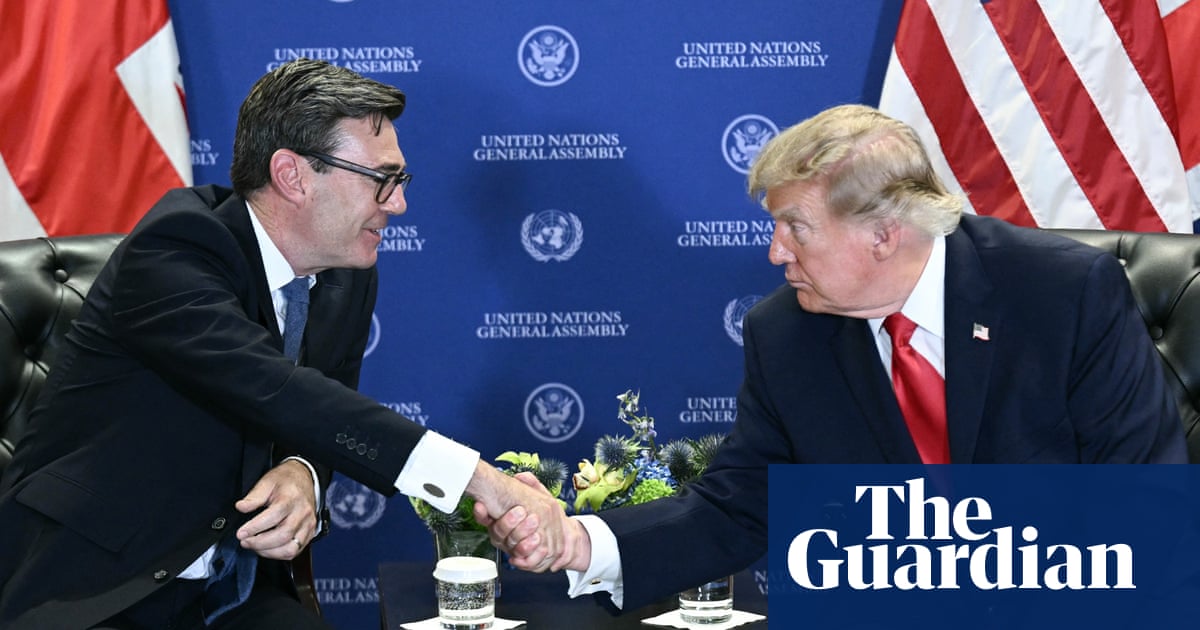

In a significant diplomatic encounter, Donald Trump has proclaimed that his relationship with the UK is “better” under Andy Burnham than it was with Keir Starmer. This assertion comes amidst ongoing tensions regarding various contentious issues, including the regulation of artificial intelligence, the Chagos Islands, and the ongoing conflict in Iran.
During their inaugural face-to-face meeting, the US president lauded Burnham, who appeared somewhat anxious, describing him as a “natural businessperson.” Trump noted that Burnham brought multiple strengths to the table and expressed confidence that he would make a “great” prime minister.
In the discussions, which also included Ed Miliband, the UK foreign secretary, and Jonathan Powell, the national security adviser, Burnham indicated that he and Trump had successfully built upon a “good connection” established previously, aiming to bolster relations strained over the situation in Iran.
UK officials were reportedly relieved that the meeting unfolded as intended, though challenges remain evident. Ahead of his US visit, Burnham emphasized his intention to persuade Trump to de-escalate tensions in Iran, given the tumult in the Middle East, which has been contributing to rising global energy costs that are impacting the UK economy.
Amid ongoing geopolitical unrest, Trump reiterated his aggressive stance during a summit speech, threatening to “annihilate” Iran if they do not acquiesce and sign a peace agreement with the US.

When questioned later about the economic strain his policies might be imposing on allies, Trump stated, “as soon as the war is over, the prices are going to come way down.” He suggested that the public understands the necessity of preventing Tehran from acquiring nuclear weapons, even at the cost of increased living expenses.
In his address at the UN, Burnham planned to advocate for enhanced international governance over AI, sharing with business leaders his vision for a global consensus on principles and standards to prevent misuse of the technology. This focus is expected to be a prominent aspect of the UK’s upcoming G20 presidency.
However, Burnham’s desire for the UK to act as an “honest broker” may conflict with Trump’s views, as the latter has publicly dismissed concerns regarding AI as a significant threat as a “hoax.” Trump’s remarks emphasized a commitment to encourage AI development rather than impose controls, declaring, “Americans have never been a nation that retreats from a frontier or shrinks from a challenge.”
Moreover, Trump criticized the UK’s decision to relinquish sovereignty over the Chagos Islands to Mauritius, labeling the deal a “terrible” one. He suggested Burnham might reconsider this agreement, highlighting its strategic importance.
While Trump refrained from commenting on the UK’s decision to prohibit trade with West Bank settlements, he indicated a willingness to address the case of imprisoned Hong Kong dissident Jimmy Lai in discussions with Xi Jinping of China.
Although British officials initially harbored concerns about the meeting due to Trump’s prior criticisms of Burnham, the encounter appeared to foster mutual respect, with Trump stating that the current relationship with Burnham is stronger than that with his predecessor.
Later during a press conference, Trump confronted journalists about his decision to ban certain media figures from the White House, asserting his right to eliminate “fake news.” In his UN address, he also signaled optimism for a swift resolution to the conflict between Ukraine and Russia, cautioning that Starmer’s rhetoric might be overly aggressive.
In contrast to Trump’s assertions, UN Secretary-General António Guterres warned of the escalating geopolitical divides, climate change, and the rapid evolution of AI, highlighting these issues as pressing challenges of our time. He emphasized the urgent need for global cooperation in addressing these existential threats.
Editor’s Take
This development showcases the complex dynamics of international relations, particularly regarding AI regulation and geopolitical tensions. The engagement between Trump and Burnham illustrates a potential shift in UK-US relations that could influence collaborative efforts in technology governance. For businesses and developers, this evolving dialogue may set new precedents in AI policy and economic cooperation.
Source: www.theguardian.com