
Alabama Man Exonerated After 40 Years Due to Judge’s Critique of ‘Junk Science’

An Alabama man who has endured over forty years in prison for the murder of his wife is set to receive a new trial. Charles McCrory, convicted for the death of his wife, Julie Bonds McCrory, in May 1985, may soon regain his freedom after a federal judge mandated a retrial or his release.
The prosecution heavily relied on two small marks found on Julie’s arm, which were described as bite marks made by Charles during a supposedly violent attack. Presently, the methodology of correlating bite marks to specific individuals is regarded as unreliable, often labeled as “junk science.” Notably, the forensic dentist who testified against McCrory has recanted his statement, admitting uncertainty about whether the marks were even caused by teeth.
In his ruling, Chief US District Judge Austin Huffaker Jr. stated, “The bitemark evidence clearly prejudiced the outcome of McCrory’s trial, particularly considering the thin nature of the non-bitemark evidence presented.” McCrory had been offered a chance for freedom six years ago if he admitted guilt, a deal he rejected, asserting, “I’m not going to plead guilty to something I didn’t do.”

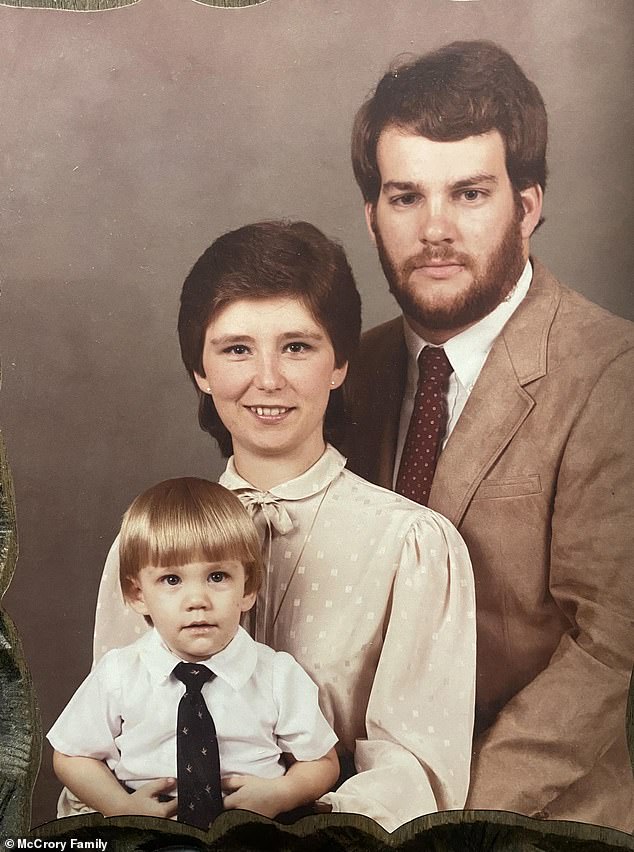
Julie and Charles McCrory were in the middle of a divorce when Julie was found dead in her apartment in 1985
Judge Huffaker mandated that the Alabama Attorney General’s Office has 180 days to initiate a new trial or release McCrory from imprisonment. Throughout his time in prison, McCrory worked as a tech worker and volunteer paramedic, and despite the absence of direct DNA evidence, confessions, or clear motives, he remained the primary suspect in his wife’s murder. There was also no blood found on his clothing or in his home.
Dr. Richard Souviron, a forensic dentist who had previously linked bite marks to notorious criminal Ted Bundy, testified in McCrory’s initial trial that the marks on Julie’s arm matched his teeth. This testimony was critical to the prosecution’s case, but Judge Huffaker criticized the reliance on such evidence, stating it resulted in an “unfair trial.” He asserted that the previous court’s refusal of McCrory’s request for a new trial was an unreasonable application of federal law based on flawed factual determinations.
At the time of the murder, McCrory was residing close to his wife and their toddler son in Covington County, where their divorce proceedings were ongoing. The couple had attended therapy sessions, spent quality time together, and shared intimacy the night before the tragic event. Their interactions suggested a potential reconciliation, as indicated by entries in Julie’s date book.
As of now, McCrory heard about the murder through his paramedic radio the next morning. Julie was found severely beaten at her home, exhibiting multiple injuries, including two bite marks. The lack of concrete evidence in the case raised significant concerns, especially considering Souviron’s later affidavit, whereby he disavowed his prior testimony, stating it was neither reliable nor appropriate.
Despite these developments, Alabama state courts have previously rejected pleas from McCrory’s legal team for a retrial. Prosecutors suggested that jurors might have matched the bite marks by simply examining photos of Julie’s body, a perspective that Judge Huffaker openly criticized, stating, “This finding blinks reality in light of the evidence.”
Moreover, McCrory’s legal representatives pointed to 39 known wrongful convictions linked to flawed bite mark forensics, two of which involved Souviron’s testimony. The Daily Mail reached out to the Alabama Attorney General’s Office and McCrory for comments.
Editor’s Take
The case of Charles McCrory underscores the urgent need for reform in criminal justice, particularly regarding the use of discredited forensic techniques. This ruling could pave the way for reevaluating other questionable convictions, emphasizing the importance of reliable scientific evidence in the courtroom. With growing skepticism surrounding bite mark analysis, the implications of this case resonate beyond Ohio, igniting discourse on maintaining the integrity of judicial processes.
Source: www.dailymail.com