
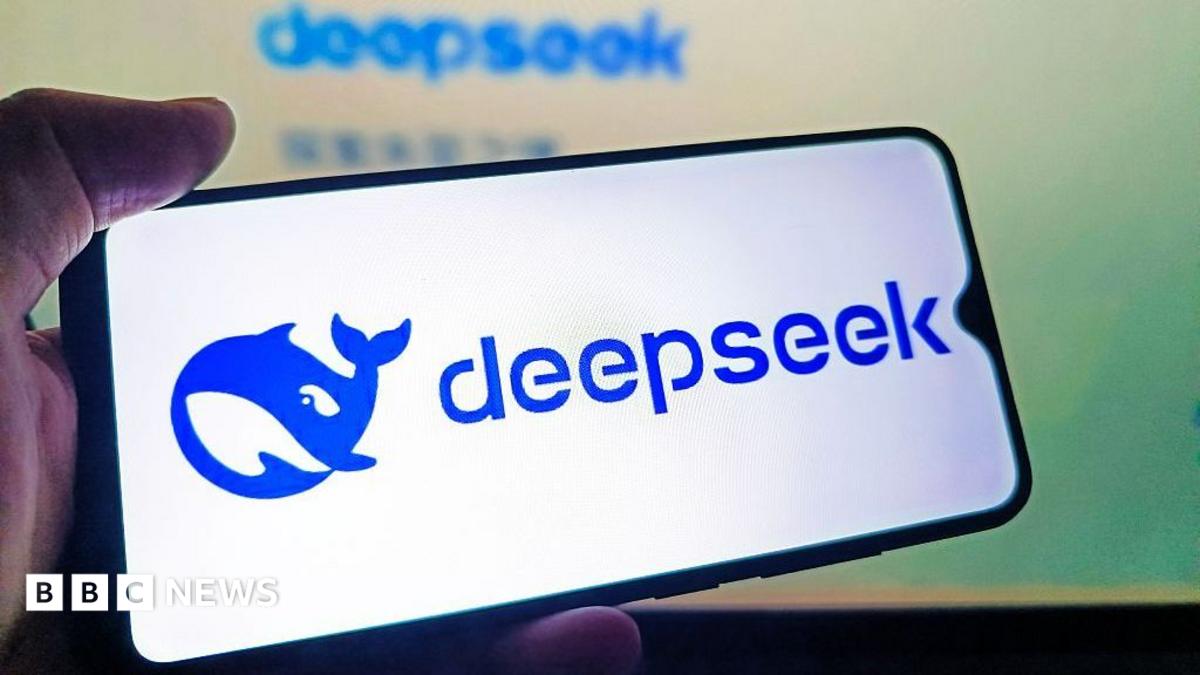

The United States government has mandated the removal of all artificial intelligence (AI) technologies developed by the Chinese company DeepSeek from most government systems.
As directed by the Department of Homeland Security (DHS), the use of DeepSeek’s AI within civilian government agencies has been completely prohibited, including any technologies developed integrating its AI models.
DeepSeek, recognized for its open-source AI model that is both accessible and cost-effective, has emerged as a disruptive force in the competitive landscape of AI technology.
Although the DHS did not specify the security issues associated with DeepSeek, this decision aligns with the White House’s ongoing concerns about Chinese AI advancements.
The DHS made this public announcement on a Monday, indicating the ban had been effective since the end of July, specifically targeting civilian departments such as the Department of the Treasury, the Department of State, and the Department of Justice. Notably, the Department of Defense is exempt from this order.
This regulatory action follows prior criticisms of Chinese AI practices, particularly from the Trump administration and various American companies.
In an internal memo earlier this year, White House tech lead Michael Kratsios highlighted concerns regarding the “malicious exploitation” of American AI technologies by Chinese firms.
American startups such as Anthropic and OpenAI have accused some Chinese companies, including DeepSeek, of closely copying their AI models.
Donald Trump has consistently identified China as the primary competitor in the AI domain, emphasizing the importance of this technology for the future of the United States.
Since its initial release in 2025, DeepSeek has gained widespread popularity, with demand for its models leading to occasional server outages.
DeepSeek’s free chatbot application has ranked among the most downloaded in the Apple App Store, while its models are utilized by major U.S. technology firms including Snowflake, Vercel, and OpenRouter.
Startups are increasingly attracted to open-source models like DeepSeek, due to significantly lower costs compared to proprietary models such as Google’s Gemini, Anthropic’s Claude, and OpenAI’s Codex.
DeepSeek’s model development has also been notably cost-effective; the company reported expenditures of around $6 million (£4.5 million) for its first model, whereas the training costs for OpenAI’s GPT-4 were approximately $100 million. Such disparities have impacted tech stock valuations.
The latest DeepSeek model was released just last week, receiving accolades from users who claim it outperforms even top-tier AI tools from OpenAI in various tasks, including software coding.
Editor’s Take
The U.S. government’s ban on DeepSeek highlights escalating concerns over AI security and competitive integrity. This move could significantly impact the dynamics of the AI industry, especially for startups relying on open-source technologies. Users and developers may need to navigate new limitations as they seek innovative solutions amidst increasing scrutiny of foreign technology.
Source: www.bbc.co.uk