

Uber Launches London’s First Commercial Robotaxi Service
Uber has successfully launched a commercial robotaxi service in London, marking the city’s inaugural venture into autonomous ride-hailing. This new fleet utilizes advanced autonomous driving technology developed by Wayve, a startup based in the UK. Initially, these robotaxi rides will include safety drivers monitoring from the front seats.
This launch represents a significant achievement for Uber, which has been planning to implement this service in the UK for several years. By outpacing Waymo, Uber establishes itself as a pioneer in the robotaxi sector within London, potentially influencing the driverless ride-hailing landscape beyond the United States and China, where most existing services are concentrated.
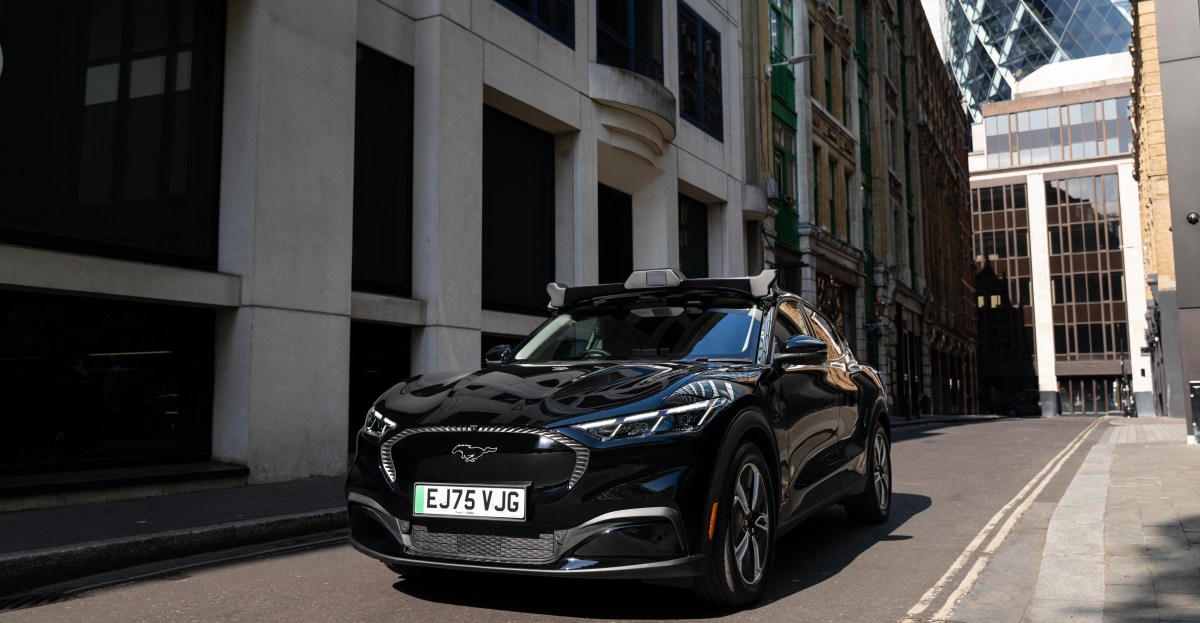
Londoners eager to experience these autonomous vehicles can set their preferences in the Uber app. While booking rides via UberX, Uber Comfort, or Uber Electric, users may find themselves paired with a Wayve autonomous vehicle, although availability isn’t ensured. The vehicles used for this service will initially include Ford Mustang Mach-Es, with plans to introduce Nissan Leaf models in the future.
Safety drivers will oversee operations but will not take control of the vehicle, gradually transitioning to fully driverless options. These drivers will be certified by Transport for London, ensuring compliance with local regulations.
Notably, this service does not implement a geofence, the common virtual boundary for autonomous vehicle operations. The AV2.0 system from Wayve is engineered to function beyond the limitations of standard autonomous systems. According to Wayve, the improvement lies in a single, learned AI driver that can navigate various environments and anticipate risks, differentiating from the traditional AV1.0 methods that typically rely on detailed mapping and rigid programming.
“The traditional AV1.0 approach relies on hand-engineered stacks and HD maps, which restrict scalability and adaptability to new scenarios. Wayve’s AV2.0 adopts a new direction, utilizing a singular AI driver proficient in understanding the world and dynamically adjusting to varied circumstances,”
Maintenance for the fleet will be managed by Uber in collaboration with UK-based fleet operator Otto Car, while Wayve will retain control over the autonomous driving system. Founded in 2017 by machine learning PhD graduates from the University of Cambridge, Wayve claims its technology can autonomously learn from varied driving experiences, making it a unique competitor as it does not deploy lidar, a technology widely used by other operators in the space.
In addition to Uber, Wayve is developing hands-free driving technology in partnership with Stellantis. Earlier this year, the startup secured $1.2 billion in funding from major players, including Uber, Nvidia, Stellantis, Nissan, and Mercedes-Benz.
In a related note, Waymo has announced plans to introduce its own robotaxi service in London by the year’s end. Moreover, Lyft is also working with China’s Baidu to initiate a robotaxi service in the Brent neighborhood of London.
Uber envisions a mixed network of human drivers and robotaxis, which contrasts sharply with Waymo’s ambition of establishing a purely autonomous and rider-only service. Although both companies collaborate in different U.S. cities, tensions have arisen, suggesting potential shifts in their partnership dynamics.
Editor’s Take
The introduction of Uber’s robotaxi service in London signifies a crucial step in the evolution of autonomous transportation. By leveraging cutting-edge technology from Wayve, Uber not only enhances its service offerings but also sets the stage for future developments in urban mobility. The implications for users are profound, promising increased accessibility and potentially redefining city transportation norms. For businesses and developers, this advancement presents fresh opportunities and challenges in the competitive landscape of autonomous driving.
Source: www.theverge.com