
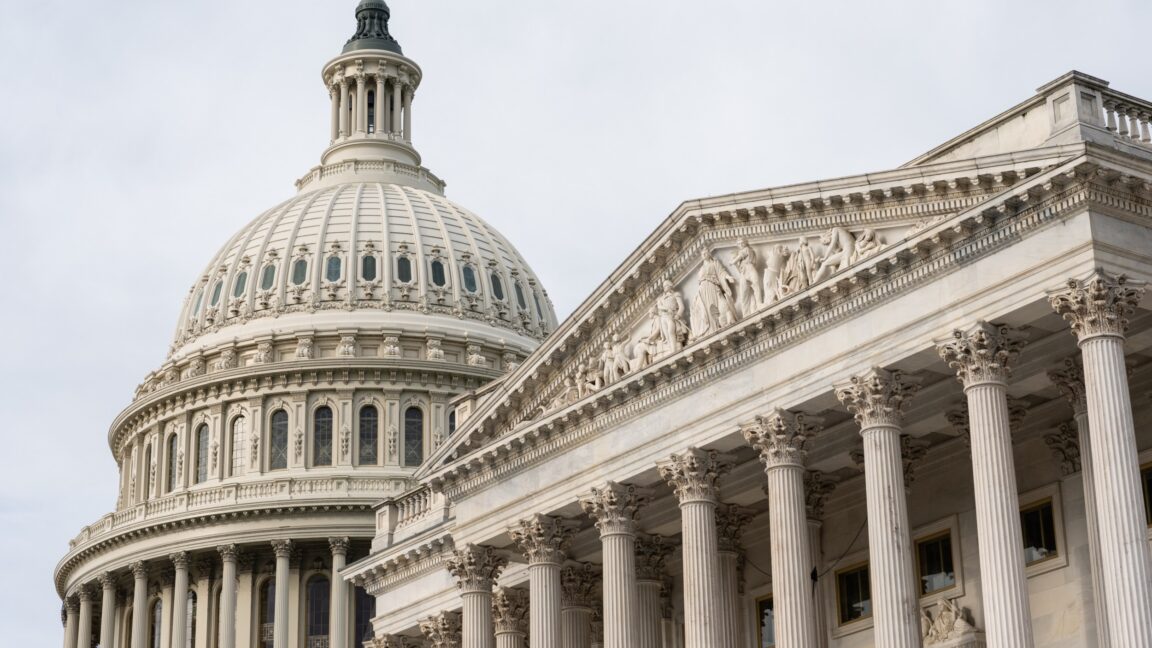

On Tuesday, the House of Representatives approved a temporary funding resolution intended to sustain government operations until early December. This stopgap measure now awaits President Trump’s signature, though he’s anticipated to sign it to avert a government shutdown right before the upcoming midterm elections.
Such stopgap measures have become commonplace in recent years, as securing the necessary political backing for a full annual budget often proves challenging. Notably, internal disagreements among the Republican caucus in the House led to the adoption of the Senate’s previously passed version of the funding bill rather than a unified Republican proposal.
This legislative decision has garnered support from the scientific community, as the Senate’s budget plan includes a crucial provision that restricts the Office of Management and Budget (OMB) from enacting new regulations. These rules would have allowed political appointees full authority over science funding decisions and granted them the power to cancel any grant at will. Such changes have been widely criticized as detrimental to scientific progress, receiving significant backlash from various scientific and health organizations.
The bipartisan cooperation that led to this outcome was largely influenced by two senators: Patty Murray (D-Wash.) and Susan Collins (R-Maine). They played a pivotal role in including language within the funding agreement that bars implementation of the controversial OMB rules until after the stopgap measure expires on December 11.
While this development is not permanent, it indicates a reluctance from legislators to grant extensive control over federal funding to the OMB and administration officials. The Senate passed the budget bill with a significant majority, receiving support in a 90-6 vote, while the House approved it 370-48, with most dissent centering on different issues within the measure. These substantial margins suggest that similar provisions could emerge in future budget discussions without facing strong opposition.
Editor’s Take
This recent move to limit political influence over scientific funding is significant for researchers and organizations reliant on grants. By preventing the OMB from implementing the new rules, Congress signals a commitment to preserving the integrity of scientific inquiry and funding stability. For businesses and developers in technology and AI, this may foster a more conducive environment for innovation, ultimately benefiting the industry.
Source: arstechnica.com