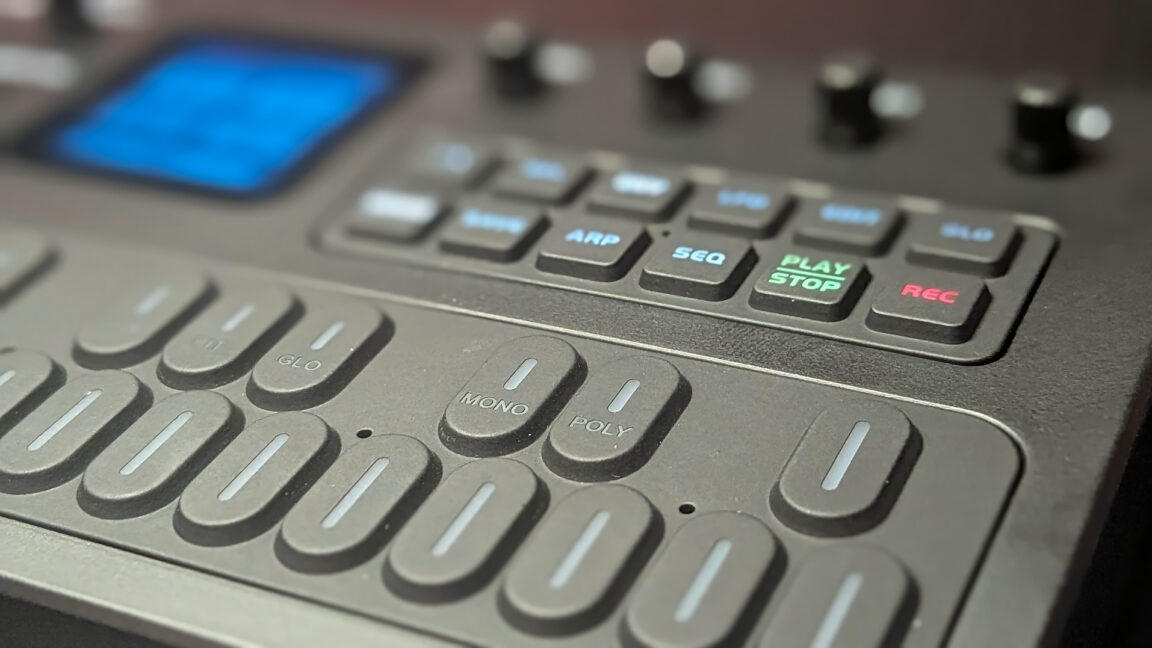

The M-Vave FM-1 has captured the interest of tech enthusiasts and musicians alike, piquing curiosity even among those without a specific application in mind for this frequency-modulation synthesizer. Priced at a mere $59.72, its unique charm has made it an irresistible addition for many.
Initially introduced as a pocket-sized version of the iconic Yamaha DX7, the FM-1 performed well upon its launch, fulfilling its basic promises but lacking deeper functionalities. However, in July, a wave of innovation sparked from the r/synthdiy community on Reddit, where users began reverse-engineering the FM-1’s firmware. By September, custom firmware options had started to emerge, and as October progressed, an array of community-developed firmware projects began to accumulate.
Introducing FM1 Open
On October 17, M-Vave unveiled FM1 Open, an initiative designed to empower FM-1 owners to create and share customized firmware. This announcement came alongside the release of a software development kit (SDK), a web-based workbench, and version 15 of the original firmware, which now operates on an open platform that can be utilized for various creative endeavors. With its 27 physical piano keys and compact 1.54-inch TFT display, the FM-1 is well-equipped for a multitude of innovative projects.
While it is common for manufacturers to respond to community reverse-engineering with official updates or patches, M-Vave has adopted a distinct strategy. The source code for the application is released under the GPLv3 license, and M-Vave also provides an in-browser emulator, allowing users to test their custom firmware before deployment on the actual hardware. However, it is important to note that the core synthesizer engine remains a closed binary, restricting some capabilities while still fostering creativity on the application layer.
Editor’s Take
This significant move by M-Vave opens a new frontier for users eager to explore the capabilities of their FM-1 synthesizer. By providing tools for customization, the company not only enhances user engagement but also cultivates a vibrant community around their product. This development may inspire other tech firms to reconsider their approach to firmware and software openness, ultimately benefiting developers and consumers alike.
Source: arstechnica.com