
Google Beam Expands to 20 USO Locations, Enhancing Connections for Service Members
For many deployed service members, the greatest hardship is often emotional rather than physical. Missing milestones such as a child’s first steps or a partner’s promotion can leave a profound impact on families. Recognizing this, Google has partnered with the USO to expand the reach of their innovative communication technology, HP Dimension with Google Beam, to 20 locations globally. This initiative aims to help service members bridge the distance between them and their loved ones through immersive 3D video communication.
The pilot program, which initially connected families between Trzebień, Poland, and Fort Bliss, Texas, has shown promising results. Now, a new docuseries directed by military veteran and filmmaker Kyle Hausmann-Stokes is set to document the expansion of Google Beam to additional locations, including Grafenwöhr, Germany, and Fort Hood, Texas. This series underscores the transformative power of technology in facilitating emotional connections across long distances.
Real Families, Real Impact
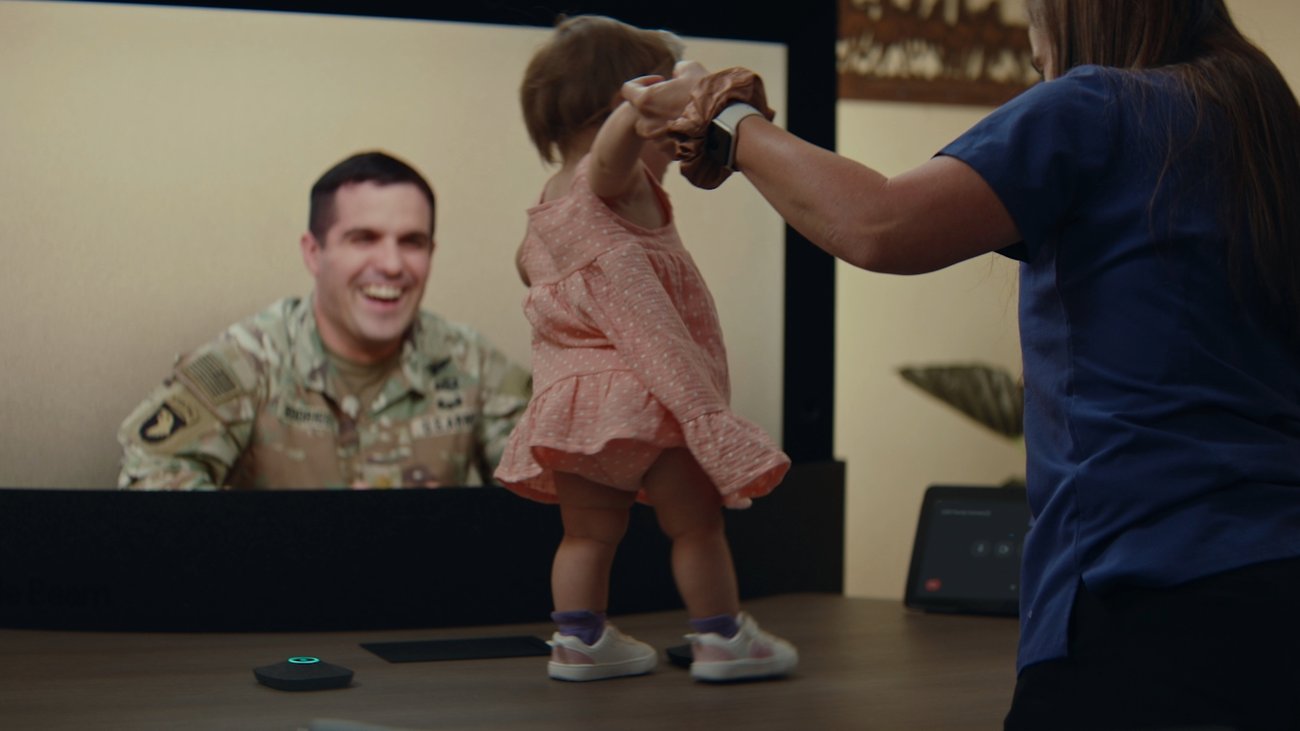
The docuseries follows four soldiers from the 2nd Battalion, 37th Armored Regiment (Iron Dukes) as they navigate the challenges of deployment. One poignant story features Sergeant Amoy Brown, a Bradley Gunner stationed in Poland, and his wife Tiyanna Orane, an aviation logistics specialist based at Fort Bliss. Together, they exemplify the sacrifices and challenges faced by military families. The eight-hour time difference can complicate significant life events, such as Tiyanna’s recent military promotion. However, Google Beam made it possible for them to celebrate this achievement together, allowing Amoy to interact with Tiyanna and their son, Azeal, in a lifelike setting.
Moving forward, Google’s initiative highlights the importance of maintaining familial bonds through advanced technology. As emotional well-being becomes a focal point in military support, tools like Google Beam will continue to play a crucial role in allowing service members to remain connected with their loved ones.
In a broader context, this collaboration with the USO not only showcases the potential of video communication for military families but also mirrors the growing trend in utilizing various AI and communication tools to streamline the interaction process. By exploring different AI capabilities in one platform, users can enhance their own communication experiences, similar to how Google Beam is reshaping family connections for service members.
As Google Beam expands its reach, the hope is that these technologies will continue to evolve, making it easier for service members and their families to bridge the emotional distance that comes with military service.