
Tesla’s Humanoid Robot Challenges: A Bumpy Road Ahead
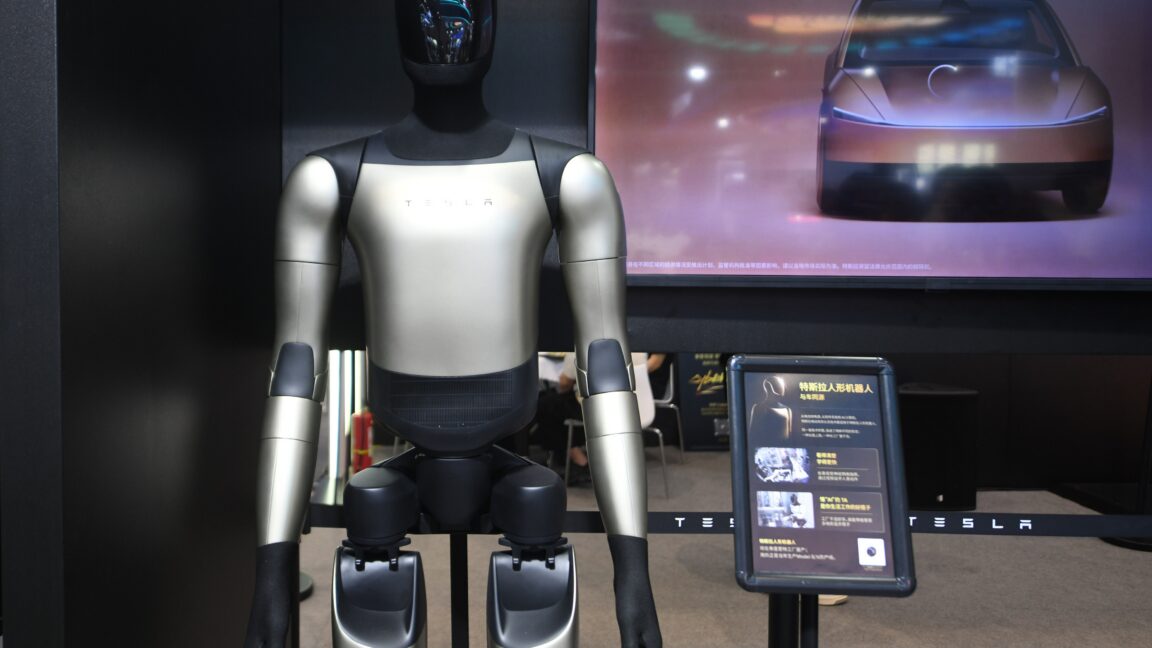
Tesla’s ambitious endeavor to manufacture humanoid robots, particularly the Optimus model, is facing significant hurdles due to an imperfect and labor-intensive production process. Recent assessments reveal that newly assembled robots frequently require immediate attention for fixes. A notable concern is with the robot’s hand touch sensors, which have shown inconsistent performance. In response, Tesla has engineered a glove-like sensory overlay designed for easy replacement, avoiding the need to discard the entire hand.
While advancements in artificial intelligence are critical for the robot’s effectiveness, reports indicate that the current AI capabilities are inadequate for versatile applications. Instead of functioning autonomously in varied settings, these robots necessitate specific programming to execute tasks within controlled environments, as highlighted by sources from The Information.
One of the greatest obstacles for robotics firms, including Tesla, is the scarcity of data essential for training robots to visually interpret and execute a broad spectrum of manual tasks. To address this challenge, Tesla has equipped factory workers in Texas and California with specialized suits that capture their physical movements during work. However, this strategy has not been without backlash; some workers reportedly expressed concerns about job security, fearing the robots were designed to replace them. As a result, Tesla has redirected this data collection to dedicated teams and established training hubs to optimize the process.
Market Competition and Supply Chain Dynamics
The competitive landscape for humanoid robotics is intensifying, with numerous companies around the globe making strides in this domain. Tesla continues to rely on Chinese suppliers for various components, a situation that persists even amidst efforts to develop domestic production capabilities. For instance, the Federal Communications Commission (FCC) enacted a ban in July on foreign-made robots, including humanoid models, intended to bolster U.S. manufacturing.
Challenges faced by Tesla in the production of humanoid robots are not isolated. The automaker finds itself in a race against established car manufacturers from China, Japan, and South Korea, all of whom are investing heavily in robotic technology. Notable competitors include Toyota, which plans to invest significantly in upgrading factories with robotic systems, and Hyundai, which aims to deploy thousands of Atlas humanoid robots from its U.S. subsidiary, Boston Dynamics, in the coming years.
Among the trailblazers in the commercial deployment of humanoid robotics is Agility Robotics, based in Oregon. This company successfully integrated humanoid robots into an Atlanta logistics facility owned by GXO Logistics in 2024. However, the business viability of humanoid robots remains to be fully validated through consistent and efficient operational models, particularly regarding safety while working alongside humans.
Editor’s Take
The ongoing challenges faced by Tesla in developing humanoid robots underscore the complexity of this emerging field. As the race intensifies among global competitors, the implications for workforce dynamics and the future of automation become increasingly critical. For developers and businesses, this situation highlights the importance of balancing innovation with workforce equity. The success or failure of these robots will likely shape the trajectory of robotics and AI in various industries.
Source: arstechnica.com