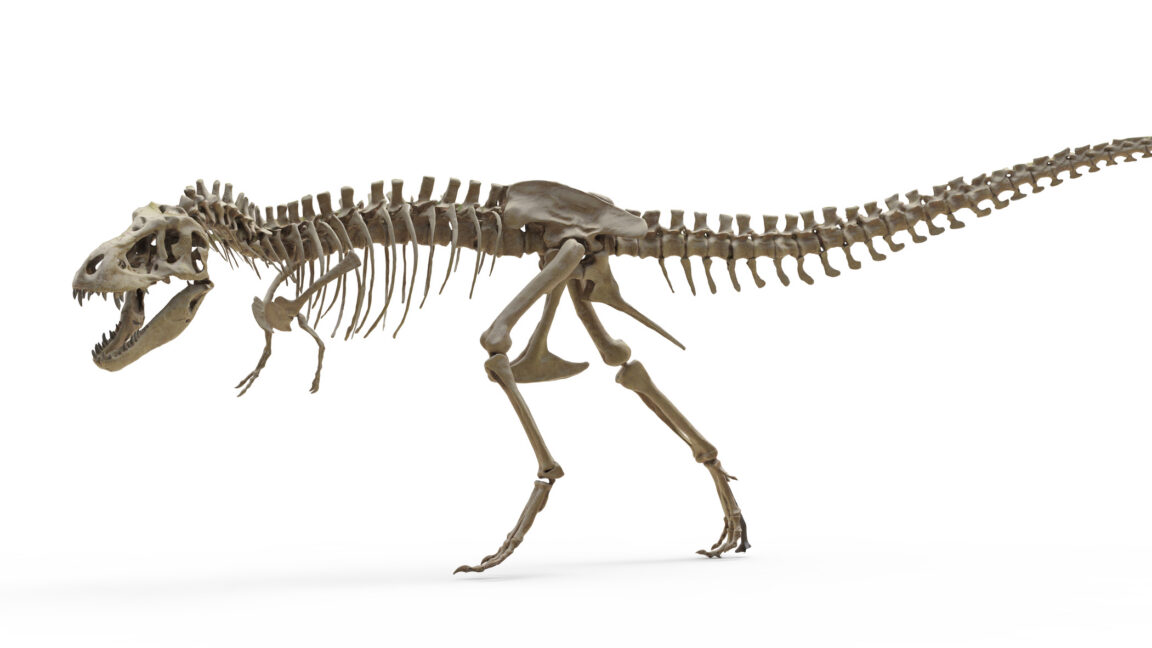

For most of the 20th century, the image of Tyrannosaurus rex was that of a sluggish, tail-dragging giant that required sunlight to gain energy before becoming active. However, further studies over recent decades have transformed this perception, presenting the dinosaur as an agile, bird-like creature akin to those depicted in the film Jurassic Park. Despite these advancements in understanding its behavior, the question of whether T. rex was warm-blooded has lingered—until now.
A collaborative team of researchers, spearheaded by geochemists Randon J. Flores and Robert A. Eagle from the University of California, Los Angeles, has made significant strides in determining the body temperature of the T. rex by studying its teeth. Their findings indicate that the dinosaur’s body temperature hovered around 36° Celsius, comparable to that of a modern elephant.
Understanding Dinosaur Thermoregulation
The discourse surrounding dinosaur physiology has long relied on indirect measures such as bone microstructure and fossil locations. Some scientists have proposed that numerous dinosaurs, including T. rex, were endothermic—able to generate their own body heat like birds and mammals. Others have suggested that different species may have adopted varied thermal strategies.
Previous methodologies aimed at deciphering T. rex‘s temperature utilized oxygen isotopes found in its bones and teeth. However, these assessments were complicated by the fact that isotope ratios are influenced not only by temperature but also by the specific water composition within the creature’s body—an aspect impossible to determine for extinct species.
Overcoming these limitations, Flores, Eagle, and their team employed a technique known as clumped isotope thermometry. This innovative method, which Eagle had previously introduced to dinosaur studies during work on Jurassic sauropods, revolves around the analysis of carbonate minerals found in tooth enamel. These minerals host rare heavy isotopes of carbon and oxygen—specifically carbon-13 and oxygen-18. The frequency with which these heavy isotopes bond with each other, or “clump,” is temperature-dependent. Since tooth enamel forms while the animal is alive, the patterns of these clumped bonds reflect the creature’s body temperature, independent of its water content.
Editor’s Take
This breakthrough in measuring T. rex‘s body temperature opens new avenues for understanding dinosaur physiology. Such insights could reshape our comprehension of how these ancient beings lived and survived in their ecosystems. For paleontologists and enthusiasts alike, this finding enriches the narrative of dinosaur biology, while potentially guiding future research into the evolutionary strategies of warm-blooded versus cold-blooded organisms.
Source: arstechnica.com