


Successful Launch of SpaceX’s Starship Marks Key Milestone
STARBASE, Texas—On Friday evening, SpaceX successfully completed the 15th test flight of its Starship rocket from South Texas, precisely on schedule. This launch is significant as it enhances the rocket’s operational capabilities in space travel.
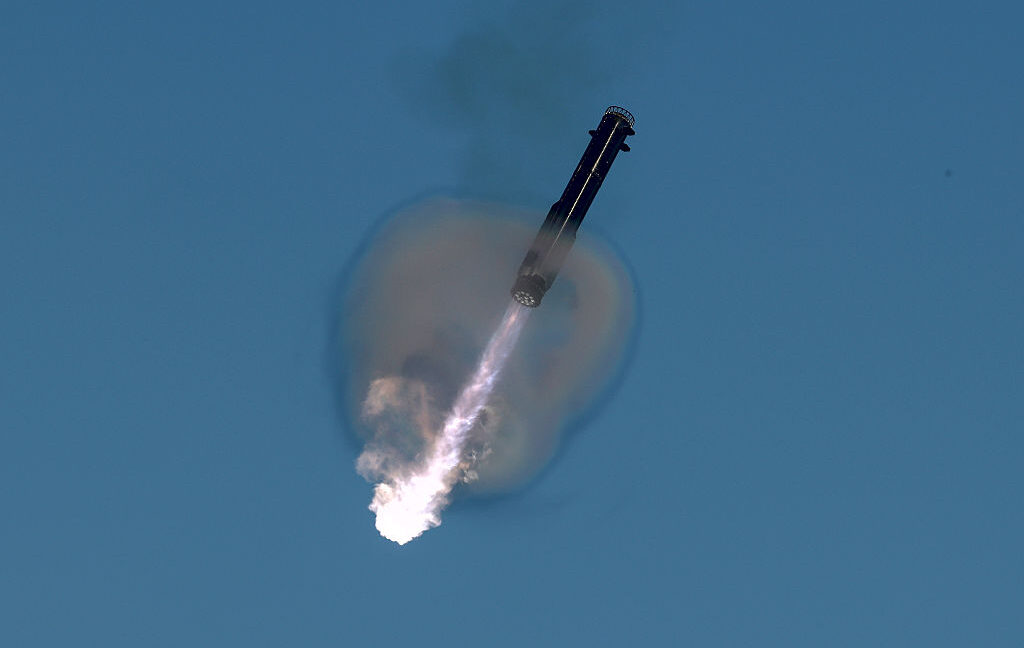
The flight unfolded under optimal conditions, with calm atmospheric winds allowing the rocket’s exhaust plume to linger in the air as it ascended into the evening sky. The warm summer climate typically seen in South Texas was absent, making for a perfect launch evening.
The initial phase of the mission proceeded without a hitch, as the first stage of the rocket ascended smoothly and released the upper stage above the Gulf of Mexico. Following this separation, the Starship upper stage ignited its Raptor engines and successfully achieved a nominal orbit. This flight marks the second time that Starship has reached low-Earth orbit.
However, the return of the first stage did not go as planned. Despite a flawless ascent, the rocket was redirected into the Gulf due to an unspecified issue, instead of landing back at the Starbase facility. This decision resulted in a dramatic explosion that was clearly visible to spectators even from over 10 miles away.
Mission Objectives Achieved
The main objective of Friday’s launch was to deploy a set of 26 Starlink V3 satellites. Approximately 40 minutes into the flight, the spacecraft successfully released these satellites through a narrow hatch at its base. Each satellite features solar panels extending 60 meters when fully deployed, and they are now positioned to use their onboard propulsion systems to ascend to their designated orbits.
This successful deployment underscores the operational status of Starship as an orbital rocket. Additionally, it is notable for being the largest and most powerful launch vehicle humanity has ever sent into space. Moving forward, SpaceX aims to enhance the rocket’s reusability and boost its launch frequency.
While the satellite deployment represents a significant accomplishment, the mission did not fully meet all of its objectives. SpaceX originally planned to refurbish the first-stage booster for future flights, a capability that has been successfully demonstrated with earlier Starship models but remains unproven with the latest iteration.
Editor’s Take
This successful flight of the Starship demonstrates substantial progress in achieving operational capabilities in space. The deployment of the Starlink V3 satellites adds to the constellation’s capabilities, benefitting users with enhanced internet access. However, the challenges faced during the booster return highlight the ongoing hurdles SpaceX must overcome to realize the full potential of this launch system.
Source: arstechnica.com