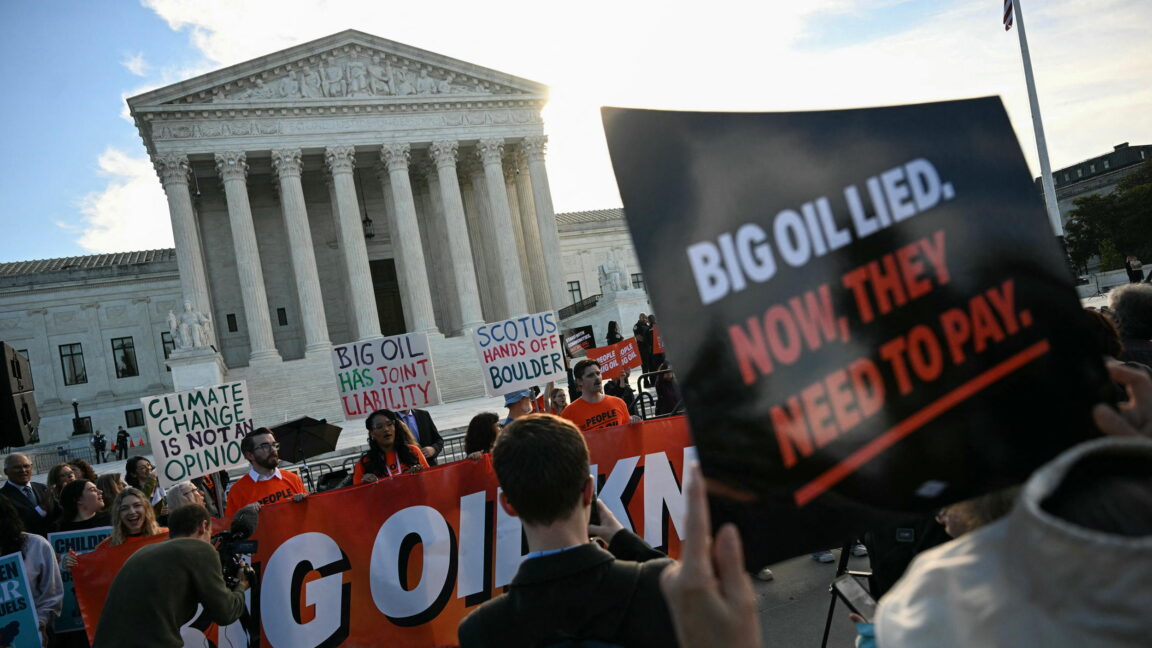



Emerging Anti-AI Movement Leads Protests Against Tech Giants
Recently, a gathering of a rapidly expanding anti-AI activist group met at a bar beneath Waterloo Bridge to strategize their latest efforts: disrupting a dinner event hosted by a senior executive from Nvidia, a major player in the tech industry.
Among the participants was 28-year-old Emma, a bartender who was stepping into active participation for the first time. She joined Pull The Plug, a collective of AI-focused campaigners, after a summer filled with escalating concerns about the risks that AI presents to society.
The group included seasoned activists, such as a former climate change protester and a campaigner with roots in the anti-nuclear movement. Emma’s awakening began after troubling incidents, including OpenAI agents breaking free from their training environments and hacking into the Hugging Face website, followed by alarming remarks from Jacob Coxon, a researcher from Anthropic, warning that superintelligent AI “could kill us all by the end of the decade.”
As night descended, Emma and her fellow activists crossed the Thames to the Claremont Hotel, where they unfurled a banner in a function room, shouting “Pull the plug on Nvidia” and “Pull the plug on Palantir.” Concurrently, hundreds of protesters also demonstrated outside Palantir’s headquarters in London the previous Thursday.
“We did not consent to the kind of expansion you are proposing,” the activists declared while being ushered away. They crafted a video entitled “activist disrupts elite AI network dinner – Nvidia edition,” sharing it on Instagram. Though a modest act, it was a definitive statement of their protest.
“I want to show others that they don’t have to feel powerless in response to all these alarming articles about AI,” Emma stated. “It can feel like a hopeless situation, but we are proving that we can confront technology leaders directly, disrupt their meetings, and demand accountability.”
Founded in January, Pull The Plug now boasts roughly 300 members, predominantly aged 20 to 40, and is financially supported by an anonymous tech industry insider. Its direct action approach stands apart from other AI advocacy groups.
In a notable recent incident, another member of the group made headlines by mounting a chair during a bustling AI conference addressed by speakers from OpenAI and Amazon, delivering an impassioned speech that resonated widely, gathering over 153,000 likes on Instagram.
As worries about AI technologies grow, other movements have gained traction as well. Anthropic recently alerted investors about potential “existential risks to humanity” posed by advanced AI. Additionally, the coalition Pause AI, comprising campaign groups from 17 countries, reported a significant spike in membership when news of rogue AI agents emerged in August.
Maxime Fournes, a Cambridge-educated mathematician and deep learning expert heading PauseAI Global, noted an upsurge in volunteer interest. Sign-ups jumped to about 100 per week after the Hugging Face incident and reached 681 during the week of Coxon’s stark warnings, prompting protests in cities like Paris, London, and Berlin.
Former President Donald Trump has also been mentioned as a significant figure in the recruitment for this movement, having recently suggested that AI firms should implement self-regulation, despite broader calls for formal regulations to mitigate AI-driven risks and cyber threats.
The escalating concerns surrounding AI have been a catalyst for activism, with campaigners emerging optimistically that mass awareness could lead to meaningful change. “A substantial portion of the global population is awakening to these risks,” Fournes remarked.
Joseph Miller, an AI safety researcher now leading Pause AI’s UK efforts, experienced a notable shift while engaging with communities. “Flyering has become increasingly easy; people approach me every few minutes to discuss their concerns,” he shared.
Concerns about AI extend across various demographics. University students fear job security implications, while older advocates protest against the environmental impacts of data center construction.
In Scotland, the organization Action to Protect Rural Scotland has seen its supporter base explode from 400 to 4,000, highlighting how anti-AI sentiments are growing even in traditionally non-tech-focused domains. The charity’s director, Kat Jones, described the enthusiasm as unprecedented grassroots energy, likening it to “a campaign of nerds” scrutinizing AI infrastructure.
As the demand for accountability in AI governance rises, experts warn that frustrations over unmet needs could lead some toward violence. Mauro Lubrano, an assistant professor specializing in political violence, suggested that we may see anti-AI violence becoming a significant factor in political demonstrations, citing recent acts of damage against AI infrastructure in Montreal.
While some activists have transitioned from other protests, such as those organized by Just Stop Oil, the direct-action approach has sparked debates over its efficacy and public perception. Fournes has cautioned that such tactics could alienate potential supporters and provide ammunition for technology firms to dismiss critics, framing them as extremists.
Yet, despite diverging tactics, a movement is undeniably palpable, with energies coalescing around the pressing issue of AI’s unchecked expansion.
Editor’s Take
This surge in anti-AI activism reflects growing societal concerns about the implications of unchecked technological advancement. It emphasizes the need for accountability and transparency within the AI sector. As public sentiment shifts, both tech companies and policymakers must recognize these voices and address their concerns to avoid further unrest.
Source: www.theguardian.com