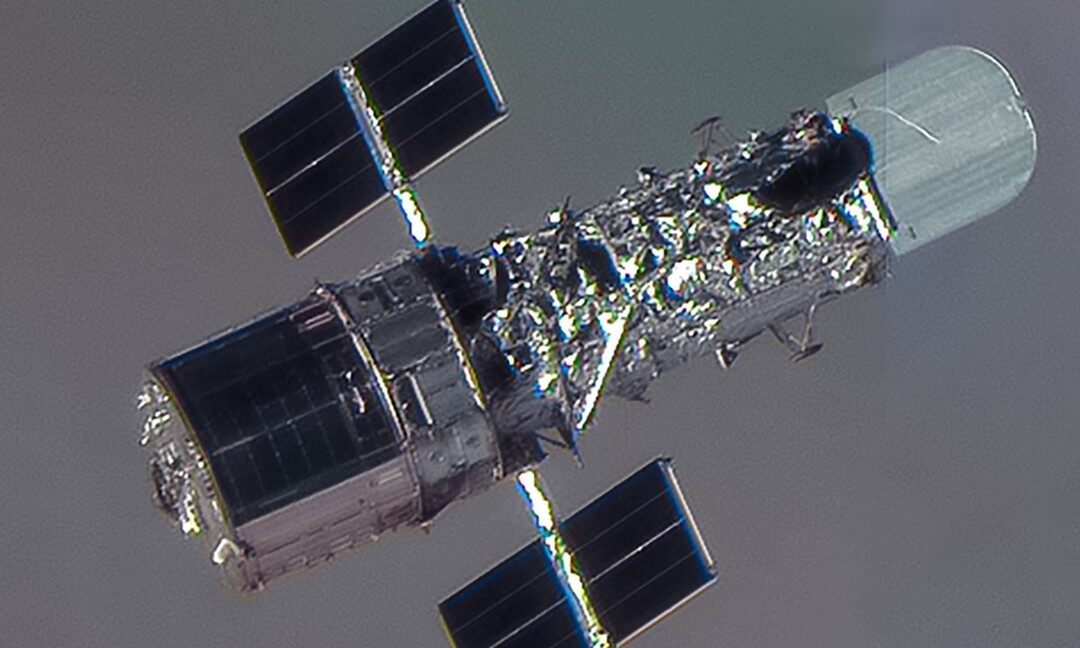

The Hubble Space Telescope continues to captivate astronomers nearly 36 years after its launch. However, its operational capabilities are diminishing. Without intervention, this iconic observatory is expected to re-enter the Earth’s atmosphere in the early to mid-2030s, marking the end of an era for one of science’s most renowned instruments.
NASA last elevated Hubble’s orbit in 2002 during a servicing mission conducted by the Space Shuttle Columbia. The final servicing mission in 2009 did not include an orbit boost, and following the retirement of the shuttle fleet two years later, Hubble has been on a slow descent toward eventual demise.
Recently, NASA issued a Request For Information (RFI), inviting commercial entities to propose solutions for reboosting, servicing, or safely disposing of the telescope. Responses to this request are due by November 30. The agency is particularly interested in companies that can capture Hubble and elevate its orbit to at least 373 miles (600 km), enhance its operational efficiency, or ensure a controlled reentry.
“The mission must ensure there is no harm to the Hubble Space Telescope, with an expected completion date by 2032,” noted NASA in the RFI. Contractors would need to provide not only the launch vehicle and servicing spacecraft but also handle mission operations and, if needed, crew logistics.
No Commitments Yet
While NASA has not committed to a contract for a Hubble rescue mission, the agency is keen to gauge interest from the private sector, as well as the potential costs and feasibility of such an undertaking. Current models suggest that without intervention, Hubble could fall out of orbit and disintegrate during reentry around 2033 or 2034; however, these predictions could vary based on solar activities.
Over the past 24 years, Hubble has drifted from an altitude of 362 miles (583 km) in 2002 to its present level of approximately 292 miles (470 km). A successful reboost to 373 miles could potentially extend Hubble’s lifespan by another 25 years.
Editor’s Take
This development is critical not only for preserving Hubble’s legacy but also for assessing the role of private companies in space operations. If successful, it could lay the groundwork for future partnerships in space exploration and resource management, significantly impacting the broader tech and aerospace industries.
Source: arstechnica.com