

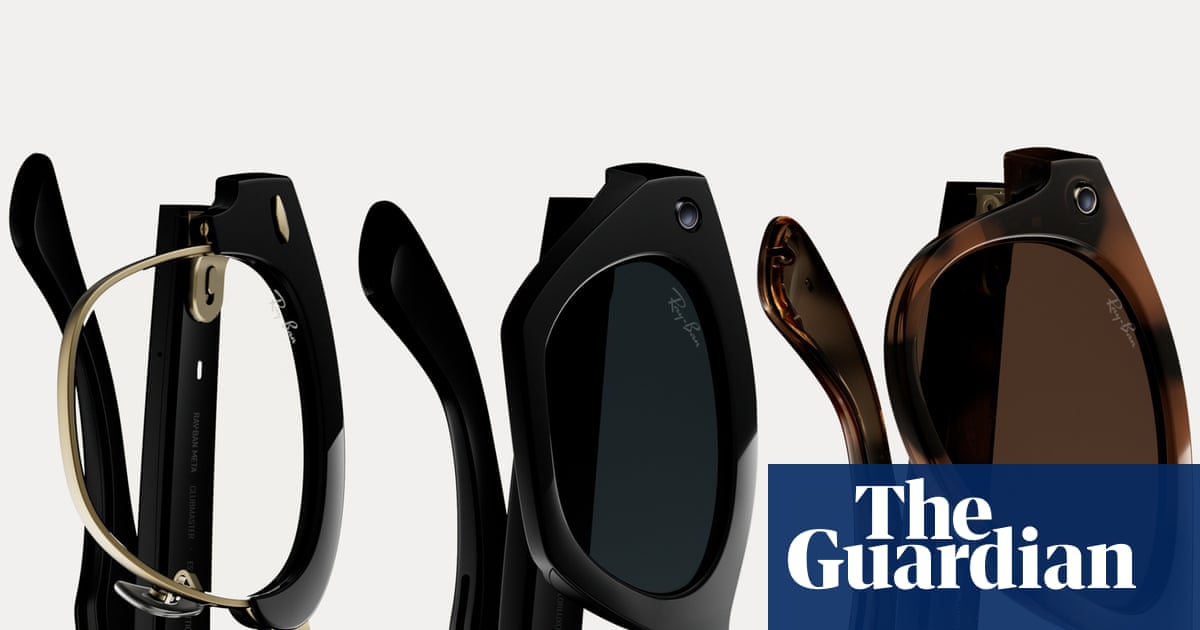

Meta has unveiled a significant advancement in personal technology with a new range of virtual reality (VR) and smart glasses during its recent Meta Connect conference in Menlo Park, California. Among the new offerings is a unique audio-only model that forgoes a camera, addressing privacy concerns that have plagued previous iterations.
Presenters highlighted the new Ray-Ban Meta glasses as a leap forward in terms of battery life and weight, encapsulating the capabilities of an entire headset into a lightweight, stylish frame. Designed to perch comfortably on a user’s ears, these glasses aim to redefine the user experience in the smart eyewear sector.
The smart glasses market is currently under scrutiny, facing criticism from privacy advocates concerned about the ability of such devices to record video discreetly. Yet, the Ray-Ban Meta spectacles emerge as a frontrunner in a hesitant industry, gaining popularity despite the negative perception associated with “spy glasses.”
Photograph: Meta
The newly introduced Ray-Ban Meta Audio AI glasses eschew cameras altogether, potentially alleviating privacy issues while still offering impressive functionality. Featuring sleek microphones and speakers, these glasses allow for music playback, phone calls, and interaction with Meta’s AI assistant. Available in styles reminiscent of classic Ray-Ban designs, they promise a surprisingly long battery life of up to 12 hours for a price of £319 (€349/A$529).
Photograph: Meta
The third-generation Ray-Ban Meta glasses, which do include cameras, boast improved battery life lasting up to nine hours, along with support for Dolby Atmos audio. Priced at £409 (€449/A$679), these models will also feature noticeable enhancements including improved tampering detection during livestreams. All of the firm’s models are equipped with LED indicators that light up when recording to increase transparency.
Photograph: Meta
In addition, Meta has announced its expansion into international markets with the availability of its Meta Ray-Ban Display smart glasses, set to launch in the UK and Canada on September 23, priced at £749 (CA$1,149). Following that, they will roll out to France, Germany, and Italy on October 13 for €899.
Photograph: Meta
The new VR glasses represent the latest evolution of Meta’s Quest VR headset range, offering a drastically lighter design at just 100g. Crafted from magnesium alloy, these glasses incorporate a 5K microOLED display promising high pixel density for sharp visuals comparable to high-end offerings like Apple’s Vision Pro headset. Enhanced with augmented reality features, users can engage with their environment while enjoying a vivid viewing experience.
These glasses connect to a compact 300g puck housing all necessary computational hardware and a battery designed to last around three hours. Meta claims this offers a fivefold decrease in weight compared to the original Quest 3 headsets, making them more user-friendly for daily tasks.
Composite: Meta
Capable of displaying multiple virtual screens, these glasses also connect to external devices like Macs and PCs, providing versatile functionality. Features such as eye-tracking, hand-gesture control, and integration with an Xbox gamepad are designed to elevate both productivity and entertainment value. The Meta VR glasses will retail for $1,299.99 and are expected to launch in spring 2027 across North America, Europe, and Asia.
Editor’s Take
The launch of Meta’s new VR and smart glasses could mark a pivotal moment in wearable technology, especially in addressing user privacy concerns. With enhanced battery life and lighter designs, these products aim to broaden the appeal of smart glasses beyond niche markets. For developers and businesses, this innovation offers an opportunity to explore immersive experiences, pushing the boundaries of how technology can integrate with daily life. The emphasis on comfort and functionality suggests that Meta is seeking to redefine user expectations and advance the industry landscape.
Source: www.theguardian.com