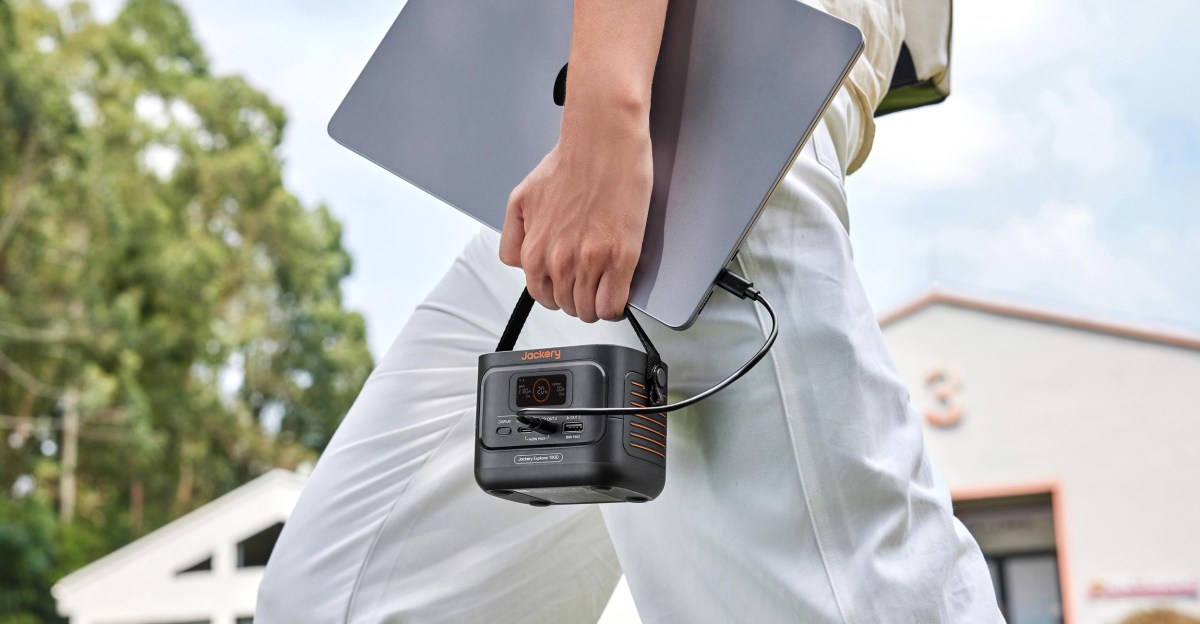

Jackery has unveiled its latest innovation in portable power solutions with the launch of the Explorer 100D. Utilizing the safer and more durable lithium iron phosphate (LFP) batteries introduced earlier this year, this model claims to be the smallest power station in Jackery’s lineup, measuring a compact 4.6 by 3.4 by 3.4 inches and weighing just 1.87 pounds. This remarkable size allows for easy storage in carry-on luggage, making it an ideal companion for travelers needing to power multiple devices on long trips.
Set to be available on November 15th through Walmart at a price of $99, the Explorer 100D can already be found at Costco in a two-pack option priced at $179.99. While smaller, more affordable 30,000mAh chargers exist, the LFP technology used in the 100D is engineered for longevity, boasting a lifespan of up to 8 years with 3,000 charge cycles, which can significantly outlast typical lithium-ion offerings.
Despite its reduced dimensions and weight compared to larger models, the Explorer 100D features an integrated handle for easy transportation, along with an optional shoulder strap. The front of the device offers two 140W USB-C ports and an 18W USB-A port. However, it’s important to note that its total output caps at 158W, which may affect power delivery when all ports are utilized simultaneously. For users needing to recharge the unit in remote locations, the 100D supports up to 100W of direct solar charging, enabling it to reach 80 percent capacity in about 90 minutes.
Editor’s Take
The launch of the Jackery Explorer 100D represents a step forward in portable power solutions, particularly for travelers and outdoor enthusiasts. By prioritizing lightweight design and robust battery longevity, Jackery is addressing key user concerns about efficiency and reliability. This model not only expands their product range but also sets a new benchmark in the industry for combining compactness with performance.
Source: www.theverge.com