

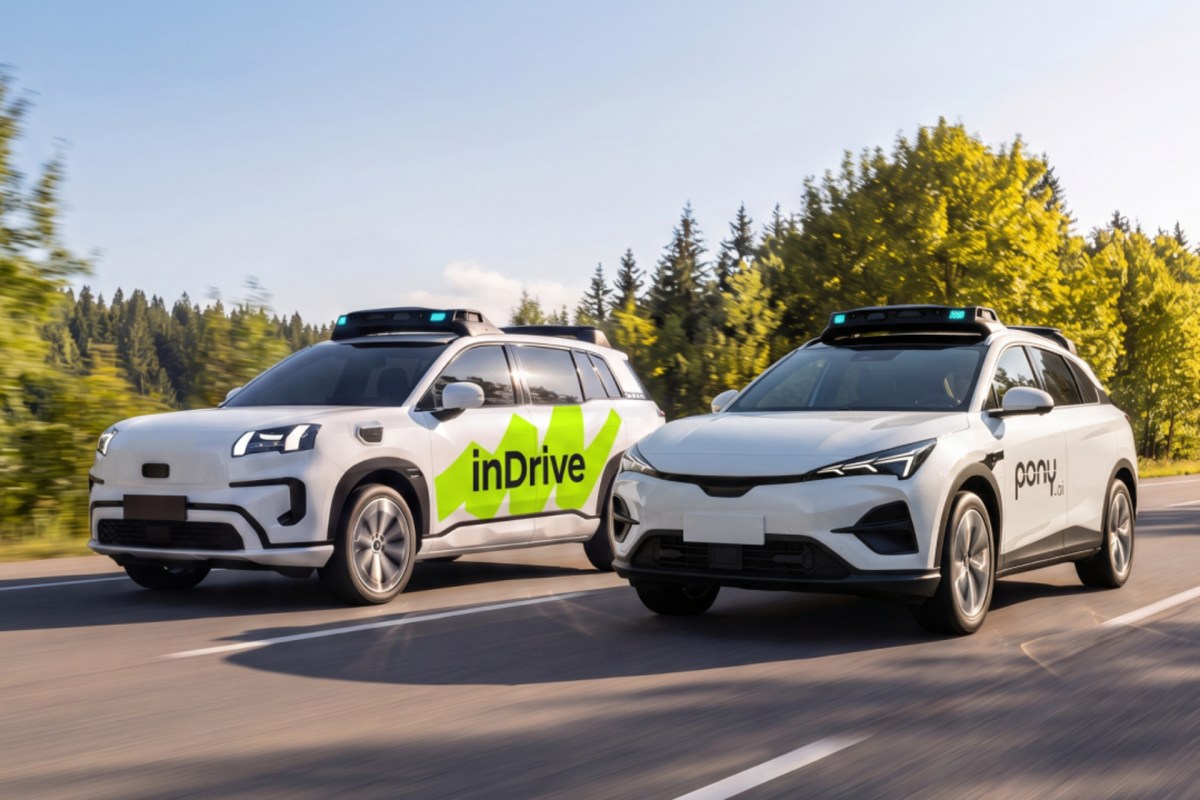

Ride-hailing platform inDrive, which allows users to negotiate fares with drivers, is partnering with Pony.ai—a Chinese leader in autonomous driving—as well as Nvidia to initiate robotaxi testing in Kazakhstan by 2027. This collaboration signifies a heightened global interest in self-driving technologies, extending beyond traditional markets like the U.S. and China.
On Friday, it was announced that a memorandum of understanding had been signed, paving the way for the integration of Pony.ai’s robotaxi fleet into inDrive’s app. The testing phase is set to launch in the capital city, Astana, within the first half of 2027, according to inDrive’s Chief Technology Officer, Yuri Misnik.
The initial phase of testing will include a safety operator in the vehicle, with a transition to fully autonomous rides as the long-term goal. Under this arrangement, Pony.ai will provide its Gen-7 robotaxis, which will be accessible through inDrive’s platform in Kazakhstan. Meanwhile, Nvidia is set to supply critical AI technology, incorporating its Hyperion platform and Halos safety system.
This initiative aligns with broader trends in the ride-hailing industry as companies increasingly explore autonomous vehicle technologies. Recently, Uber outlined plans to test Pony.ai’s robotaxis in London while also commencing supervised autonomous ride services through its partnership with British startup Wayve.
inDrive’s model focuses on affordable rides, and its strategy for autonomous services aims to mirror this ethos in a competitive landscape. “Our approach is capital-light by design,” stated Misnik, emphasizing a collaborative model that combines the expertise of various partners to enhance customer experiences.
Nvidia believes that its Hyperion platform can significantly reduce the costs associated with robotaxi development. By providing a comprehensive suite of sensors and computing technology, Nvidia aims to alleviate the need for companies to build these components from scratch, which is particularly beneficial for emerging markets where cost-efficiency is crucial.
Notably, this announcement comes during Jensen Huang, the CEO of Nvidia’s, inaugural visit to Kazakhstan, highlighting the importance of this venture.
The partnership also complements Pony.ai’s expansion strategy, which aims to operate over 3,500 robotaxis across more than 20 global cities by the close of 2026—up from nearly 2,000 vehicles recorded at the end of June.
In a related context, Kazakhstan recently declared plans to launch its own autonomous taxi services in 2027, with trials slated for Astana and two other cities. The country has put regulatory frameworks in place to facilitate the testing of autonomous vehicles on certain public roads.
The challenging winter climate of Astana, characterized by significant snowfall and icy conditions, presents an ideal testing ground for robotaxi technology. “Launching here will provide an important opportunity to evaluate autonomous driving technology in challenging winter conditions,” noted Arsen Tomsky, founder and CEO of inDrive. Success in such an environment could serve as a model for other regions facing similar weather-related challenges.
inDrive is not exclusively targeting Kazakhstan; it had previously signed an agreement with AI Driver in Saudi Arabia to explore autonomous vehicle deployment, initially focusing on the city of Riyadh. The timeline for launching this pilot program remains uncertain.
“We are also looking at a number of other markets for future deployments,” Misnik commented, underlining the necessity for a supportive regulatory environment to enable safe and sustainable testing.
With operations in over 1,200 cities across 47 countries, inDrive has expanded its offerings beyond ride-hailing to include delivery services, intercity transportation, and financial services.
Editor’s Take
This collaboration among inDrive, Pony.ai, and Nvidia is significant in advancing autonomous vehicle technology in emerging markets. By tackling the unique challenges of winter driving in Kazakhstan, this initiative not only enhances the potential for robotaxis but could also set benchmarks for other regions. As companies increasingly pivot towards automation, the insights gained here will be crucial for shaping future developments in the global transport sector.
Source: techcrunch.com