

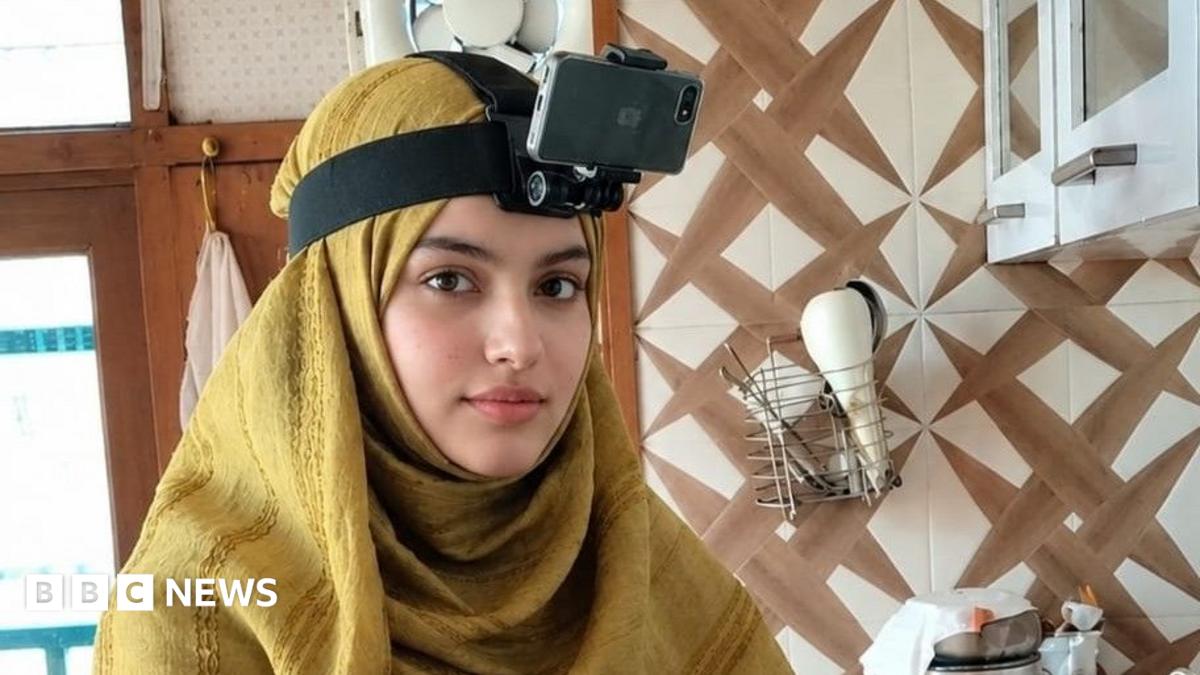

Mohammed Ashim, a 22-year-old barber in Bengaluru, has been honing his skills in hair cutting and beard trimming for the past four years. Recently, he has begun to incorporate a new tool into his routine—a camera strapped to his head to record his techniques. The camera captures only his hands and fingers, ensuring that his clients’ identities remain obscured.
“The routine is straightforward, but discipline is key,” Ashim explains. “I was trained to keep my hands within the frame, ensure proper lighting, and avoid abrupt movements of my head while working.” He typically wears the camera for about five to six hours each day.
While the monetary compensation is appealing, Ashim expresses a deeper excitement. “It’s rewarding to feel that my razor techniques contribute to something innovative. I never envisioned that my skills would be relevant to a tech company on a global scale,” he shares.
Ashim is among countless workers worldwide engaged in documenting their activities. His footage is collected by a local company that employs hundreds of individuals to film their work processes.
This video content is then sold to technology firms and research organizations for the purpose of training artificial intelligence systems, especially in developing physical AI, which refers to AI capable of controlling robotics in real scenarios.
Rashdan Technologies is at the forefront of aggregating and processing this human-generated data. “Every robotics company and cutting-edge AI lab requires specific types of data, whether it be for industrial tasks, agriculture, household chores, or artisan crafts like pottery and garment-making. We adapt to wherever the task is,” says Shahil Baig, the co-founder and CEO.
The company compensates workers between $5 and $10 (£3.74; £7.47) for eight to ten hours of recorded footage. Baig notes that for many participants, this income is significant.
Ensuring that workers give their consent and are comfortable with the recording process is a priority for Rashdan Technologies. “We focus on capturing hands rather than faces. When using multiple cameras to gather more comprehensive data, we ensure to blur out faces. We do not include any identifiable information in our data sets,” he emphasizes.
However, as the demand from clients increases, so too do the challenges faced by the company. “Clients are now requesting setups with four to six cameras positioned around a worker to capture a fuller scene, not just their hands,” Baig explains. “Convincing someone to wear a single small camera is one conversation; persuading them to don a five-camera headset is a entirely different and more complex dialogue. We offer higher compensation for this advanced tier of data collection, reflecting the greater ask.”
The industry is poised for growth, with Baig anticipating a surge of new competitors entering the market in India this year.
Editor’s Take
The integration of human-generated data for training AI is a significant stride toward enhancing robotic capabilities in various sectors. As more workers like Ashim participate in this burgeoning ecosystem, it opens doors for businesses to innovate in AI applications. This trend could lead to improved efficiencies in industries ranging from manufacturing to artisanal crafts, shaping the future of work.
Source: www.bbc.co.uk