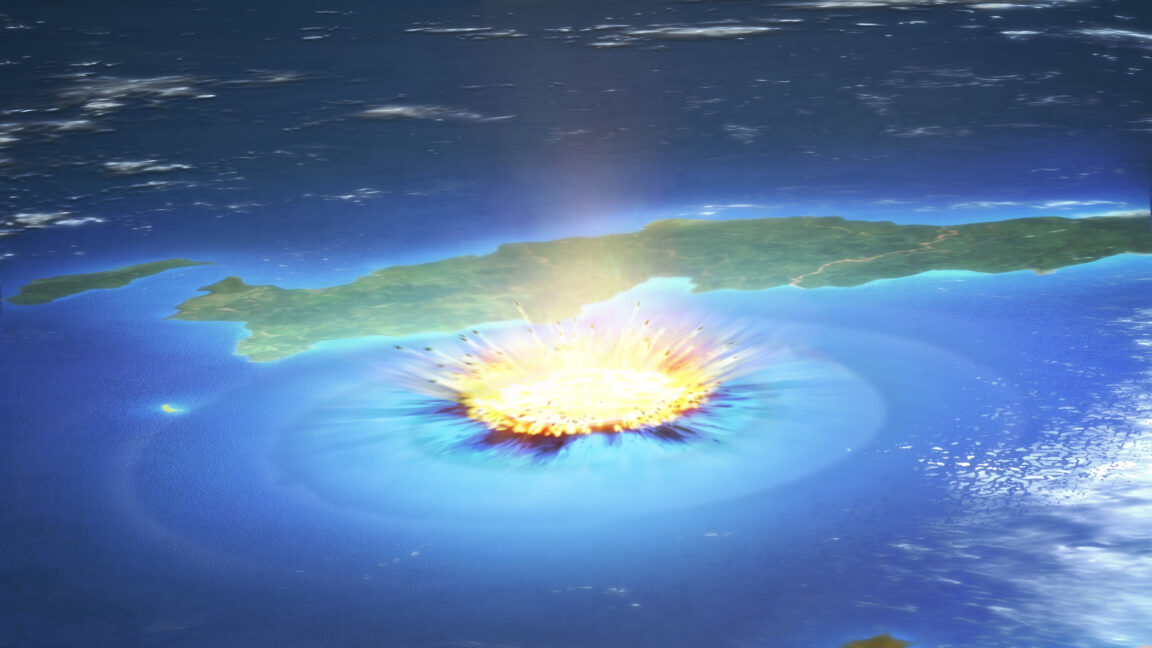

Dr. Pickersgill and her research team are exploring the potential for life in the aftermath of the Chicxulub impact, which is famously known for its role in the extinction of the dinosaurs. Their findings, published in Communications Earth & Environment, suggest that extended periods of hydrothermal activity could provide ideal conditions for prebiotic chemical reactions, enabling life to emerge and flourish.
Unraveling the Past
Hydrothermal systems resulting from various impacts can be found throughout our planet. While these systems are deemed potentially habitable due to the warmth and nutrients they offer, evidence of life within them has proven elusive. Notably, microbial life has been detected in only eight out of the 70 underwater impact craters exhibiting hydrothermal activity.
To investigate whether the Chicxulub impact fostered habitable environments, Dr. Pickersgill’s team analyzed rock samples to assess the likelihood of conditions conducive to life. Their research does not definitively confirm if the hydrothermal systems at this site were inhabited.
The focus of their study was on the duration of habitable conditions facilitated by the Chicxulub crater. Prolonged hospitable environments could greatly increase the chances of attracting organisms that could establish colonies around hydrothermal vents.
To gauge the timeline of the Chicxulub hydrothermal system, the researchers drilled one kilometer into the site to recover core samples. They conducted radioisotopic measurements on feldspar, a mineral that contains potassium. By analyzing the decay of potassium into argon, they could estimate the age of the rock, a method previously utilized for dating lunar samples and volcanic formations.
Editor’s Take
This research sheds light on the potential for life in environments previously deemed sterile, particularly in contexts related to planetary impacts. Understanding the conditions that could allow life to develop in such settings is crucial for both terrestrial and extraterrestrial studies. As we advance our knowledge in astrobiology, this could have profound implications for exploring life beyond Earth and developing new strategies in bioengineering and environmental science.
Source: arstechnica.com