

How Datacentres Influence Politics: Donations to Parties and Lobbying in Australia

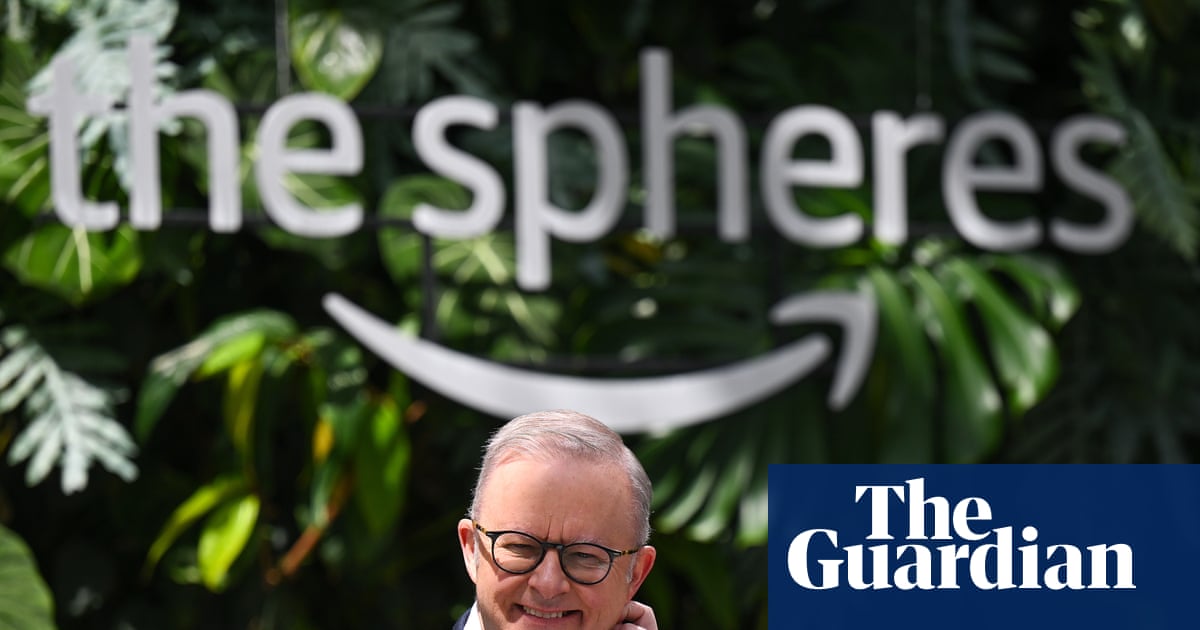
Anthony Albanese, the Australian Prime Minister, found himself in a futuristic sphere made of glass and steel on June 14, 2025, surrounded by 40,000 plants from various regions of the globe. The backdrop of his visit was Amazon Web Services‘ Seattle headquarters, where the company’s CEO, Matt Garman, outlined an ambitious $20 billion investment plan to establish new datacentres in Melbourne and Sydney.
During a press gathering, Garman emphasized the significance of Australia as a vital market for the world’s leading datacentre corporation. Barely days after Albanese’s return to Australia, Amazon recorded its largest political donation in history—a payment of $46,500 to the Labor Party on June 28.
This contribution was part of 34 payments aggregating $538,000 made to the Labor and Liberal parties over a six-year span, according to federal disclosures of the company. While Amazon asserted that these payments did not sway governmental decisions, the pattern of financial contributions preceding substantial announcements has attracted renewed scrutiny.
The scrutiny comes at a time when public backlash against fast-tracked datacentre projects grows, coupled with concerns about well-connected political figures lobbying for these corporations.
Clancy Moore, the Chief Executive of Transparency International Australia, pointed out that the datacentre sector is soothing its needs through outdated methods of political engagement, describing these facilities as modern-day extractive industries engaging in traditional lobbying operations.
Access to Ministers
In 2024, the Albanese administration struck a $2 billion deal with Amazon Web Services to construct three confidential datacentres aimed at safeguarding sensitive data from intelligence agencies. Notably, just eight days before this deal, Amazon had disclosed a $33,000 payment to the Labor Party, with another similar payment following shortly thereafter.
These payments were reportedly membership fees for the Labor Business Forum, which provides closer access to ministers and members of parliament. Since mid-2021, Amazon has paid over $200,000 in fees to this forum, raising questions about the proximity of these contributions to crucial governmental agreements.
Despite Amazon’s assertion that its payments to political fundraising entities were unrelated to public investments, the timing of these contributions remains a concern amid ongoing debates about corporate financial influence in politics.
Payments to NSW Liberals
Meanwhile, during his last weeks as Prime Minister in 2022, Scott Morrison opened a new five-storey datacentre in Sydney’s northwestern region. In the lead-up to his address on March 25, 2022, the Macquarie Technology Group disclosed a $3,000 donation to the NSW Liberal Party, shortly following payments of $15,000 made in January.
This company has been consistently donating to the NSW Liberal branch, coinciding with the construction of the IC3 East datacentre in the Macquarie Park innovation district. While there is no suggestion that these donations aimed to influence decision-making processes, they coincide with pivotal developments in the company’s operations, including plans for a significant datacentre known as IC3 Super West.
Recent donations also highlight an alignment with major milestones. For instance, Macquarie made a payment to secure a lunch meeting with local political figures amid ongoing planning applications.
A spokesperson for the City of Ryde, which has raised its voice against the rapid concentration of datacentres, confirmed that such donations were reported as per legal requirements.
As per Australian Electoral Commission data, Macquarie has contributed $2.2 million to both state and federal divisions of the Liberal and Labor parties since the year 2000. In response, the company emphasized that its engagement with political representatives is compliant with all electoral disclosure mandates.
Former LNP Premier Hired, $20,000 Donated
The reliance on established lobbyists is growing among datacentre companies. For instance, Viridis Green, which is in the process of developing regional datacentres, has hired former Queensland National Premier Rob Borbidge to advocate on its behalf.
Borbidge has met with senior planning officials in Queensland, a collaboration that followed a $20,000 donation to the LNP intended to fund an event at the party conference in November.
‘Legitimate Question to Be Answered’
Abigail Boyd, a member of the Greens and head of a parliamentary inquiry into datacentres, expressed skepticism regarding the intentions behind such contributions, questioning what companies might expect in return for their financial support. Similarly, David Pocock, an independent senator and participant in a federal inquiry, voiced his apprehension about technology companies’ financial influence in political campaigns.
Catherine Williams, executive director of the Centre for Public Integrity, remarked that the lack of transparency surrounding lobbying activities amplifies public concern over financial engagements with political entities.
Editor’s Take
This situation raises significant questions about the relationship between major corporations and political entities. As the technology and datacentre industries grow, the potential for corporate financial influence on public policy becomes more pronounced, calling for increased transparency and accountability. For users, businesses, and developers, these dynamics could shape the future landscape of data management and regulation.
Source: www.theguardian.com