
Greens Face Accusations of Anti-Semitism After Approving ‘Zionism is Racism’ Motion

The Greens’ Controversial Motion Sparks Division Within Party
The Green Party faced intense scrutiny following a contentious vote to adopt a resolution declaring ‘Zionism is Racism.’ This decision has led to accusations that the party is now the most anti-Semitic political organization in the UK.
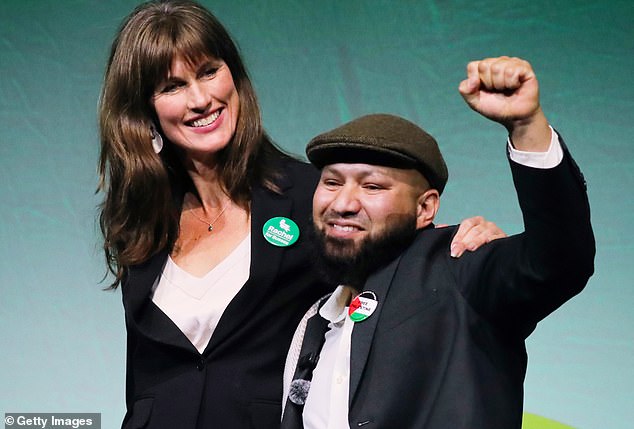
During a recent conference, members voted 1,022 to 813 in favor of a proposal advocating for the treatment of Israel as an apartheid state akin to South Africa. The motion also calls for the establishment of a singular democratic Palestinian state encompassing all of historic Palestine, with Jerusalem as its capital—an assertion critics claim undermines the existence of Israel.
This development has triggered a significant internal debate, with voices like deputy leader Mothin Ali expressing support while former leaders such as Caroline Lucas, Adrian Ramsay, and Carla Denyer raised concerns that such a stance may alienate Jewish members within the party.
Current party leader Zack Polanski was absent during the vote as he campaigned in London for the Holborn and St Pancras by-election. Despite his previous criticisms of the proposal, he has refrained from explicitly stating that Israel has a right to exist, repeatedly focusing on the rights of peoples rather than nations.
In reaction to the vote, Shahrar Ali, a former deputy leader, conveyed his profound disappointment, stating, “This is a very sad day for the Green Party.” He emphasized that the resolution cements the party as the first openly anti-Semitic group in the UK.
The decision arrives on the heels of persistent efforts from pro-Palestinian factions within the Greens, who have long sought to brand Israel an apartheid state. Activists previously attempted to pass a similar motion at the Spring conference, but procedural hurdles prevented a vote.
The current motion passed with a critical time constraint at the end of the plenary session, as attempts to amend its language were unsuccessful. High-ranking party officials, including Carla Denyer, echoed concerns that the resolution could disenfranchise a significant contingent of Jewish party members.
In a joint statement, Green MPs reiterated their commitment to universal human rights, condemning oppression in all forms. They stressed the need for a balanced approach that respects both Palestinian rights and those of Jewish individuals.
Opponents of the resolution argue it effectively supports a one-state solution reminiscent of policies advocated by Hamas. Critics warn this position undermines the two-state solution framework and could lead to further division within the party.
As discussions around the motion reached a boiling point, a ‘safe room’ was established for Jewish members at the conference, illustrating the deep divides now present within the party. Disruptions led to the revocation of passes for two attendees, highlighting the tense atmosphere.
Notably, the party leadership has taken a firm stance against racist ideologies, asserting its commitment to anti-racism while addressing the Israeli-Palestinian conflict. However, the leadership’s reluctance to clarify Israel’s right to exist remains contentious.
As this saga unfolds, the implications for the Green Party and its broader electoral ambitions cannot be understated. The future of the party’s internal cohesion and its appeal to various voter demographics remains delicately poised.
Editor’s Take
This development has significant ramifications for the Green Party’s identity and public perception. It raises questions about inclusivity and the balance between political stances on international issues and internal party dynamics. How the party navigates this controversy will be crucial not only for its future but also for its relationship with key demographics, including Jewish voters.
Source: www.dailymail.com