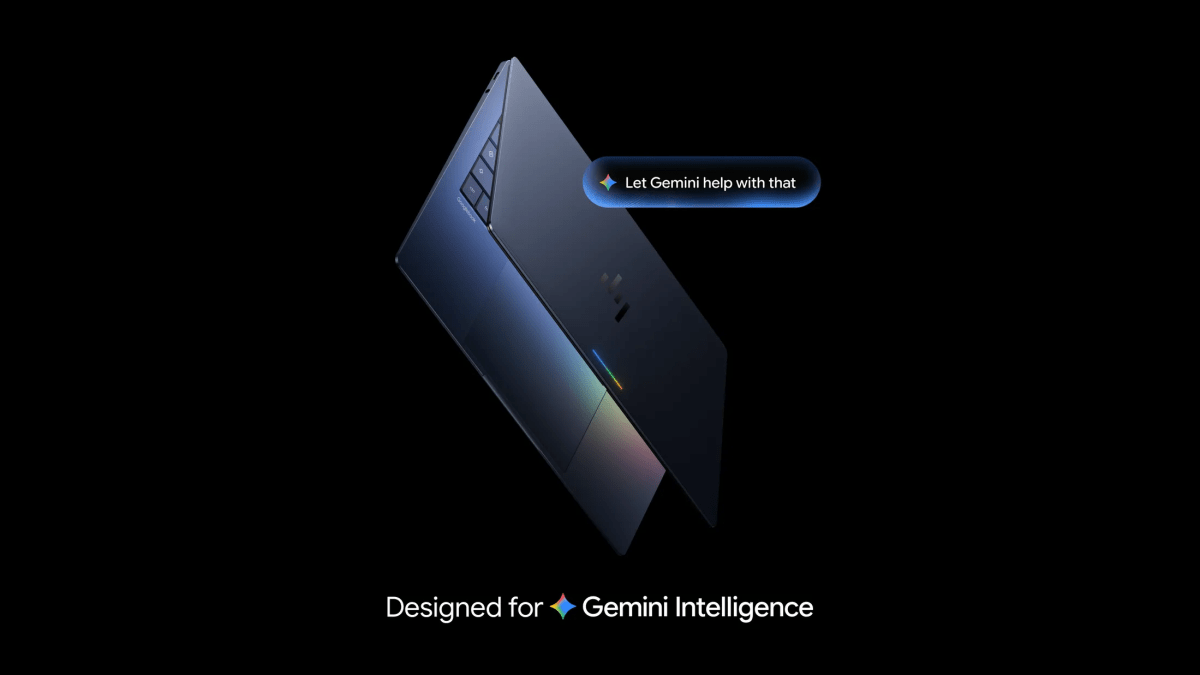

Google has officially launched its highly anticipated AI-driven laptop, the Googlebook, which is now available for pre-order priced at $899.
Initially introduced in May, the Googlebook aims to elevate traditional Chromebooks by running on Android OS while incorporating various elements of ChromeOS. The standout feature of this new device is its integration of Gemini, Google’s latest AI technology, designed to enhance the laptop experience significantly.
Among its unique offerings, the Googlebook includes an AI-powered cursor, innovative widgets, and robust support for AI-driven dictation through a feature called Rambler. Rambler refines disorganized thoughts into coherent text, highlighting its practical utility.
This initiative signals Google’s ambition to harness AI, particularly through its Gemini model, to persuade consumers to adopt this new laptop rather than relying on standalone desktop applications. Moreover, the Googlebook is positioned to potentially replace Chromebooks, enticing millions of users towards Gemini AI.
On the Googlebook, Google aims to redefine the traditional desktop experience by embedding AI functionalities directly into the mouse cursor. Users can engage with Gemini in various ways, such as analyzing web content, assessing suspicious emails, or generating visual compositions from selected images.

However, this functionality resembles the existing Android feature known as “Circle to Search,” which enables smartphone users to interact with Google Search through gestures. Despite its clever design, the transition to Android was not significantly driven by this feature alone. Likewise, the Magic Cursor—the AI-enhanced pointer—might not be enough to drive mass adoption of the Googlebook.
Conversely, Rambler stands out as one of the more promising upgrades, filling a practical gap in user needs. Nonetheless, it may not provide enough motivation for users to invest in a new device, appearing more as a supplementary improvement rather than an essential feature.

Additional enhancements such as vibe-coded widgets also make their way into the device. Other features within the Googlebook, including Gemini Spark and Gemini Live, do not necessitate hardware upgrades, making them accessible to existing users.
Of particular interest is the strategic positioning of the Googlebook, reflecting a broader plan by Google to capture a significant share of the K-12 market, which heavily relies on Chromebooks. Currently, around 50 million Chromebooks are utilized in educational settings.
In May, Google assured users that existing Chromebooks will continue to receive support, with many devices poised to eventually transition to the Googlebook experience.

Priced at $899, the Googlebook includes a one-year subscription to Google AI Pro, which provides 5TB of cloud storage, access to Gemini Advanced tools, and a complimentary three-month subscription to YouTube Premium and Adobe Photoshop. Google has committed to regular updates for up to a decade.
Pre-orders for the Googlebook are now available on the Google Store, Best Buy, and various other retailers. The laptops will officially launch on October 4 in the United States and October 5 in Canada, the U.K., Ireland, France, Germany, and Australia.
Major brands such as Acer, ASUS, Dell, HP, and Lenovo are manufacturing the flagship models, which feature premium materials like aluminum, magnesium alloy, and carbon fiber. These laptops boast up to 2.8K OLED displays, haptic glass trackpads, and backlit keyboards, powered by Intel and Qualcomm processors complemented by dedicated NPUs. Google claims that the device can deliver up to 14 hours of battery life.
Editor’s Take
The launch of the Googlebook signals a significant shift in Google’s strategy to integrate AI into everyday computing while targeting the educational sector. By positioning itself as a replacement for Chromebooks, Google aims to retain and expand its user base among students and educators as AI becomes more ingrained in learning environments. The success of such innovations could reshape user expectations about laptops and further enhance AI’s role in personal and professional productivity.
Source: techcrunch.com