

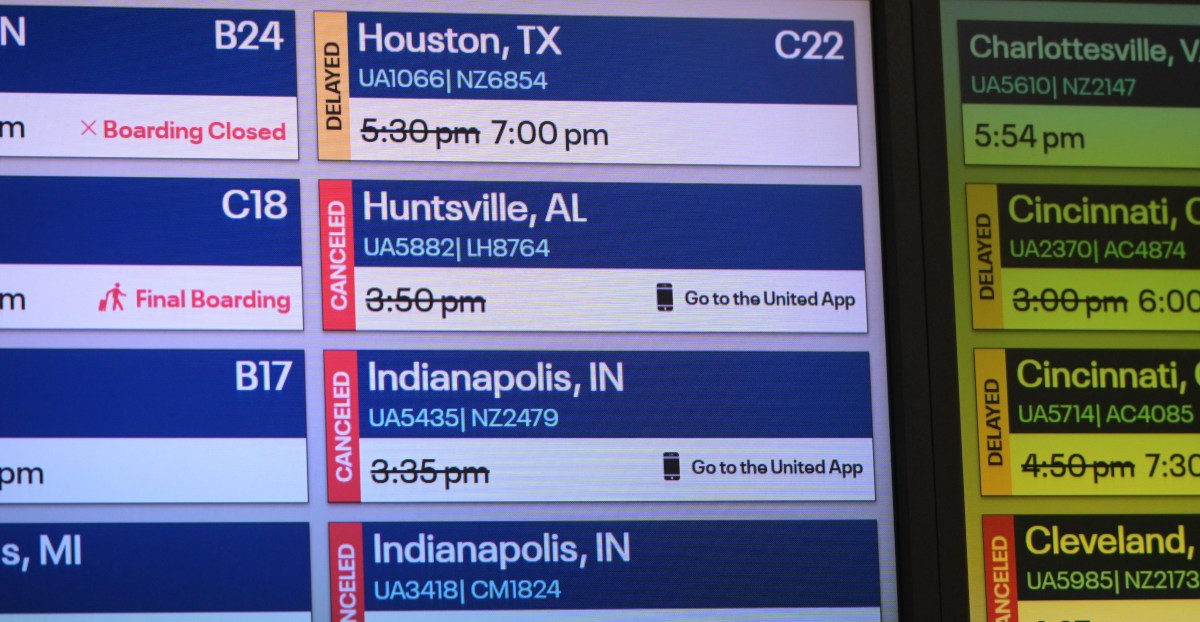

Nationwide Ground Stop Disrupts Flights Across the U.S.
Takeoffs from airports all over the United States were brought to a halt on Friday when the Federal Aviation Administration (FAA) implemented a nationwide ground stop at 3:44 PM ET, citing “extraordinary circumstances and safety concerns.”
Over four hours later, the FAA announced the lifting of this ground stop at 8:15 PM ET. However, the outlook for departing flights remains unclear as congestion at airports has intensified. Many crews have exceeded their operational limits, leaving numerous travelers in limbo with potential cancellations and delays on the horizon.
During a press conference held at the White House to discuss the incident, Transportation Secretary Ryan Duffy pointed to the nation’s aging air traffic control infrastructure. He revealed that issues arose from the Terminal Radar Approach Control (TRACON) systems, which experienced inconsistencies in radar data and communications from aircraft.
Duffy elaborated that the problematic devices were analog telecom instruments that became overloaded with data. This situation resulted in significant communication inconsistencies.
Reports from CBS News indicated that a recent update to the private communications network, managed by L3Harris, triggered a system reboot leading to the outage. While L3Harris has not yet provided a statement, both Duffy and Homeland Security Secretary Markwayne Mullin confirmed during the briefing that “patches” introduced to the system were responsible for this disruption.
When questioned about the patches and their link to the outage, Duffy stated, “By doing nothing, you inject way more risk into the system… I didn’t anticipate that we would have an outage like this.”
As of 8:39 PM ET, flight-tracking service FlightAware reported that over 9,000 flights were delayed, with an additional 5,901 cancellations.
Prior to this incident, the last significant ground stop in 2023 lasted approximately 90 minutes due to a failure in the NOTAM (Notice to Air Missions) system, while the previous occurrence was linked to the September 11 attacks in 2001.
In conversations with reporters, Mullin remarked that there was no evidence suggesting a cyberattack or any national security risks connected to the ongoing telecommunications outage. Furthermore, he clarified that no links have been established between this situation and a recent outage experienced by Microsoft Outlook.
In response to inquiries about possible associations with the newly activated cloud-based AI system known as SMART (Strategic Management of Airspace, Routes and Trajectories), Mullin stated they were investigating this angle. However, Air Space Intelligence (ASI), the company responsible for developing the system, denied any related issues, emphasizing that the ground stop was not a consequence of SMART or any of ASI’s integration efforts with the FAA.
According to reports from Jon Ostrower of The Air Current, the problems initiated at the Chicago air traffic control center and subsequently spread to other regions, including Boston, Washington, New York, and Minneapolis, leading the FAA to issue a ground stop for aircraft heading east. The disturbance impacted both radar and radio frequencies instrumental for communication between air traffic controllers and pilots.
Updated, Friday, November 13th: The ground stop has been lifted, and quotes from the press conference have been included.
Editor’s Take
The nationwide ground stop underscores the vulnerabilities in the U.S. air traffic control system. As technology evolves, so must the infrastructure that supports it. This incident is a wake-up call for stakeholders to prioritize upgrades and ensure safer flying experiences for passengers. Continuous modernization will be crucial in preventing similar disruptions in the future, impacting not only travel convenience but also broader economic activities.
Source: www.theverge.com