


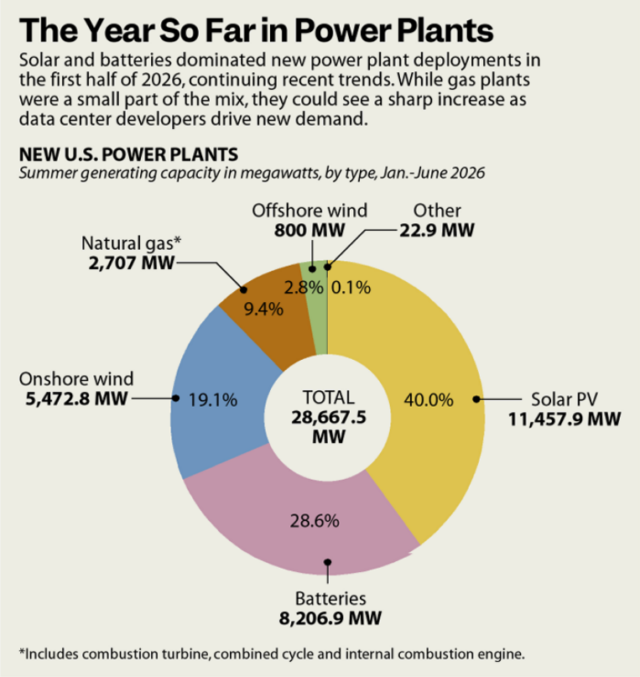
A recent report highlights the significant growth in the U.S. energy sector, particularly in renewable energy technologies. Among the various advancements, natural gas combustion turbines led with 22 projects, while natural gas internal combustion engines followed closely with 21. Onshore wind technologies contributed nine new projects, indicating a diverse approach to energy production.
Interestingly, the combined-cycle natural gas plants, despite a substantial amount of capacity announced for future development, only saw three projects come online this year. The anticipated influx of new gas plants is expected to materialize in the coming years.
Credit:
Paul Horn/Inside Climate News
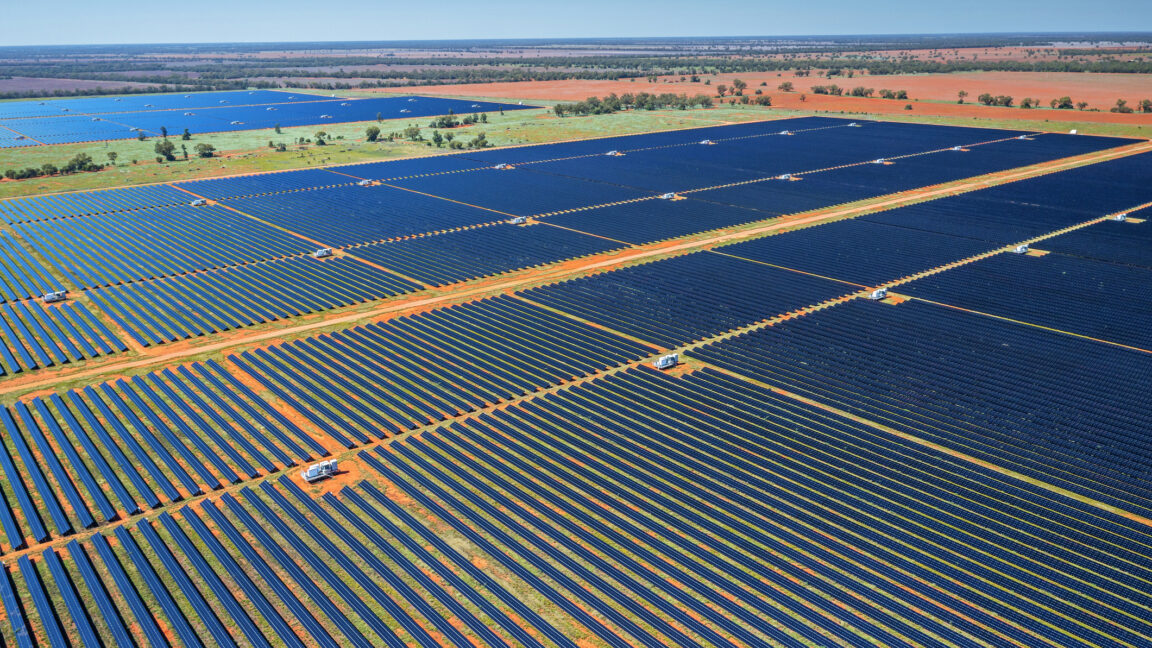
In terms of generating capacity, utility-scale solar energy has emerged at the forefront, totaling 11,458 megawatts. This was followed by battery installations at 8,207 megawatts and onshore wind, largely attributed to the SunZia projects, which contributed 5,473 megawatts. The top three types of natural gas plants collectively added 2,707 megawatts of new capacity.
Notably, small-scale solar installations, such as rooftop solar systems, were not included in this evaluation. It is essential to consider the different operational characteristics of various power generation technologies. For instance, solar energy production significantly diminishes at night, while many gas plants operate sporadically, primarily during peak demand periods.
Insights from Eric Gimon, a senior fellow at Energy Innovation, shed light on the state’s current energy landscape. Gimon noted that most new projects are smaller utility-scale solar installations. While these may not attract widespread attention, they are increasingly prevalent and often coupled with battery storage solutions.
Gimon elaborated, “These kinds of smaller-size projects are just easier to build, and the site possibilities are much more diverse and easy to find.”
Geographically, three states dominate the construction of new power plants, accounting for approximately 50% of the nation’s new generating capacity: Texas, New Mexico, and Arizona.
Leading the charge is Texas, which is particularly focused on battery and natural gas technologies. In Texas, battery installations peaked at 3,067 megawatts, followed by utility-scale solar at 2,311 megawatts, and natural gas combustion turbines or internal combustion engines contributing 1,154 megawatts.
Editor’s Take
This surge in renewable energy projects highlights a critical shift towards sustainability in energy production. With states like Texas leading the way, the integration of batteries with solar technology could significantly enhance energy reliability and efficiency. This trend may attract investment and innovation, influencing both consumers and the energy market dynamics in the future.
Source: arstechnica.com