

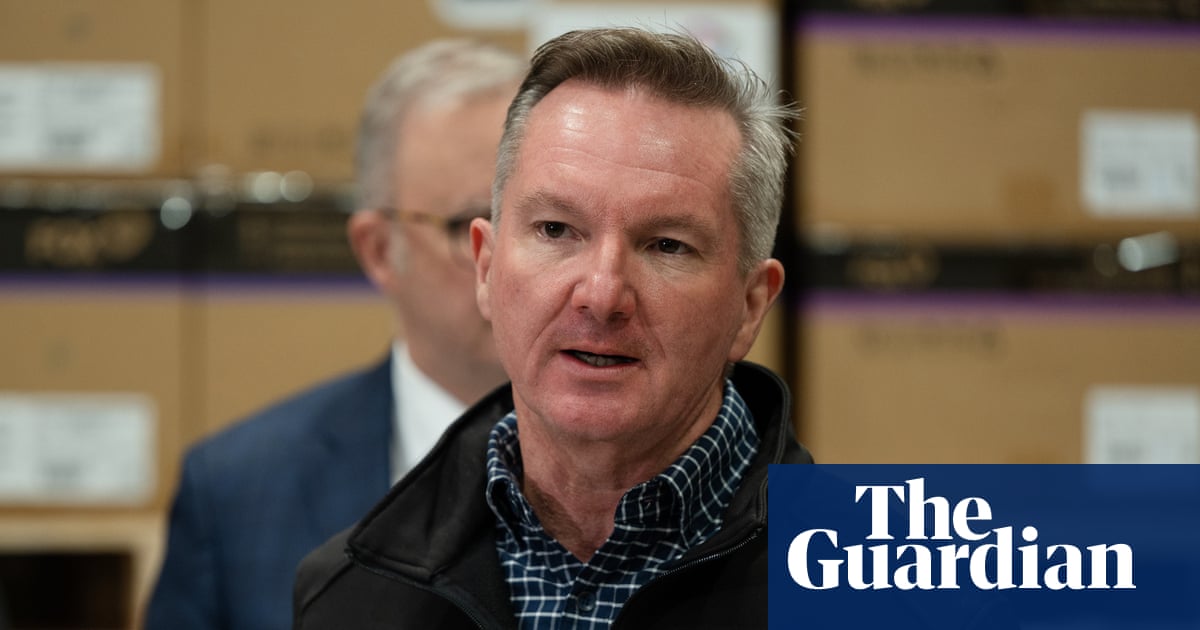
Chris Bowen: No Exceptions for Fossil Fuel Use in Data Centres, Regardless of New Conditions

Chris Bowen, the federal Energy Minister, has asserted that new national laws regarding datacentre power supply will not feature special exemptions for states such as Queensland and the Northern Territory. States keen on utilizing coal and gas need to substantiate their arguments to the national regulator.
In an interview with Guardian Australia, Bowen clarified that the only modification agreed upon during the national cabinet meeting was to allow existing coal and gas supplies to be utilized, provided they can be demonstrated to be cheaper than renewable energy alternatives. This meeting, which took place on Wednesday, sets the stage for robust discussions in federal parliament next year regarding these regulations.
Prime Minister Anthony Albanese entered the meeting with a clear agenda: implement new regulations mandating the use of renewable energy sources for datacentres, ensuring they do not inflate energy prices for homeowners and businesses. He emphasized that new datacentre developments must actively contribute to Australia’s energy transition.
Following the meeting, the Chief Minister of the Northern Territory, Lia Finocchiaro, and the Premier of Queensland, David Crisafulli, both claimed favorable outcomes. Finocchiaro noted that gas obtained from the significant Beetaloo Basin project would be made available for powering datacentres, while Crisafulli asserted that his administration would be able to manage the energy mix through state-owned networks.
However, Bowen reiterated on Friday that there will be no exceptions for any state or territory. “The Commonwealth, as we always indicated, will be establishing nationally consistent standards for datacentres, mandating 100% reliance on renewable energy with backup systems,” he stated. “This remains our position.” He clarified that although a state-owned entity may apply for an exemption if they can prove their energy supply is more affordable than renewables, the ultimate decision rests with the Commonwealth.
The Australian Energy Regulator will evaluate each application, requiring state and territory governments to demonstrate the cost-effectiveness of non-renewable options. Bowen termed this a “very challenging task.”
He dismissed any notions of a blanket exemption for Queensland and the Northern Territory as “inaccurate.”
After the Sydney discussions, Albanese described the resulting decisions as allowing room for flexibility among governments that oversee state-owned power systems.
A signed communique from the leaders indicated that further consultations would occur, with the federal government continuing to develop “consistent mandatory standards” in areas such as energy, water, and land use.
This meeting followed a recent forecast from the Australian Energy Market Operator, which predicted a seven-fold increase in datacentre power consumption over the next decade.
Earlier this month, Bowen informed the National Press Club that the federal government would utilize constitutional powers to override state governments opposing the new national regulations for datacentres.
Additionally, on Friday, Bowen released the latest quarterly data indicating a 1.6% decrease in Australia’s carbon emissions for the year ending March 2026, largely attributed to solar, wind, and battery technology replacing coal and gas generation.
This drop includes a 5.6 million-tonne reduction in electricity emissions and a significant 300% surge in battery power discharge. Bowen acknowledged the ongoing need for improvements in transport and emphasized that there remains a long journey ahead for the broader transition.
Currently, emissions have been reduced by 25% against the June 2005 baseline, as Labor aims for a 43% reduction by 2030, with an ultimate target of a 62% to 70% decrease by 2035.
Editor’s Take
This development is pivotal as it reinforces Australia’s commitment to transitioning towards renewable energy, while also highlighting the intricate balance between state and federal regulations. For technology companies, especially those involved in AI, understanding these energy standards is essential for future planning and investment in datacentre infrastructures. As energy consumption in this sector continues to soar, these regulations will likely shape operational strategies significantly.
Source: www.theguardian.com