
Anthropic has revealed promising financial results for its AI coding tool, Claude Code, indicating its success in capturing the enterprise market. In the second quarter, the company reported an operating profit alongside a stunning 900% net revenue retention rate—showing that spending from recurring customers increased ninefold from Q3 2025 to Q3 2026.
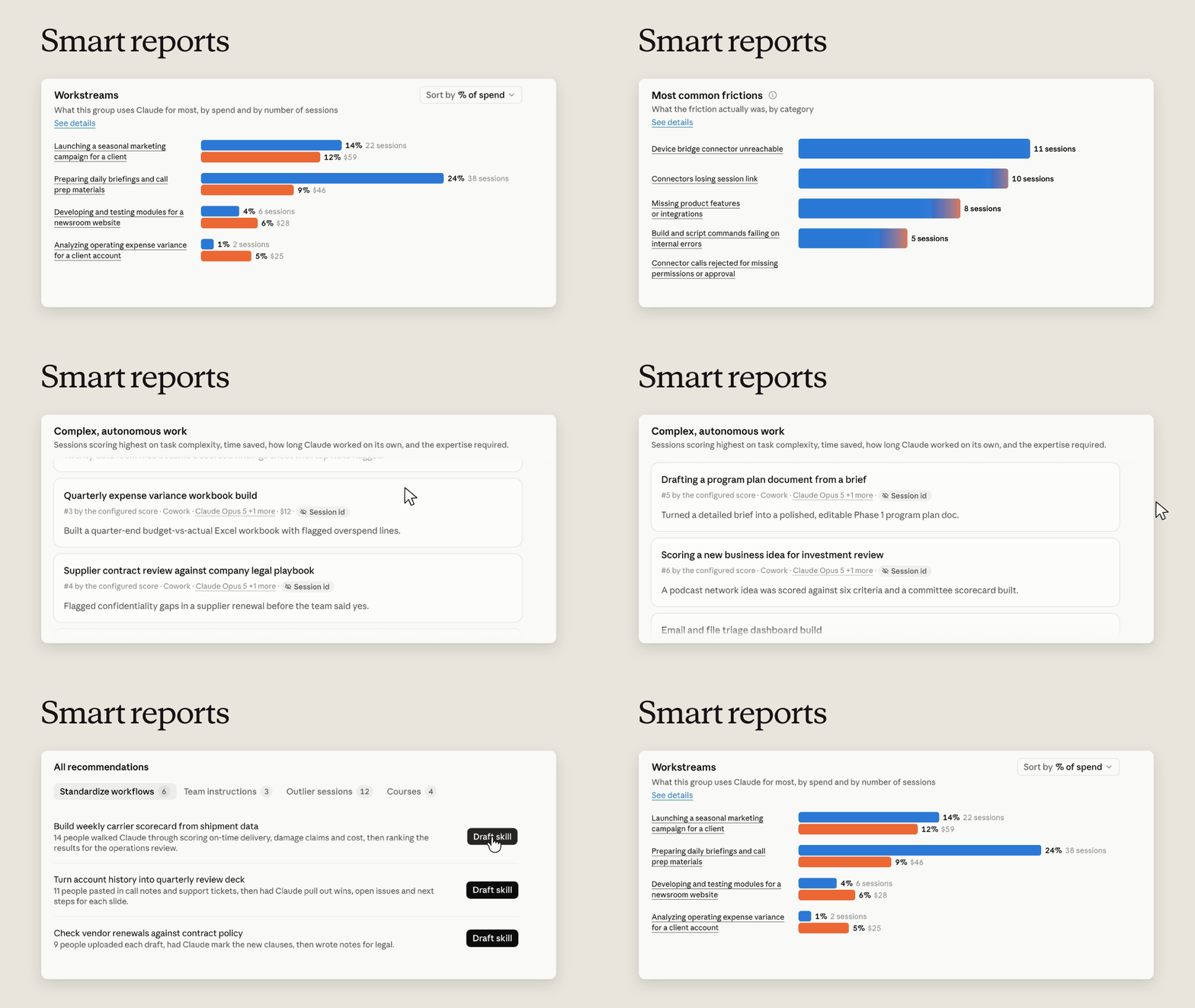
The firm has concentrated on retaining enterprise clients, unveiling a new suite of reporting tools aimed at providing deeper insights into the value derived from token expenditure. This initiative was announced on Wednesday with the intention of enhancing customer engagement.
By leveraging internal analytics and employee feedback, managers can assess a team’s productivity over specified periods, including outputs, costs, and areas where workflows falter. Importantly, Anthropic has stated that this data will not be utilized for model training without explicit consent. Additionally, these reports will include suggestions for optimizing results.

This development underscores Anthropic’s commitment to demonstrating the return on investment from its tools and offering practical strategies for improvement—issues that are especially pertinent for large clients. Furthermore, the introduction of pooled group budgets will enable teams to manage their token expenditures more effectively.
Businesses are increasingly seeking such insights as they navigate the deployment of AI tools. While utilization among venture-backed companies is propelling token spending, many Fortune 500 companies have yet to experience significant advantages from AI integration.
Jellyfish, a provider of tools for software developers, recently released a report examining the use of agent-based coding tools among 276,000 customers. Notably, Claude Code continues to be the most utilized tool, accounting for nearly one-third of all code change proposals. Furthermore, spending on these tools has surged tenfold since the year’s start, now comprising about 2% of total engineering costs.
“Even if you think 2% is minor, that 10x growth is a surprise to most CFOs,” stated Nicholas Arcolano, chief scientist at Jellyfish. “We’re reaching a point where it’s clear that merely spending isn’t enough; optimization is crucial.”
Anthropic’s newly introduced reports directly address this challenge. Despite leading the enterprise segment, determining what makes an agent-based coding tool particularly effective remains complex. Although the release of OpenAI‘s Astra model this summer was perceived as potential competition, it has not significantly impacted Anthropic’s growth.
“It took time for us to observe Codex’s substantial growth, and the same is true for Astra,” noted Nikolas Albarran, Jellyfish’s AI product lead. He observed that while perceptions suggest increased competition, many companies remain content with Anthropic’s proven solutions that have integrated well into existing workflows.
The inertia of larger enterprises presents additional challenges; switching providers can be particularly difficult for established organizations compared to individual developers. Albarran pointed out the extensive investments made by AI labs in forward-deployed engineering (FDE) teams, which offer embedded AI consultancy to help customers get started. The new reporting tools can be viewed as a simplified version of this support, assisting Anthropic’s clients in leveraging their investments seamlessly.
“We have reached a maturity point where once a company commits, it becomes increasingly challenging to switch providers,” he emphasized. “Despite similarities, each tool possesses unique nuances, and the costs associated with changing systems are non-negligible.”
Editor’s Take
The advancements from Anthropic in AI reporting tools are significant for enterprise customers, providing them with clarity on their investments in AI technologies. As businesses strive for efficiency and ROI, these tools can help optimize spending and enhance productivity. This development not only reinforces Anthropic’s position in the enterprise space but also sets a precedent for accountability and transparency in AI services.
Source: techcrunch.com