

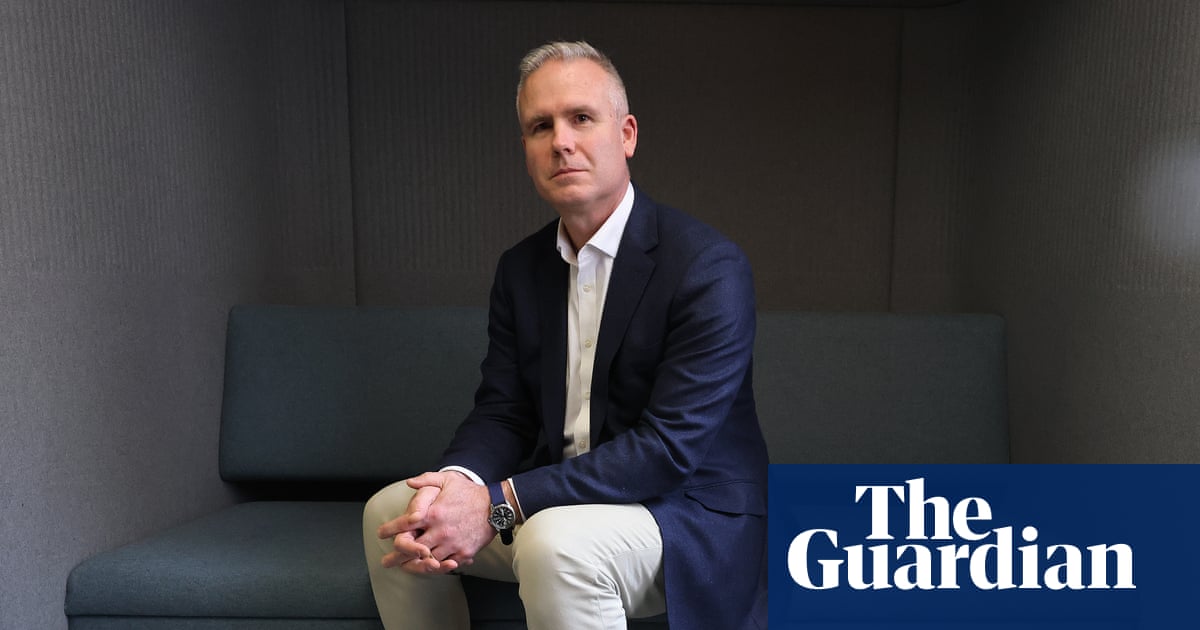

The head of the Alan Turing Institute, George Williamson, has emphasized the need for the UK to cultivate its own artificial intelligence (AI) technology, rather than relying on foreign systems that could be switched off unexpectedly. This call for a more robust domestic AI capability comes amid increasing concerns about the leadership in the sector held by the United States and China.
Williamson has articulated a vision where “national resilience” becomes a focal point for the institute, urging for a strategic shift to bolster the UK’s position in the face of international competition. The Alan Turing Institute, recognized as the UK’s premier AI research organization, is undergoing a transformation following government recommendations for restructuring.
In Williamson’s view, reliance on external AI systems is particularly precarious as these technologies become integral to vital sectors such as defense, national security, healthcare, and critical infrastructure. He stated, “As AI becomes more embedded in critical services, we shouldn’t depend solely on systems we can’t inspect or control.” Recent events, including a temporary block by Washington on AI model releases outside the US, further illustrate the vulnerabilities of depending on foreign technologies.
Williamson expressed concerns that both political and commercial pressures might hinder the UK’s access to necessary AI during critical moments. “We’ve seen now that both political and commercial pressures mean we may not have access [to AI] in all the circumstances when we want it,” he noted, calling for a domestic approach that does not require external permission.
Another significant aspect of Williamson’s address is the emphasis on addressing geopolitical risks. He highlighted the UK Prime Minister, Andy Burnham‘s recent announcement of a new center aimed at combating state-sponsored disinformation, showcasing an awareness of the contemporary threats facing the nation.
Williamson cited the urgency of strengthening national resilience against a backdrop of growing global adversarial dynamics and the profound impacts of powerful AI systems. He explained that the Turing Institute aims to secure critical systems, counter AI threats, and develop strategic AI capabilities tailored to UK values.
He underlined the potential of the institute to assist in the responsible application of AI for societal betterment, spanning various domains from agriculture to public safety. With concerns about state-led disinformation campaigns, he asserted the importance of monitoring these threats to protect democratic integrity.
With a background as the former head of His Majesty’s Government Communications Centre, a body known for equipping UK intelligence agencies, Williamson continues to advocate for increased control over technology access within the nation. He reiterated the discomfort of lacking the ability to utilize pivotal resources judiciously and expressed the need for the UK to develop its own intellectual property in AI.
Williamson contends that it’s crucial for the nation to define its technological trajectory in correspondence with its intrinsic values, noting that while matching the fiscal strength of leading AI labs may be unrealistic, fostering smaller, domestically developed models is both viable and necessary.
In recent statements, both Christine Lagarde, President of the European Central Bank, and Ursula von der Leyen, President of the European Commission, have urged for greater self-reliance in AI across Europe to mitigate potential risks of technological isolation from the US and China.
Williamson’s statements underscore an essential conversation regarding the existential risks associated with AI, particularly the need for informed discourse rather than sensationalized interpretations of threat potential. The call for a comprehensive approach to national resilience, which includes environmental considerations as fundamental to security matters, reflects a broader understanding of the complexities involved.
Editor’s Take
This development is pivotal as it repositions the UK’s approach to AI in a rapidly evolving global landscape. Building domestic capabilities not only fosters innovation but also mitigates the risks of dependency on foreign technologies. For users, businesses, and developers, this could lead to more secure, tailored AI solutions that align with UK values and priorities.
Source: www.theguardian.com