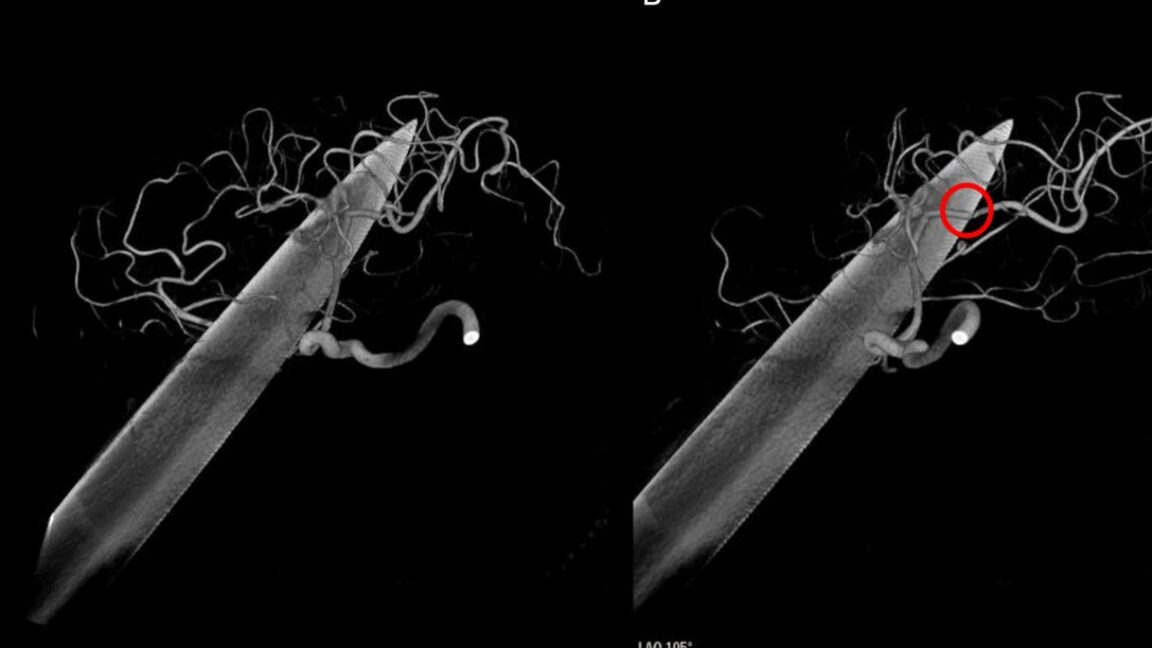

A man recently demonstrated an extraordinary recovery after undergoing a life-threatening knife injury that penetrated his eye and lodged in his brain. Following surgical intervention, he exhibited rapid progress in the intensive care unit, wherein medical staff successfully removed his breathing tube just one day post-operation.
Though he initially experienced minor weakness on the right side of his body, this issue resolved within two days. Brain scans revealed consistent healing, with observed incidents of mild bleeding and swelling as well as air within brain tissue resulting from the injury. Encouragingly, the patient showed no signs of infection or seizures during his recovery.
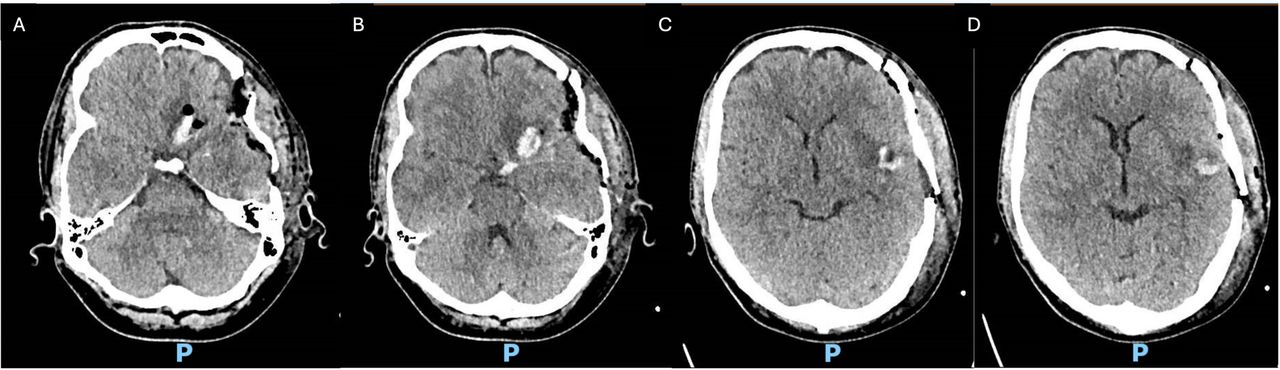
Credit: BMJ Case Reports, 2026
Remarkably, throughout this traumatic experience, the man preserved his language abilities and did not suffer from any loss of coordination or movement. Upon his discharge, follow-up appointments confirmed that he remained neurologically stable, with continued attention for his eye and mental health.
Miraculous Recovery
The circumstances surrounding his injury remain uncertain, though the attending physicians noted his previous struggles with depression. They reflected on the extraordinary nature of his survival and impressive recovery. Injuries that traverse the eye and penetrate the brain are infrequent and often stem from high-velocity incidents, like gunfire. Comparatively, injuries from knives, rods, or nails are classified as low-velocity mechanisms, which typically carry a higher risk of serious complications.
Despite the severe nature of such injuries, the doctors cited cases of unexpected recoveries from significant brain trauma. They referenced the famed case of Phineas Gage, a railroad worker who survived a catastrophic accident involving a large iron rod passing through his skull. Although Gage’s personality reportedly changed post-accident, the medical team involved in the knife-wound case did not mention any similar personality shifts.
The doctors concluded that outcomes may not solely depend on the external severity of the injury but also on its precise trajectory concerning critical brain structures. This case adds to the growing awareness of the complexities surrounding brain injuries and recovery.
Editor’s Take
This remarkable case underscores the resilience of the human body in the face of severe trauma. It highlights the potential for recovery even after seemingly devastating injuries. For both medical professionals and patients alike, such stories reinforce the importance of tailored treatments and the need for ongoing research into brain injuries and rehabilitation strategies.
Source: arstechnica.com