John Healey Noncommittal on Defence Spending Goals Amid Streeting’s Support for Chancellor

John Healey, the Chancellor of the Exchequer, is facing scrutiny over his commitments to increase defence spending, with doubts emerging about his funding strategy. During recent discussions, he avoided providing clear answers regarding the financing of his ambitious budgetary plans, which will necessitate an annual budget of £11 billion.
Healey has yet to clarify how he intends to elevate defence spending to three percent of the nation’s total gross domestic product (GDP) by 2030, deferring the decision to next year’s spending review. In his inaugural Budget presentation, he described the 2030 timeline as merely a ‘target’, prompting criticism that he lacks a real plan.
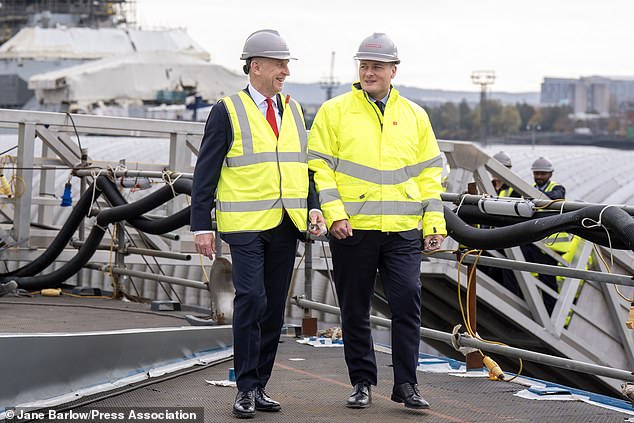
While visiting the BAE Govan shipyard in Glasgow, Healey stated, “I said we needed a target date of 3 percent in 2030 on the way to that,” asserting that specifics would be revealed in the government’s multi-year spending outline next year.
In his Budget speech, Healey underscored his aim to meet the broader NATO commitment of investing 3.5 percent of GDP in military capabilities by 2035, indicating that a pathway for this would be laid out next year. However, the postponement has sparked outrage from military leaders, including Admiral Lord West, who accused the Chancellor of ‘betraying’ the Armed Forces.
The dissatisfaction intensified when three former military leaders, General Sir Peter Wall, Field Marshal Lord Richards, and General Lord Dannatt, expressed concerns that the government’s approach could embolden adversarial nations like Russia.
General Sir Peter characterized the absence of urgency in strategic policy as alarming, stating, “The lack of strategic urgency is shocking and will only embolden our opponents.” General Lord Dannatt criticized the Labour government for engaging in ‘creative accounting’ instead of sourcing tangible funding for military spending.
As anxiety grows over the situation, Defence Secretary Wes Streeting publicly supported Healey, expressing confidence in his ability to fulfill the spending plan. He acknowledged public skepticism about political promises but urged that Healey’s tenure should be judged by tangible actions rather than mere words.
Streeting defended the delay in detailing how Labour would finance the spending increase, affirming that it is reasonable to outline the larger investment during the upcoming spending review. He responded to criticism by emphasizing ongoing investments in military capabilities and repositioned the conversation towards proactive defence spending as vital for national security.
The heightened tensions surrounding Vladimir Putin’s recent statements about potential war with Europe have added urgency to the UK’s defence strategy. Concerns have been raised that the delay in concrete spending commitments could tarnish Britain’s reputation within NATO.
Regarding the criticism from fellow politicians, Stuart Anderson, a member of the Conservative party’s defence readiness committee, lamented that each decision taken by the government moves the country further from being prepared for conflict. He stated that current cuts are severely impairing operational capabilities while aggravating long-term consequences for the Armed Forces.
Streeting, however, countered by stating that Labour is doing more for defence than previous Conservative administrations, which he accused of allowing military forces to dwindle to their lowest levels in decades. He remains optimistic about current commitments to defense spending as the most substantial increase since the Cold War.
Reports suggest that the Chancellor is considering alternative funding strategies that would not necessitate increased taxes or borrowing. This might involve establishing an international defence bank with allied nations and enabling private companies to provide upfront investment for new military developments.
Editor’s Take
This situation highlights the ongoing tension between political promises and practical implementation in defense spending. The lack of clarity and firm commitments could have significant impacts on both national security and international alliances. Stakeholders from various sectors, including technology and military industries, should remain vigilant as these plans evolve, as their implications could affect funding and development priorities.
Source: www.dailymail.com