

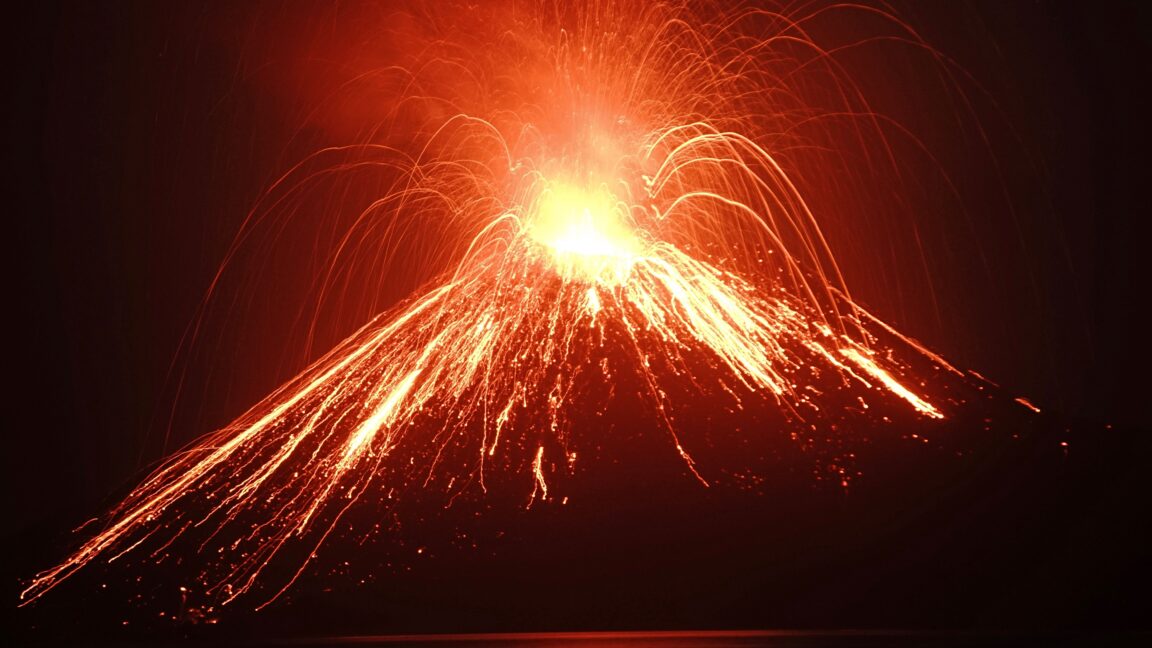

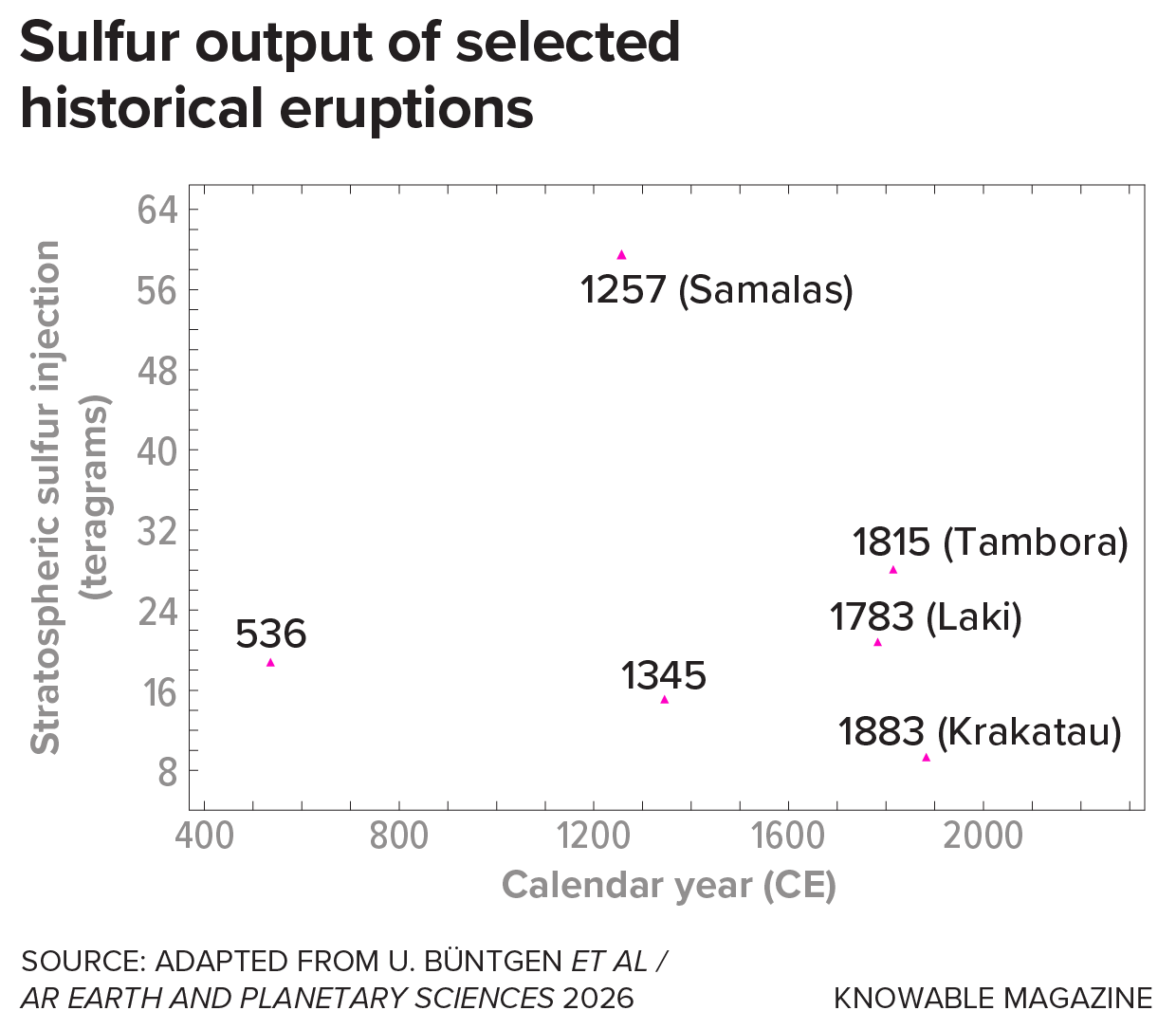
Recent studies of polar ice cores have revealed significant quantities of sulfur that date back to the year 536, signaling a major volcanic eruption. Despite this discovery, the specific volcano responsible remains unidentified, as there are no known historical accounts from surrounding areas, particularly in Iceland, which was uninhabited at that time.
Credit: Knowable Magazine
The Rise and Fall of Empires
More conclusive evidence has emerged linking volcanic eruptions to historical events like the decline of the Mongol Empire, nearly seven centuries after the mysterious eruption in 536. Prior to 2013, only speculation surrounded the eruption that released a massive amount of sulfur in 1257. That year, research conducted by an interdisciplinary team used radiocarbon dating to connect ash and pumice deposits to the Samalas volcano.
Research involving tree-ring analysis indicated substantial cooling occurred between 1257 and 1259, pointing to adverse weather conditions that led to poor harvests in regions like England and crop failures in Japan. Some scientists have suggested that these climate disruptions may have contributed to the downfall of the Mongol Empire, coinciding with the death of its last ruler amidst an epidemic in 1259.
Volcanic Influence on Plague Events
Further intriguing connections between volcanic activity and disease have been documented during the Black Death, which ravaged Europe between 1346 and 1352. Historical documents indicate that the skies were unusually dark during that period, potentially due to volcanic emissions. Ice-core records have corroborated the occurrence of significant eruptions around 1345, although the specific volcano remains unidentified.
Editor’s Take
This exploration into the historical impact of volcanic eruptions emphasizes our interconnectedness with natural events that shape climate and societies. Understanding these relationships can benefit researchers, historians, and climate scientists as they study the long-term effects of such phenomena on human civilization.
Source: arstechnica.com