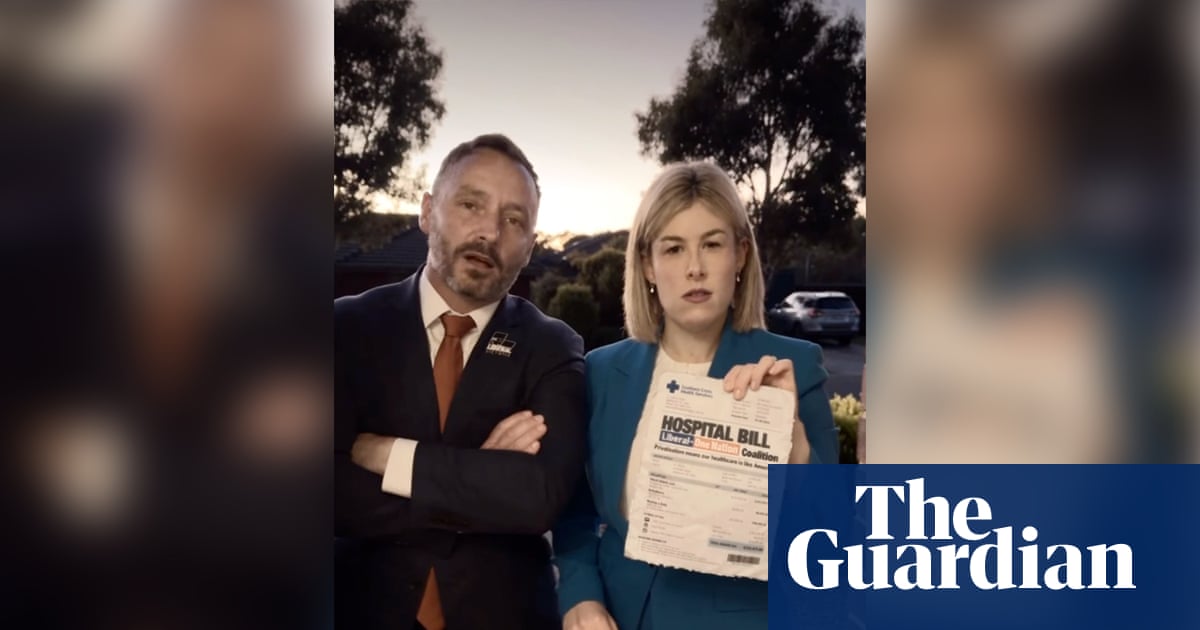

On Halloween night, Jess Wilson, the leader of the Victorian Liberal Party, resurfaced in a tense social media moment. She issued a stark warning about the potential implementation of what she termed “Americanised healthcare” should the Liberal Party successful in the upcoming election. Wilson dramatically suggested that a heart attack could lead to out-of-pocket expenses amounting to $150,000 under this framework.
However, the claims attributed to Wilson are not entirely accurate; she did not make such statements. The video in question was released by the Victorian Labor Party and features an AI-generated depiction of Wilson, complete with a voice resembling her own. This digital creation displayed a fictitious bill suggesting exorbitant costs for various healthcare services, including a staggering $150,000 for a heart attack, $6,000 for an ambulance ride, and $40,000 for childbirth.
Wilson’s remarks about Americanising healthcare arose from a prior press conference where she introduced a $1.27 billion initiative to pay private hospitals for public elective surgeries, aimed at alleviating waiting lists. When confronted about the implications of Americanising the healthcare system, she dismissed the idea as problematic, defending her position by highlighting similar practices already occurring in Queensland.
In response to the AI video, Ben Carroll, the Victorian Premier, defended its content, asserting that Wilson herself had acknowledged no issues with Americanising the healthcare system. However, Wilson characterized the video as part of a “desperate smear campaign” and firmly denied that her party is seeking to transform Victoria’s healthcare model.
The Liberal Party condemned the use of the AI video as “garbage,” urging voters to disregard it. Yet, they themselves have adopted AI technologies for their social media campaigns, including a recent post featuring an AI-generated clip of Premier Carroll allegedly asleep at his desk, following a negative article accusing him of napping during work hours.
This digital political landscape is proving contentious, with various political entities including the conservative lobby group Advance Australia also utilizing AI-generated content. Their recent video fabricated a premature Labor Party victory during the election night, showcasing former leaders in a way that stirred controversy.
The rise of AI-generated media has sparked calls from experts and political organizations, such as the Greens, for stricter regulations. Clancy Moore, CEO of Transparency International Australia, emphasized that the proliferation of deepfakes and misleading digital content undermines public trust in politics and democracy.
Media researcher Timothy Koskie noted that the issue of misinformation extends beyond AI capabilities and has plagued political messaging long before technology advanced to this extent. He further advocated for accountability for those who misrepresent information, cautioning against the long-term implications such misleading narratives can generate.
In Victoria, there are increasing calls to adopt truth-in-political-advertising laws similar to those in the Australian Capital Territory and South Australia. These laws prohibit AI-generated deepfakes that portray individuals inaccurately, imposing penalties for non-compliance. Calls for implementing AI watermarks in political advertising continue, advocating for transparency in the rapidly evolving landscape of digital political content.
Editor’s Take
The emergence of AI-generated political content highlights a critical juncture for both voters and regulators. As deepfakes and digital deception become more prevalent, the potential for misinformation increases. This situation necessitates a robust discussion about ethical standards in political advertising and the responsible use of AI technology. Establishing truthful practices could restore trust in electoral processes and mitigate the risks associated with misleading narratives.
Source: www.theguardian.com