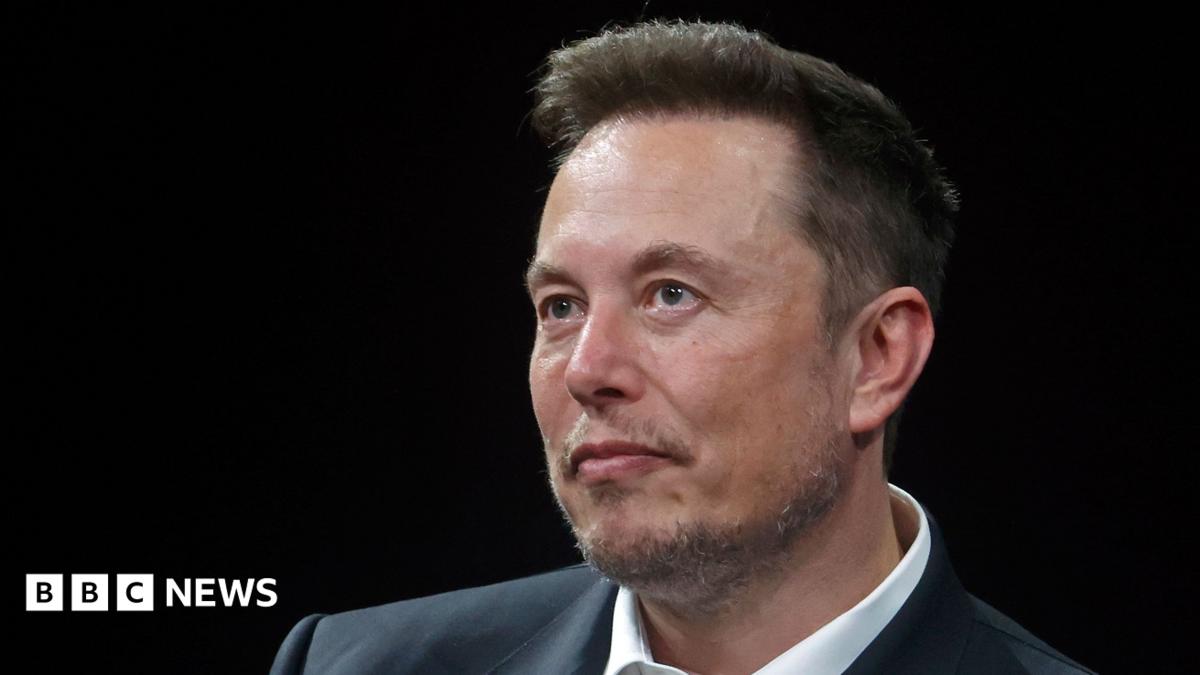

The US government is taking steps to support Elon Musk in his legal battle against a €120 million (£105 million) fine imposed by the EU on X, formerly known as Twitter, regarding its blue verification check marks.
In December 2025, the European Commission accused the platform of misleading users by permitting payments for a blue verification badge, asserting that it does not effectively authenticate the identities behind the accounts.
Recently, US Assistant Attorney General Brett A. Shumate criticized the Commission’s actions, claiming it was overstepping its authority by targeting American companies.
Elon Musk, who has been a notable supporter of American political figures, has previously expressed concerns that EU regulations on technology hinder innovation and growth for businesses.
The US Department of Justice (DOJ) has filed a motion to intervene in the case at the EU’s General Court, supporting Musk and X’s bid to have the fine dismissed.
Legal statements from the DOJ contend that international law permits a state to intervene in disputes if it demonstrates interest in the case’s outcome. The DOJ emphasized that the US has a significant stake in ensuring that any judgement aligns with established norms of territorial jurisdiction.
Moreover, the DOJ aims to prevent any decisions that could adversely affect US-based digital services that play a vital role in the national economy.
During a press briefing, European Commission spokesperson Thomas Regnier confirmed the EU’s readiness to defend its position in court and asserted that it holds a robust case related to alleged breaches of the Digital Services Act.
In addition to concerns regarding the blue verification badges, European regulators have accused X of lacking transparency in its advertising practices and restricting access to public data for researchers.
Henna Virkkunen, the Commission’s executive vice-president responsible for technology sovereignty, remarked that these actions not only jeopardize users’ rights but also evade accountability.
“Misleading users with blue check marks, hiding information about advertisements, and preventing researchers from accessing data are unacceptable in the EU,” she stated.
US Secretary of State Marco Rubio and the Federal Communications Commission (FCC) have both condemned the EU’s measures, viewing them as an attack on American tech companies.
Rubio commented, “The European Commission’s fine isn’t solely an attack on X; it’s an assault on all American tech platforms and the American populace by foreign authorities.” His remarks were echoed by Musk, who responded affirmatively.
In response, the European Commission denied any bias against specific nationalities, asserting that its primary goal is to uphold its digital and democratic standards as a global benchmark.
This action marks the Commission’s inaugural non-compliance verdict under the Digital Services Act (DSA), which is part of the regulatory framework governing online platforms in the EU.
Additionally, the EU is investigating other aspects of X’s operations, including a probe into its integrated AI assistant, Grok, over concerns about the generation of inappropriate content involving real individuals.
Editor’s Take
This legal challenge highlights a pivotal moment in the interaction between US tech firms and EU regulatory frameworks. The outcome could reshape how international tech companies navigate compliance and jurisdictional issues. It raises critical questions about user safety, corporate responsibility, and the balance of power in digital governance.
Source: www.bbc.co.uk