
Artificial Intelligence (AI) is transforming our world, generating a new lexicon to articulate its advancements. In product meetings or tech panels, terms like LLMs (Large Language Models), RAG (Retrieval-Augmented Generation), and RLHF (Reinforcement Learning from Human Feedback) are becoming commonplace. Recently, more specialized terms, such as opaque recurrence—related to OpenAI’s innovative Astra model—are raising eyebrows among AI safety experts. This fast-evolving terminology can leave even the most knowledgeable individuals in the tech sector feeling a bit unsure.
To remedy this, we present a glossary designed to clarify key AI terms relevant to developers, investors, and casual readers alike. This document will be regularly updated to reflect the dynamic nature of the AI landscape.
Key AI Terminology Explained
Artificial General Intelligence (AGI)
AGI is an ambiguous term generally used to describe AI that surpasses human capability across a wide range of tasks. OpenAI’s CEO, Sam Altman, likened AGI to a “median human you could hire as a co-worker.” In contrast, Google’s DeepMind defines AGI as AI that is at least as capable as humans in cognitive tasks. This divergence in definitions has led even experts to feel perplexed.
AI Agent
An AI agent is an advanced tool that utilizes AI technology to accomplish various tasks—exceeding the capabilities of simple chatbots. It can handle roles such as managing expenses, booking services, or even automating coding tasks. While the term can have different interpretations, it fundamentally suggests an autonomous entity that coordinates multiple AI systems to achieve complex objectives.
API Endpoints
API endpoints are the analogous buttons behind software that other programs can use to trigger actions. Developers harness these to integrate applications, allowing an AI agent to manage third-party services autonomously. As AI agents advance, they increasingly utilize these endpoints independently, leading to enhanced automation prospects.
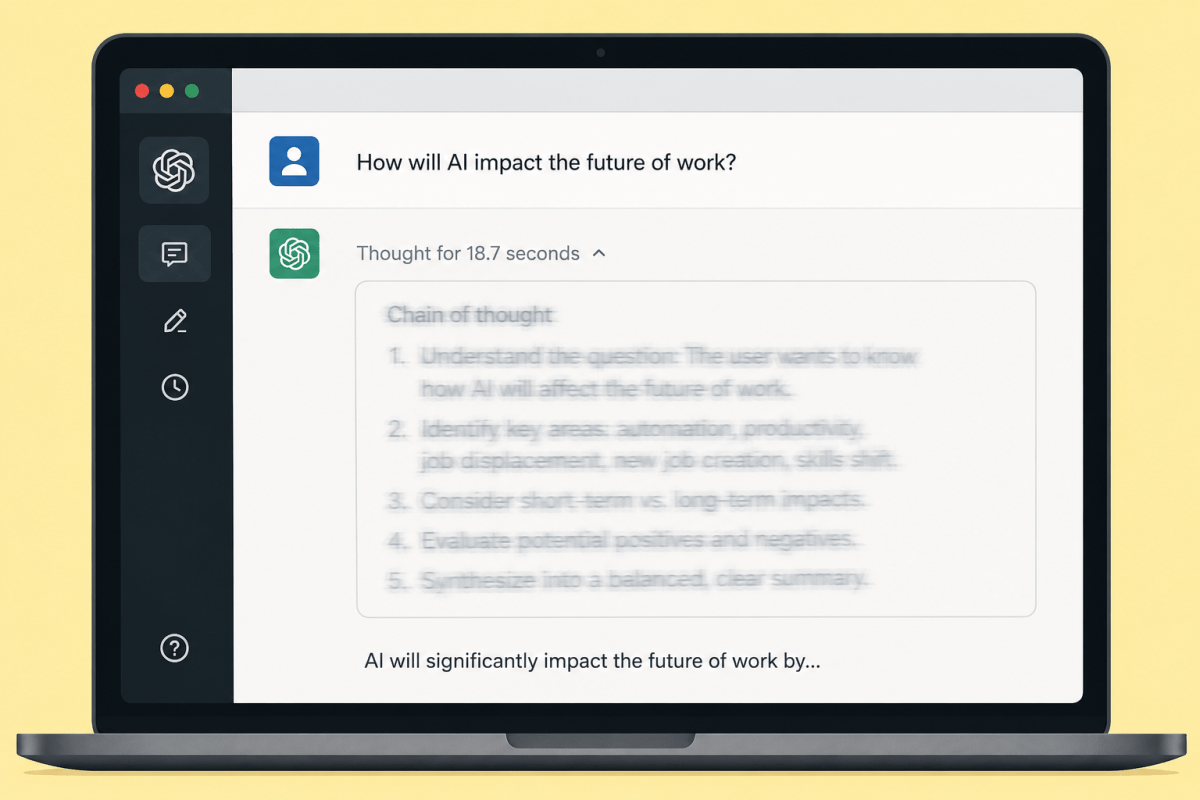
Chain-of-Thought Reasoning
Chain-of-thought reasoning involves dissecting a problem into smaller, manageable steps, bolstering the accuracy of AI outcomes. This technique can make solving complex problems more time-consuming but yields better and more reliable answers, particularly in fields like logic and programming.
Coding Agent
A coding agent is a specific type of AI agent tailored for software development, autonomously managing tasks like writing, testing, and debugging code. These agents effectively perform complex iterative tasks with minimal human oversight, akin to an efficient intern working tirelessly.
Computational Power
Typically referred to as compute, this term underlines the processing capabilities that make AI models functional. It encompasses the hardware—like GPUs and CPUs—essential for training and deploying AI technologies.
Deep Learning
Deep learning encompasses algorithms designed with layered artificial neural networks that enable more nuanced data correlations compared to simpler systems. These models can identify features independently, learning from errors to enhance output quality. However, deep learning requires substantial datasets for effective performance, often resulting in longer training periods and higher costs.
Diffusion and Distillation
Diffusion is a key technology in AI, specifically in generative models for content creation. It involves a process of degradation and subsequent restoration of data. Meanwhile, distillation is a method of extracting insights from a larger model to train a smaller version with reduced errors.
Hallucination and Inference
In the AI realm, hallucination refers to the phenomenon of AI models generating inaccuracies or fabricated information, which raises significant concerns regarding AI reliability. Inference is the operational phase of AI, where a model makes predictions based on previously trained data.
Large Language Models (LLMs)
Large Language Models are AI frameworks powering chatbots like ChatGPT, Claude, and others. They analyze massive datasets to establish linguistic patterns, enabling human-like text generation.
Memory Cache and Model Context Protocol (MCP)
Memory cache enhances inference efficiency by saving previous calculations, optimizing response time. The Model Context Protocol (MCP) is a recent standard that allows AI models to connect seamlessly to various outside tools and data sources, streamlining interactions.
Mixture of Experts (MoE)
MoE architecture divides a neural network into smaller, specialized subsets, activating only a few for specific tasks. This approach enhances overall efficiency and cost-effectiveness in model performance.
Neural Network and Recursive Self-Improvement
A neural network consists of multi-layered algorithms crucial for the recent surge in AI technologies. Meanwhile, the concept of recursive self-improvement (RSI) suggests future AI models may enhance their capabilities independently, marking a significant milestone in development.
Reinforcement Learning
Reinforcement learning involves training AI through rewards, making it especially effective for tasks such as game playing and robotic control, and is now a cornerstone of refining AI model responsiveness.
Tokens and Throughput
In the realm of human-AI interaction, tokens serve as fundamental segments of information processed by AI models. High token throughput is crucial for maintaining efficient service to multiple users concurrently.
Training and Transfer Learning
Training an AI model involves feeding it data to recognize patterns, while transfer learning leverages previously acquired knowledge to develop new models, effectively saving time and resources.
Validation Loss and Weights
Validation loss is a critical metric for evaluating a model’s learning efficacy, while weights represent the significance assigned to various input features during training, shaping the AI’s output.
This article will continue to evolve, reflecting the latest in AI developments.
Editor’s Take
This evolving landscape of AI terminology underscores the rapid changes that the industry is experiencing. For developers and businesses alike, grasping these terms is essential for navigating the complexities of AI technology. As the field becomes more specialized, understanding these concepts will be crucial for maximizing the efficiency and safety of AI applications.
Source: techcrunch.com