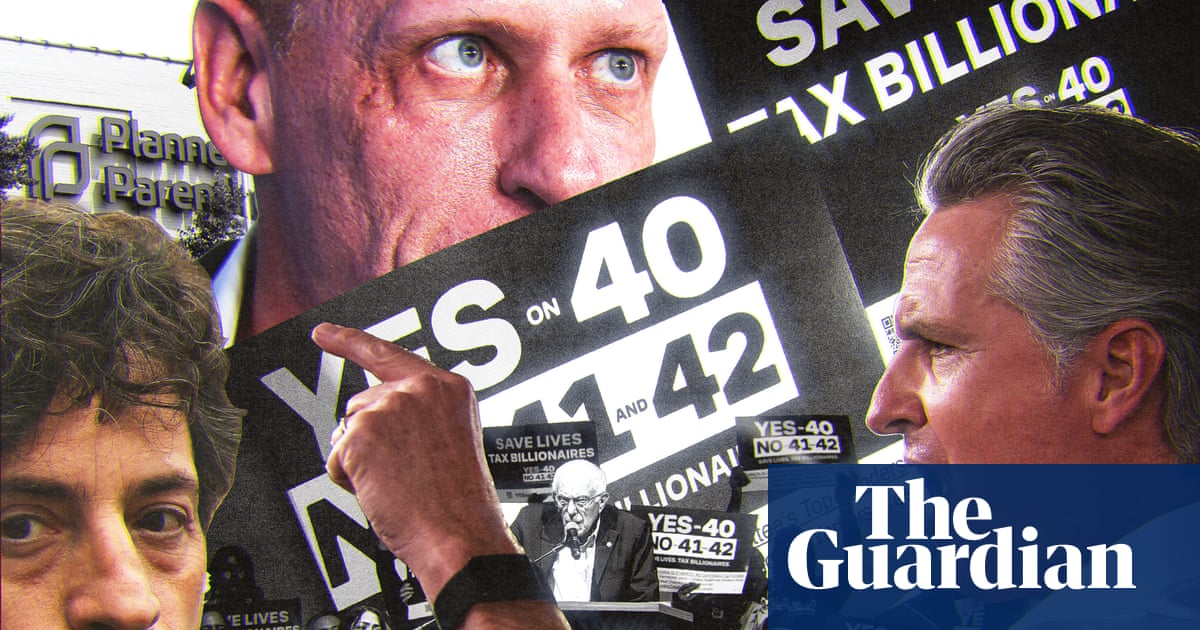
Ultra-Rich Spend $1 Million Daily to Oppose California’s Billionaire Tax Proposal

Silicon Valley Billionaires Pour Millions into Anti-Wealth Tax Campaign in California
In a vigorous battle against a proposed wealth tax, tech billionaires have collectively invested over $340 million to defeat the upcoming ballot measure in California. Leading this effort, these prominent figures are spending more than $1 million daily to counter the proposed legislation, known as Proposition 40, according to state financial disclosures.
With the election just weeks away, their expenditures have accelerated significantly. Recent campaign filings reveal that in just the first half of September, at least $21.2 million was used to oppose the billionaire tax, surpassing a daily average of $1 million. Voters in California are receiving a barrage of digital text messages, mail campaigns, and advertisements that claim a tax on billionaires would ultimately lead to “higher taxes for all Californians.”
Scheduled for a vote in early November, Proposition 40 seeks to implement a one-time 5% tax on the state’s billionaires. The revenue generated would primarily support healthcare programs, but also extend to educational and food assistance initiatives. Opinions on this measure are split among California’s Democrats; some show strong support while others criticize it as insufficient, emphasizing that it is merely a one-time tax.
Proponents of Prop 40 include several major labor unions and progressive politicians, including Senator Bernie Sanders from Vermont and Congressman Ro Khanna. However, both gubernatorial candidates from the Democratic and Republican parties have voiced their opposition, along with organizations such as the Planned Parenthood Affiliates of California. Notably, the fiercest critics of the proposition are the billionaires it would affect directly.
Key contributors to the anti-Prop 40 campaign include a host of Silicon Valley celebrities such as Peter Thiel, former CEO of Google Eric Schmidt, and DoorDash’s Tony Xu. Among these, Sergey Brin, co-founder of Google, stands out as the largest contributor, having donated at least $102 million. In stark contrast, the campaign supporting Prop 40 has raised just under $33 million, primarily from healthcare unions championing the initiative.
Both sides view this measure as a possible benchmark for future wealth taxes in other states. Opponents see it as a dangerous populist movement, while advocates link it to pressing issues like affordability in California. Given its ranking as the state with the highest number of billionaires, Proposition 40 is anticipated to influence future debates on wealth inequality across the nation.
According to political science expert David McCuan, the electorate appears volatile regarding affluent individuals and their perceived disconnect from everyday citizens. “The proponents are banking on this emotional response,” he explained.
Recent surveys indicate that although Prop 40 has been gaining support, its lead has diminished following intensified opposition advertising campaigns. A poll from late September showed 45% favoring the tax while 42% were opposed, marking a reduction from a 7% lead just a month prior.
Complicating the situation, two countermeasures named Propositions 41 and 42 appear on the November ballot. Opponents successfully introduced these measures to directly counteract Proposition 40 and protect individuals from new tax initiatives, potentially undermining Prop 40 even if it garners sufficient support.
As the campaign heats up, strategists opposing the billionaire tax have rolled out emotional advertisements featuring figures from various professions vehemently declaring their opposition to the wealth tax as a detrimental proposal. The dominant messaging centers on the narrative that this tax would adversely affect a broad swath of Californians, focusing on its repercussions for healthcare, education, and small businesses.
Despite the diverse alliances formed against the billionaire tax—spanning business unions and public safety organizations—financial reports show that nearly all funding from the opposition derives from Super PACs heavily backed by Silicon Valley, which has totaled over $297.8 million since July.
In an interesting twist, prominent political figures, including Governor Gavin Newsom, have denounced the billionaire tax while some Democratic local parties still endorse its passage. The opposition has also made targeted efforts to engage the Latino community through various advertising formats, featuring prominent local language publications.
Supporters of Proposition 40, including Sanders and Khanna, are rallying for greater awareness, framing the tax as pivotal in addressing healthcare funding as federal cuts loom. The movement has gained traction within unions and progressive factions, calling upon Californian citizens to support a tax aimed at the wealthy.
Editor’s Take
This ongoing battle over Proposition 40 signifies a broader conflict surrounding wealth inequality and taxation in the United States. The outcome could set a precedent for similar measures in other states, impacting future tax policies and political landscapes. For businesses and developers, this is a critical moment to observe how public opinion can sway the financial behavior of the ultra-wealthy and reshape fiscal strategies moving forward.
Source: www.theguardian.com