
The political landscape surrounding electric vehicles (EVs) is heating up, particularly with the recent actions by the Trump administration and the Republican Party, which have reportedly reduced federal funding for electric vehicle initiatives. This decision unfolds amidst an environment where heavy trucks, responsible for approximately 7% of the US’s greenhouse gas emissions, face relaxed fuel economy standards, further complicating the shift toward greener alternatives.
Despite these challenges, the electric vehicle market is witnessing significant momentum. Current diesel prices have surged to unprecedented levels, primarily as a result of continued disruptions in oil production due to the ongoing conflict in Iran. Under these conditions, the economic advantages of electric vehicles become increasingly apparent. As Elon Musk pointed out in a recent address, the cost of electricity is considerably lower than that of diesel fuel, especially in today’s volatile market.
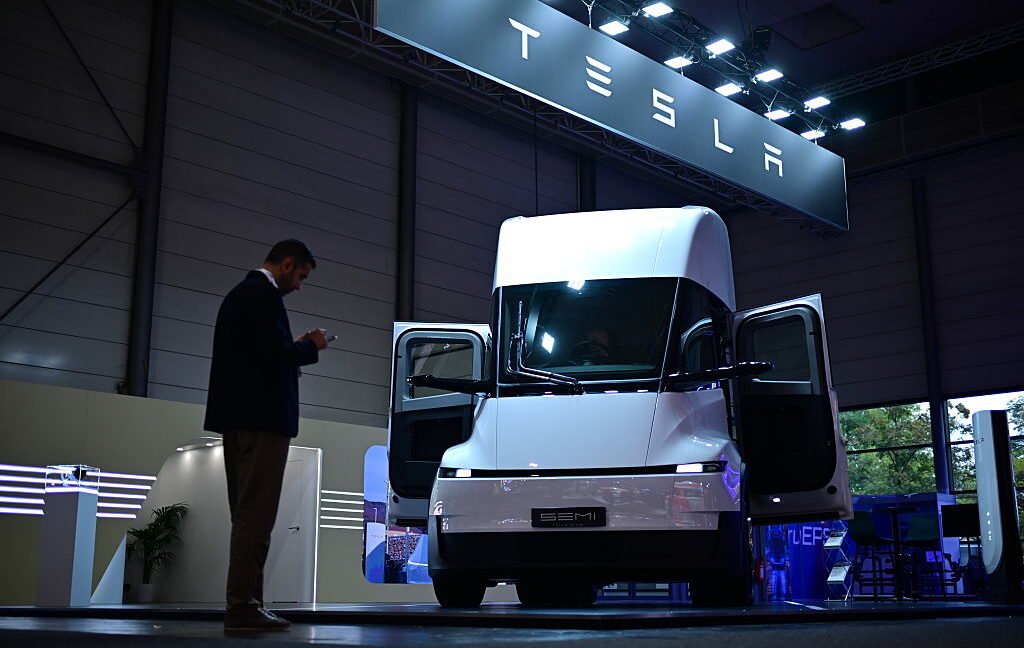
In a noteworthy development, an alliance of major logistics companies, including tech giant Microsoft and beverage behemoth PepsiCo, has placed a staggering order for 2,500 Tesla Semis. These vehicles are slated for delivery over the next 18 months. Should these trucks be successfully deployed to customers, their presence on the roads could nearly double the existing fleet of heavy-duty electric trucks across the nation.
The selection of Tesla’s trucks over competitors was driven by a careful evaluation of several factors—price, performance, production capabilities, and service support, as explained by Meena Bibra, a representative from the Smart Freight Centre, which played a role in facilitating this agreement. Given that carriers often have experience with other manufacturers, some may still opt for electric trucks from companies like Kenworth, Ride, and Volvo if their offerings better align with their needs.
The collaborative purchasing approach among various carriers has contributed to reducing the costs associated with these new electric trucks, enhancing their market viability.
While Tesla’s Full Self-Driving (Supervised) feature is not yet available for the Semi model, Musk has indicated that it will be introduced soon. The predecessor technology, known as Enhanced Autopilot, was a feature promised during the vehicle’s initial rollout back in 2017.
This article was originally published on wired.com.
Editor’s Take
This recent surge in electric truck orders underscores a growing recognition of the economic and environmental benefits of electric vehicles, even amidst political and infrastructural challenges. For businesses and developers, this shift not only signals an evolution in transportation but also presents opportunities for integrating innovative technologies. As logistics companies adopt electric solutions, the landscape of freight and delivery could see transformative changes in efficiency and sustainability.
Source: arstechnica.com