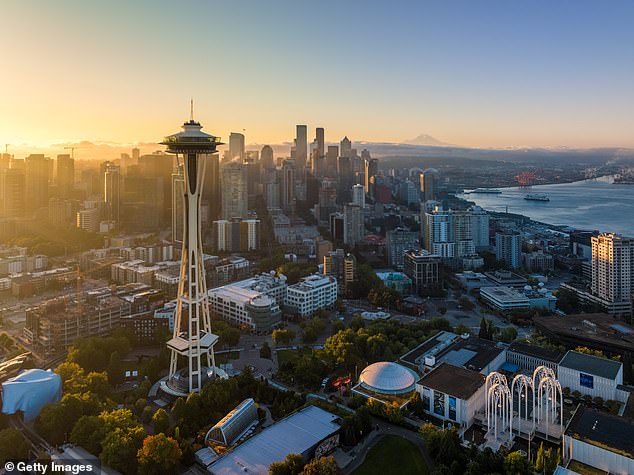

A magnitude 4.2 earthquake has hit the Pacific Northwest, located just a short distance from Seattle, Washington. The quake occurred at 5:05 PM ET on Tuesday, approximately 22 miles from the city, which has a population of about 784,000.
According to the US Geological Survey, over 5,000 residents in the Puget Sound area—including Seattle, Tacoma, and Olympia—reported experiencing the tremor within the first hour after it struck. Thankfully, there have been no reports of injuries or significant property damage; most individuals described the shaking as weak to light.
The USGS has indicated a likelihood of aftershocks, estimating a one-in-four chance of an aftershock exceeding magnitude 3.0 in the following day. While minor earthquakes are common in the region, those exceeding magnitude 4.0 generally only occur every three years on average.
The last significant seismic event in this region was the magnitude 6.8 Nisqually earthquake in 2001, which resulted in numerous injuries and extensive damage costing billions of dollars. The recent quake’s epicenter is located near the Cascadia Subduction Zone, a critical fault line known for producing potent earthquakes and potential tsunamis that experts caution may be overdue for a major rupture.
This zone represents the area where the Juan de Fuca Plate is pushed underneath the North American Plate. While this fault system enables frequent minor offshore tremors, it also harbors the potential for catastrophic earthquakes. Scientists express concern that this area is overdue for a significant seismic event, often referred to as the ‘Sleeping Giant.’
History shows that the Cascadia Subduction Zone typically produces quakes with magnitudes of 8.0 or greater every 400 to 600 years; the last such event occurred in 1700. Forecasts for a similar quake today suggest it could be the most devastating natural disaster recorded in North America, with predictions indicating numerous landslides and the collapse of 7,000 road bridges.
Emergency management agency FEMA estimates that 85% of ports and water supply facilities may suffer severe damage or destruction, along with 77% of the local airports, railways, educational institutions, and hospitals.
Editor’s Take
This latest earthquake serves as a stark reminder of the seismic risks present on the West Coast. As natural disasters become more frequent and severe, it raises important questions about preparedness. Businesses and residents must prioritize infrastructure resilience and emergency planning to mitigate potential impacts in the event of a major quake.
Source: www.dailymail.com