
Ars: Could you elaborate on your mission with JAXA, known as ISSA-J1, which involves rendezvousing with and inspecting two decommissioned Japanese satellites? How does this differ from inspecting a rocket body?
Blackerby: The challenge with ADRAS-J2 lies in approaching an oblong rocket body that remains stable. However, the ISSA-J1 mission is focused on satellites, which may present additional difficulties. These satellites might be spinning, particularly with a solar array extending from them, complicating the rendezvous and proximity operations (RPO). This makes the RPO for ISSA-J1 considerably more intricate. Developing the technology needed for such precise approaches is essential, especially since we will be inspecting a couple of these structures. The advancements we’ve made across various missions share a common technological foundation, especially concerning guidance, navigation, control, visualization, and RPO, which is essential for identifying and approaching these objects. Each mission is unique, contributing to a larger pool of knowledge aimed at establishing a servicing ecosystem in space. For the future sustainability and safety of the space environment, we will need a comprehensive dataset on approaching, identifying, and capturing objects, and that’s what we are steadfastly working towards.
Ars: So, you’re taking gradual steps towards your goals?
Blackerby: Absolutely. Our inaugural mission, ELSA-D, was certainly just the beginning. In that mission, we successfully captured debris we brought with us, marking our initial step into this endeavor.
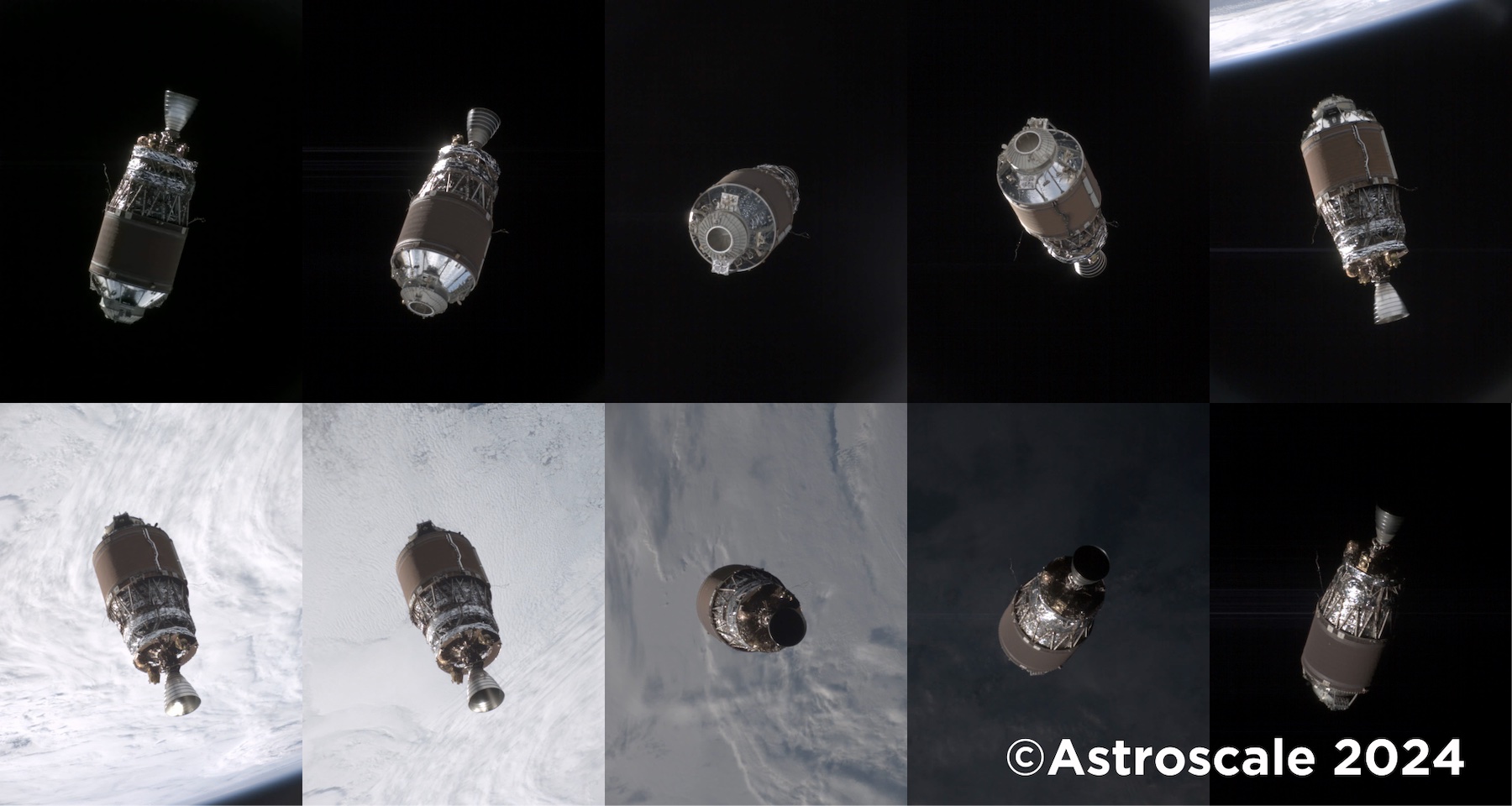
- The ADRAS-J spacecraft from Astroscale captured images of the H-IIA rocket upper stage on July 15, 2024.
Ars: What operational use cases do you foresee for the technology being developed by Astroscale?
Blackerby: I believe you’re referring to the idea of consistent and repeatable servicing. Every mission we undertake is a step closer to that goal. However, defining specific timelines for achieving it is challenging. Currently, we have eight to nine missions under development globally, alongside various missions already underway. None have yet reached the level of a robust, repeatable service model, but that possibility is forthcoming. Our initial mission, ELSA-D, was fully financed through equity markets. The second mission, ADRAS-J, was a partnership with JAXA, while ELSA-M is being developed in collaboration with the ESA and the UK Space Agency. With ADRAS-J2, we are moving towards positive revenue generation. Our aim for sustainability extends beyond just space; it includes the financial viability of our company. While we are progressing towards commercially repeatable missions, we are not quite there yet. By the early part of the next decade, we anticipate a more established, commercially viable servicing ecosystem will begin to materialize.
Editor’s Take
The developments in Astroscale’s missions underscore the importance of sustainability in the growing field of space debris management. As we venture further into space, creating a reliable servicing ecosystem becomes critical for both safety and economic viability. This initiative not only advances technology but also emphasizes a collaborative approach with organizations like JAXA and ESA, which could pave the way for future growth and innovation in space operations.
Source: arstechnica.com