

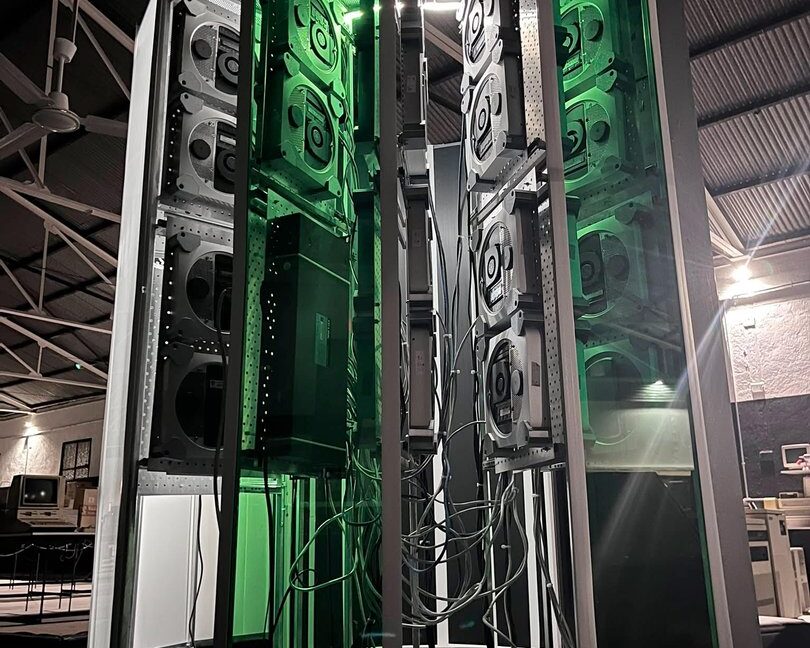

The Museo de Historia de la Computación in Spain has made headlines with the unveiling of a remarkable 1:1 scale visual replica of the iconic Cray-1 supercomputer, which originally debuted in 1976. Instead of utilizing state-of-the-art technology, the museum’s innovative team chose to power the replica using 30 Mac Minis from 2012, bringing a unique blend of nostalgia and modern computing together. This project marks a significant tribute to both the Cray-1’s legacy and the founding of Apple.
While using decade-old Mac Minis might seem unconventional for a supercomputer cluster, the developers successfully networked these machines to achieve an impressive 1.3 teraflops of computing performance in their latest tests. Previously, they recorded a peak performance of 1.5 teraflops by accessing 70 available cores before one node went offline. These benchmarks were obtained using a customized Python script designed for matrix multiplication, involving five quad-core i7 computers and 25 dual-core i5 models. With the exception of two units from 2014, the rest of this impressive array hails from 2012.
This replica serves as an educational tool for visitors, providing insights into the evolution of computer architecture since the launch of the Cray-1. The original machine utilized vector processing, executing a single instruction across multiple data elements simultaneously. In contrast, the replica distributes tasks among independent processors in a parallel cluster configuration. The original Cray-1 boasted a peak theoretical performance of around 160 megaflops, while this modern recreation utilizes contemporary hardware far surpassing its predecessor’s capabilities.
Interestingly, rather than choosing a standard Linux distribution, the museum team opted for macOS Mojave (10.14), which offered built-in support for Message Passing Interface (MPI). This software layer enables efficient task sharing among all nodes within the cluster, showcasing a thoughtful decision to leverage the existing strengths of the operating system.
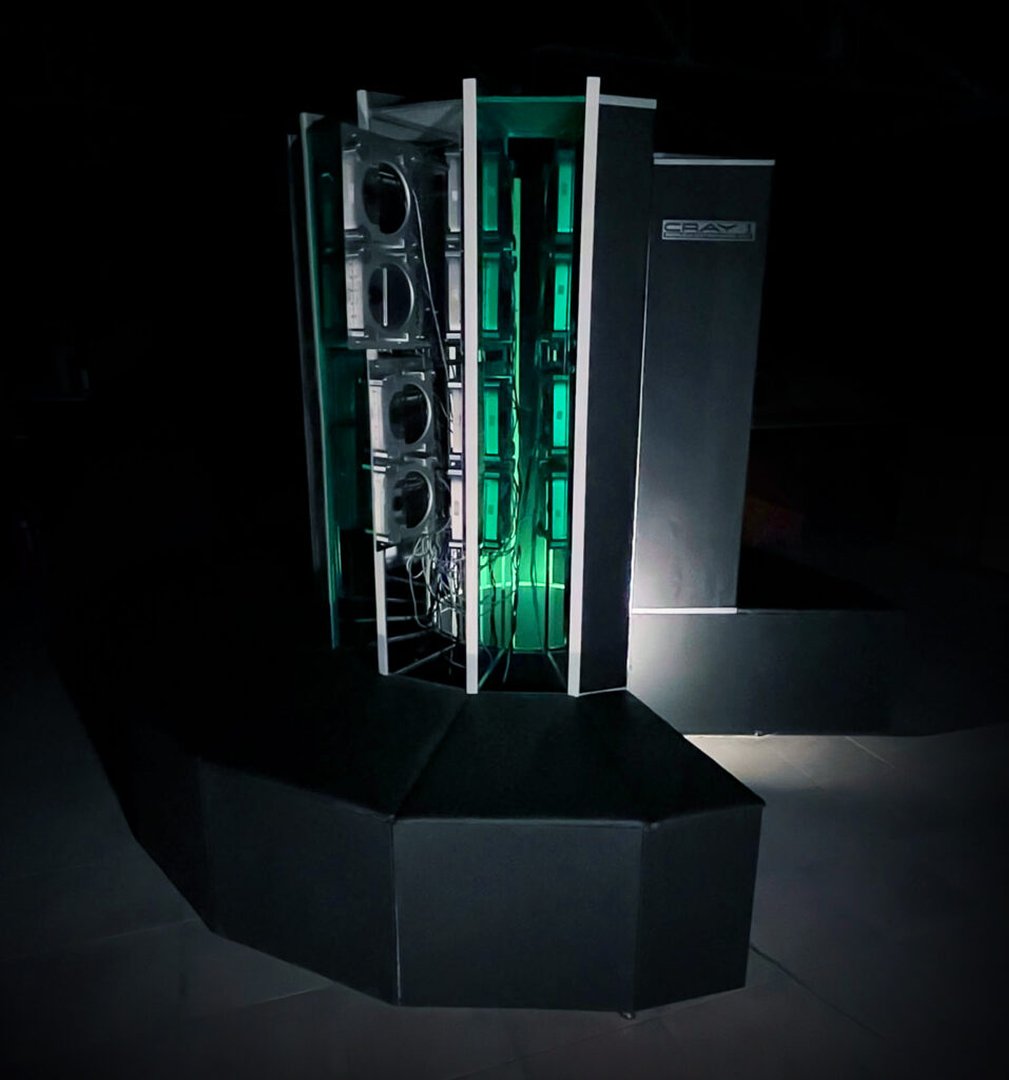
The replica of the Cray-1, featuring its signature padded bench seats. The only thing missing is a discussion featuring Robert Redford and Ben Kingsley on SECTEC Astronomy. Credit: Museo de Historia de la Computación
Visitors to the Museo de Historia de la Computación can observe live demonstrations of the system performing matrix algorithms, illustrating the scale of its performance from a single core to the entire cluster operating in unison.
Stealth Supercomputing
Creating a functional cluster from 30 consumer-grade PCs came with its own set of engineering challenges. Anyone familiar with data centers knows about the disruptive noise generated by cooling fans. However, the museum team ingeniously implemented passive convection cooling through a steel rack chassis and aluminum tray mounts for each Mac Mini, resulting in a quietly operational setup in stark contrast to the deafening roar typical of conventional server rooms.
Editor’s Take
This innovative project highlights the potential of repurposing older technology to meet modern computational demands, opening new avenues for education and exploration in computer science. By demonstrating how consumer-grade hardware can form a powerful computing cluster, the museum not only pays homage to computing history but also shows that even dated technology can generate significant interest and practical applications in today’s tech landscape.
Source: arstechnica.com