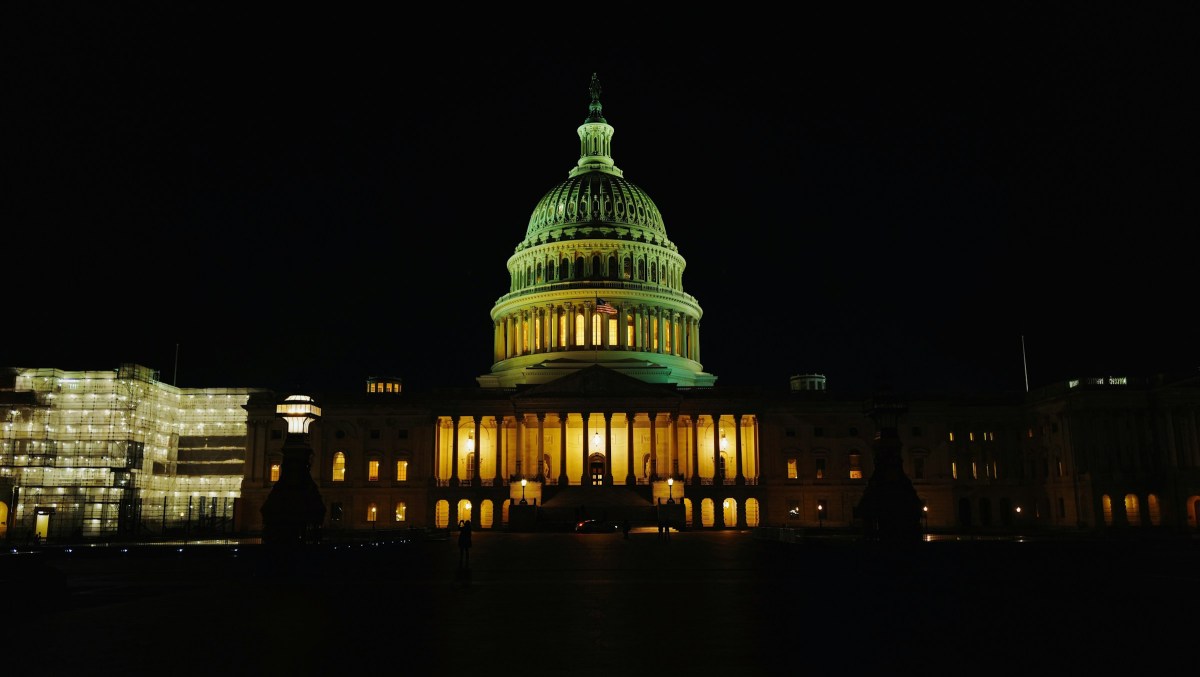

The results from the November 3 midterms have granted the Democrats complete control of Congress, setting the stage for a uniquely polarized U.S. government with a Republican administration in the White House.
The election results indicate a growing political concern regarding data centers, the extensive facilities housing the computing resources for AI. With the Democrats in command of Congress, new regulations may emerge regarding the construction of these centers and the influence local communities can exert over them.
Data centers became a significant topic during the election. An NBC exit poll revealed that over half of those surveyed believe AI poses more risks than benefits, with nearly 80% opposing data centers in their neighborhoods. Almost 60% indicated that these centers played a crucial role in their voting decisions. Nadine Smith, the president and CEO of Color of Change, described the election results as a referendum on the beneficiaries of the current economic system.
“National security is important,” Smith stated, addressing arguments from supporters of data centers that such infrastructure is vital for maintaining U.S. supremacy in warfare and its rivalry with China. “But so are the families in South Memphis dealing with exhaust from gas turbines powering an AI supercomputer,” she added, referencing a new data center run by xAI in Memphis.
In several states, voters actively resisted the expansion of AI infrastructure, despite substantial investments by pro-AI super PACs aiming to influence public opinion. The backlash has been particularly pronounced in states like Ohio, where substantial plans for a $500 billion data center by OpenAI were met with strong local opposition. Recently, a county in Ohio passed a ban on data centers, while local communities across the state overwhelmingly voted against new data center initiatives.
According to analysts at Morgan Stanley, the election of Democratic governor Amy Acton could pose significant challenges for Ohio’s data center development. Candidates from Texas, Maine, Michigan, Nevada, Georgia, and South Carolina also won key seats by opposing rapid data center construction. “It is clear that financial investment does not guarantee success in politics,” remarked Anshi Bhatt, a tech policy researcher, who pointed out that framing a local issue as a campaign hero or villain can effectively galvanize voter support.
As a next step, proposed measures may include moratoriums on construction or mandates requiring data centers to independently fund power grid enhancements rather than imposing those costs onto nearby residents. Goldman Sachs predicts that Democratic advancements will likely lead to delays in data center construction in states like Georgia and Texas.
The control of Congress by the Democrats could enhance the viability of proposals such as the nationwide moratorium on new data centers introduced by Senator Bernie Sanders and Representative Alexandria Ocasio-Cortez, although such legislation might still face presidential veto. The bill aims to ensure that data center expansion does not escalate electricity pricing, damage the environment, or occur without local approval.
Additional legislation, like the GRID Savings Act introduced by Senator Martin Heinrich from New Mexico, aims to prevent the costs of grid infrastructure from being passed onto communities during significant AI data center developments.
Environmental issues remain at the forefront, particularly regarding xAI‘s Memphis facility and the multitude of data centers in Virginia, recognized as the world’s hub for data centers, many powered by gas turbines. Maia Woluchem, program director at Data & Society, emphasized that alterations to energy regulations and environmental policies could influence data center growth, especially as Congressional Democrats actively review rollbacks from the Trump administration regarding energy protections.
“Regardless of federal actions, local and state movements are likely to gain traction, reflecting the momentum cultivated from grassroots efforts,” Woluchem noted, highlighting the support for a statewide moratorium on data centers from governor-elect Gina Hinojosa. Although Hinojosa and Governor Greg Abbott have both called for certain restrictions, Hinojosa’s campaign prominently focused on opposing data centers, a notable shift in a state whose power grid has exhibited vulnerabilities over recent years.
Nevertheless, significant challenges lie ahead. Smith anticipates robust opposition and potential executive actions to navigate legislative blockages in Congress. “Even among Democrats, opinions about implementing a blanket moratorium vary,” she noted, pointing out that some Democrats fear such measures could hinder AI innovation and threaten national security.
She also foresees increased lobbying efforts from AI advocates aimed at influencing lawmakers. “Democrats campaigned on holding Big Tech accountable,” Smith stated. “Our role is to ensure they remain committed to that pledge.”
The resentment around data centers transcends the physical structures themselves, which are not a new phenomenon. A private equity executive recently remarked that while there may not be widespread animosity toward data centers, concerns about AI have intensified, turning the structures into symbols of public anxiety. “The results suggest a genuine frustration with tech dominance across the political spectrum,” Woluchem noted, highlighting the bipartisan nature of these concerns.
In recent discussions, many individuals voiced their apprehensions about the environmental impacts of data centers and their perceived lack of community input in siting decisions.
For instance, Amazon constructed a data center in Gilroy, California, reportedly without sufficient resident awareness, by adhering to an older zoning regulation. Confusing or outdated zoning laws, combined with clauses requiring local officials to sign non-disclosure agreements, have only intensified public frustration regarding data center developments. Although tech companies tout employment opportunities and community initiatives tied to data centers, these benefits often fail to alleviate public discontent.
Residents express a desire to maintain involvement in local developments. Many fear that AI expansions will disproportionately enrich the affluent while imposing economic burdens on their communities.
“If AI infrastructure is genuinely a national concern, the companies responsible should be held accountable for their power supply, must comply with clean air standards, and ensure transparency with local populations,” Smith stated. “No family should be subsidizing the wealthiest corporations through their utility expenses.”
Editor’s Take
This development signals a pivotal shift in how data centers are perceived and regulated across the U.S. The push for local input and environmental safeguards highlights growing public concern about AI’s impact. It indicates a potential era of stricter regulations that could shape the landscape of technological infrastructure, paralleling the urgent call for community engagement and accountability.
Source: techcrunch.com