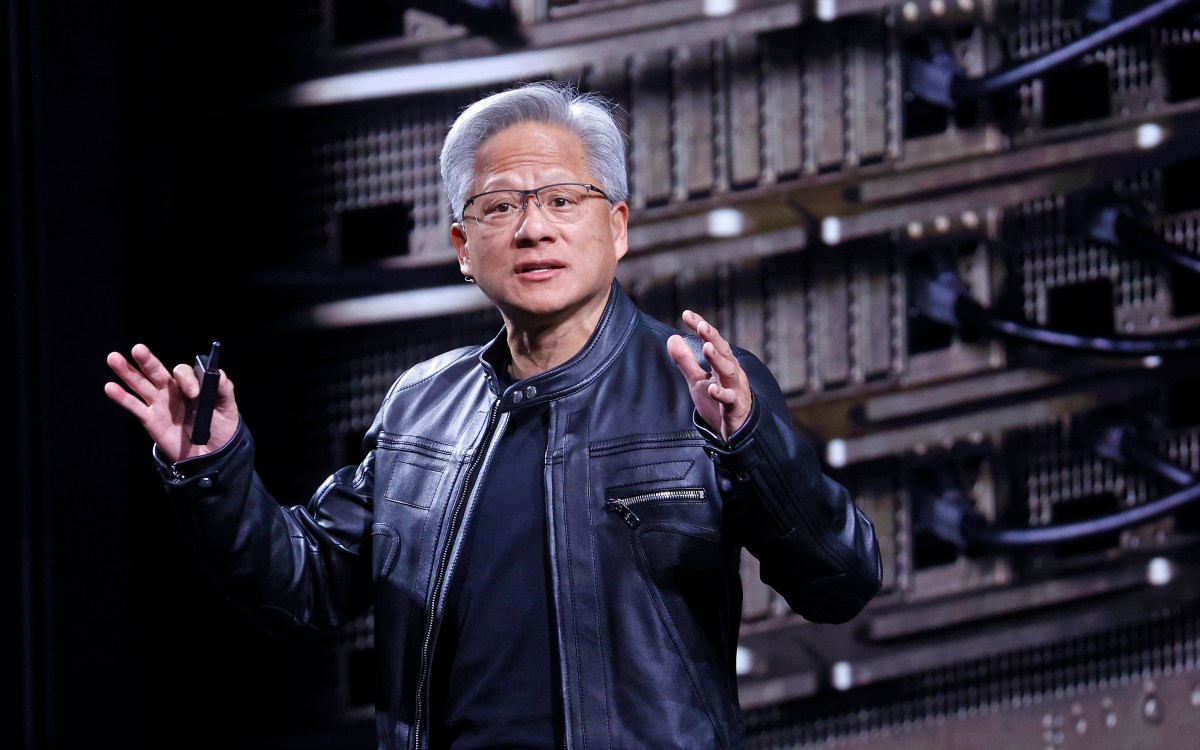

Jensen Huang, the founder and CEO of Nvidia, recently addressed significant concerns regarding artificial intelligence (AI) during his talk at Salesforce’s Dreamforce conference. He emphasized that AI should not be viewed as an “alien mind,” as suggested by some safety researchers from OpenAI, but instead as a complex system composed of hardware and software that is fundamentally human-made. This perspective leads him to believe that AI can be managed through existing laws and human oversight.
During his speech, Huang articulated, “Safety is an engineering problem, not a legal one.” He underscored that the development of safe AI is fundamentally about engineering, as these systems arise from intricate computing architectures. Consequently, he argues that imposing new regulations or laws on AI may be unnecessary. Rather, he contends that the dynamics of a free market will naturally compel companies to refrain from releasing products that are perceived as unsafe.
“If we’re not confident about the safety of the products… then don’t release it,” Huang stated, encouraging companies to take responsible steps before launching new technologies. He believes that there is an inherent market pressure to ensure safety, asserting that there’s a possibility to harmonize rapid innovation with product safety.
This viewpoint may offer some reassurance, considering Huang’s profound understanding of AI as a pioneer in the field, having worked on its foundational technologies long before the rise of models like ChatGPT. Nvidia, under his leadership, is at the forefront of AI hardware and software development.
However, one might also view Huang’s stance as expected from a leader whose company has immensely benefited from the AI surge. Why would he advocate for regulations that might impede Nvidia’s ability to market its AI systems? He further expressed his ambitious vision for the future, stating, “The sky’s the limit for our company and for every industry.”
Of concern, however, is the reality that even the most well-meaning companies can inadvertently release flawed products with severe consequences. A notable instance was the 2024 issue with CrowdStrike, where a software glitch resulted in widespread flight disruptions and operational chaos for several businesses. Other corporations, like Meta, have faced repercussions for behavior perceived as irresponsible, such as its recent multi-billion-dollar settlement regarding social media harms to minors.
Instances of AI-related harm are also becoming evident, ranging from incidents like an OpenAI model breaching data from Hugging Face to responsibilities linked to the tragic outcomes associated with its chatbots. The proposal of minimal oversight is questionable when considering societal implications, as Huang recognizes potentially existing product liability laws might address some AI-related issues, assuming those cases can navigate the legal system efficiently.
While Huang advocates for self-regulation within the AI industry, there’s an impending sense that swift action is needed to formulate standards before the technology evolves further. As suggested by Microsoft’s CEO, Satya Nadella, it may be crucial for global entities, including those from China, to also engage with these safety concerns to ensure responsible advancements in AI.
Currently, Huang’s resistance to new regulations may wield considerable influence in the ongoing discourse surrounding AI governance. His recent interactions illustrate a close relationship with influential figures, including President Trump, which may further shape regulatory decisions in the tech landscape.
Editor’s Take
This stance by Jensen Huang raises critical questions about balancing innovation with safety in the AI arena. While industry-led self-regulation could drive swift advancements, it must also ensure accountability to prevent potential harms. Users and businesses alike should remain aware of how these dynamics evolve, as the future of AI development hinges on responsible practices that place safety at the forefront.
Source: techcrunch.com