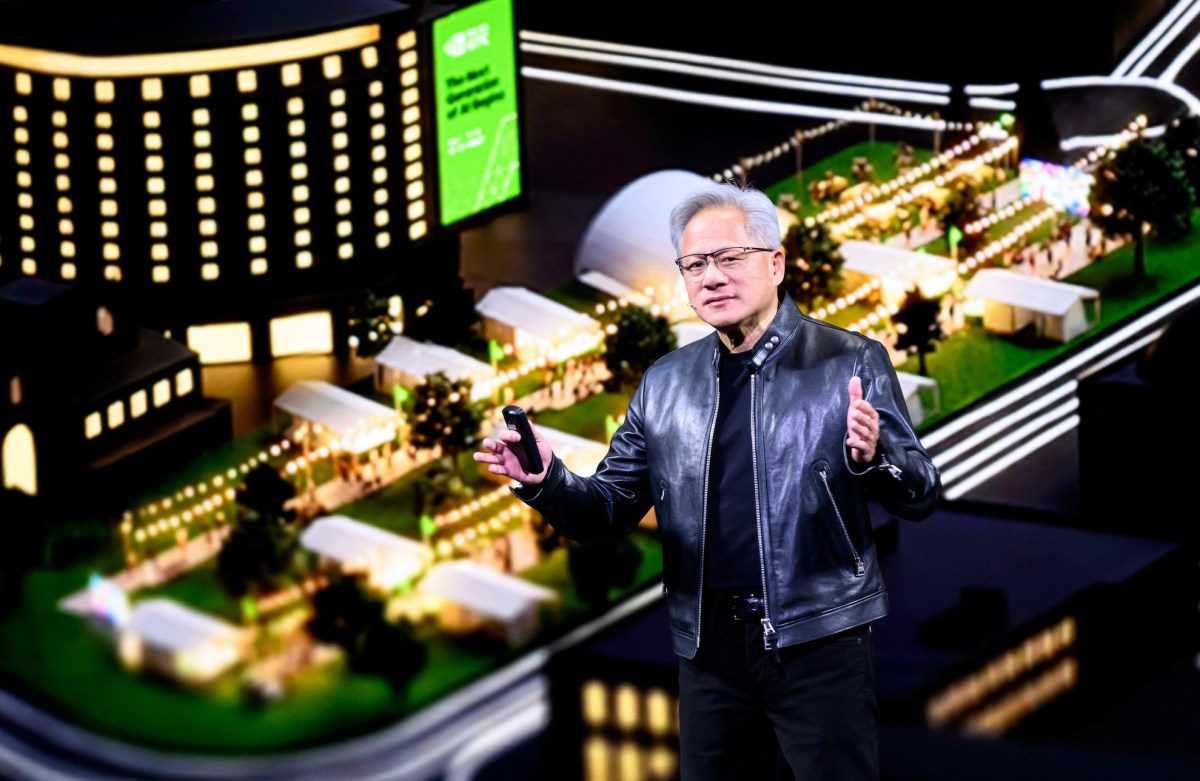

Jensen Huang, the visionary founder and CEO of Nvidia, shared insights at the recent Goldman Sachs Communacopia + Technology conference, asserting that the company’s leadership in the AI sector will sustain unprecedented revenue growth through the upcoming year.
Despite growing concerns about intensified competition from major players like Amazon, Microsoft, and Google, all developing their own GPUs and AI chips, Huang remains optimistic. New challengers such as Cerebras and various startups are also entering the fray, yet he believes Nvidia’s unique capabilities will keep it at the forefront.
“Most people think Nvidia builds a chip. I mean, you need airplanes to ship what we build,” Huang elaborated, reflecting on the transformation of Nvidia’s offerings since the early days of consumer GPUs aimed at enhancing PC gaming. He highlighted the complexity and scale of modern GPU products, noting that one sophisticated unit could cost as much as $8.5 million and consist of 2 million parts.
A particular product, a cutting-edge computer system that incorporates 36 Grace CPUs and 72 Blackwell GPUs, has already seen a remarkable growth rate of 27% month-over-month in sales.
Huang reiterated Nvidia’s robust revenue forecast, expressing confidence that sales could increase by 70% in the next fiscal year, potentially reaching around $680 billion. The company’s previous record-breaking quarterly earnings had already positioned it for success.
“Nvidia runs every model. Every single lab can use us,” he emphasized, listing prominent entities such as OpenAI and Google among those relying on Nvidia’s infrastructure. He views Nvidia as a fundamental component of the AI ecosystem.
Huang remarked on Nvidia’s extensive reach in the industry, stating, “We’re tracking every single gigawatt of land, power, shell around the world.” He conveyed that the company collaborates with numerous partners, giving Nvidia a comprehensive understanding of market dynamics.
When questioned about Nvidia’s strategy of investing in companies that subsequently purchase its products, Huang responded with humor, noting the financial benefits: “We put in $1 and $100 comes back in. Is that circular? If that is, let’s do more of that.” He asserted that these investments are predicated on solid contracts that ensure revenue streams.
While Nvidia’s current dominance in the AI market is noteworthy, Huang acknowledged the potential for disruption in the tech industry. Despite Nvidia’s strong position, he conceded that the growth of AI is largely fueled by innovative startups pumping significant resources into their own technological advancements.
For now, Nvidia is well-positioned and anticipates another prosperous year ahead due to its integral role in the evolving landscape of artificial intelligence.
Editor’s Take
This development signifies Nvidia’s continued influence in the rapidly expanding AI market. Its projected revenue growth not only underscores the company’s strength but also suggests that AI infrastructure will remain a lucrative investment for various stakeholders. For users and businesses, this may translate into enhanced AI capabilities and more effective solutions. As competition intensifies, the industry’s landscape will undoubtedly evolve, presenting new challenges and opportunities.
Source: techcrunch.com