
Revolutionizing Exoplanet Imaging with FLIP
Recent advancements in artificial intelligence are reshaping how we approach astronomical imaging, particularly in the search for exoplanets. A pioneering team has introduced a technique named FLIP—short for Physics-based Learning for Imaging Planets—which integrates the principles of machine learning with physical hardware models. This innovative process harnesses the capabilities of the NIRCam on the James Webb Space Telescope to analyze astronomical data more effectively.
FLIP operates by leveraging a model that incorporates approximately 1,000,000 parameters, utilizing software optimization to enhance its performance. The process initiates with a simulated point spread function and employs gradient descent, a widely used optimization method, to refine its analyses based on real stellar data. On contemporary GPU architectures, this optimization can be completed in just over 30 minutes.
Enhancements in Stellar Observation
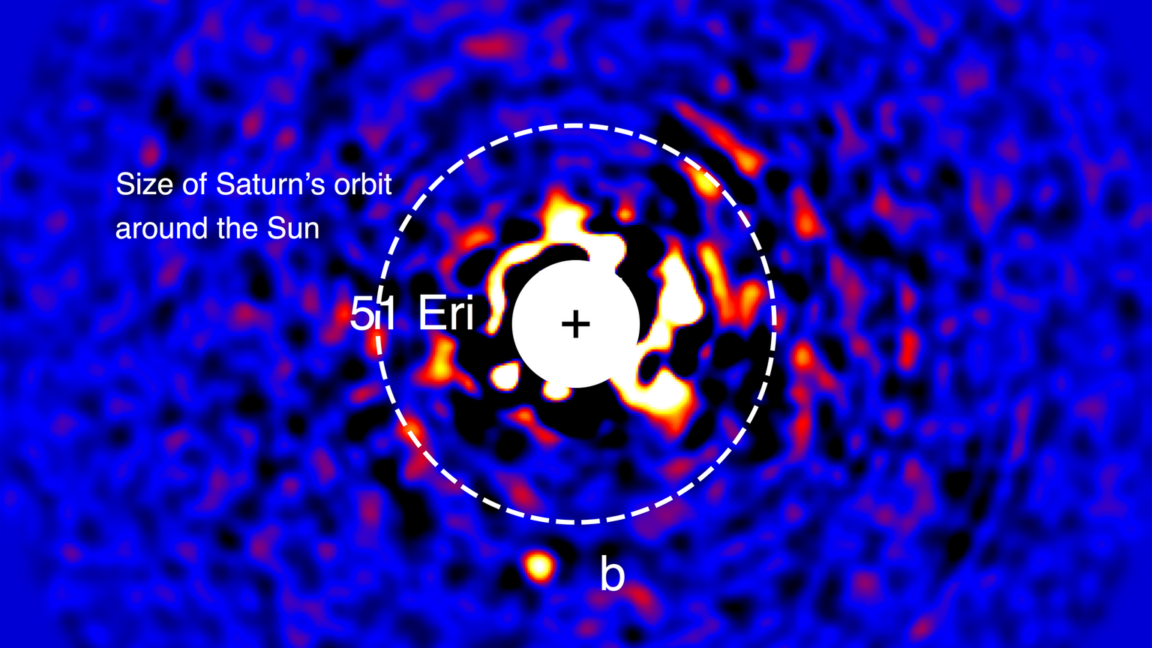
The effectiveness of FLIP was tested using data from three stars, including HIP 65426 and 51 Eridani, both of which host known exoplanets. A third star, TYC 5899, is recognized for its variability but does not have confirmed planets. These young stars exhibit intense thermal motion, making them particularly interesting for imaging.
Applying FLIP to data gathered by the Webb telescope, researchers observed significant improvements in the signal-to-noise ratio, achieving boosts ranging from 1.5 to 2 times depending on the dataset. Notably, they successfully identified one of the planets for the first time at a wavelength sensitive to carbon dioxide detection. In the case of TYC 5899, FLIP enhanced observational sensitivity by an impressive factor of 15.
The implications of this technique extend beyond simply imaging known planets. By effectively reducing noise, FLIP has the potential to unveil fainter, older, or less massive exoplanets that have previously remained undetected. The researchers also aim to refine FLIP further to pinpoint areas where it produces the most significant changes, which may yield insights into the operational dynamics of the telescope’s hardware.
The findings were published in Nature in 2026, with a DOI reference of 10.1038/s41586-026-11213-z.
Editor’s Take
This innovative FLIP technique represents a significant leap forward in exoplanet research, enabling astronomers to detect fainter planets that could enhance our understanding of planetary systems. As AI-driven methods become integrated into scientific exploration, they pave the way for breakthroughs that may redefine how we explore the universe. Businesses and developers focused on astrophysics and AI should take note of such advancements, as they open new avenues for research and practical applications in space observation.
Source: arstechnica.com