
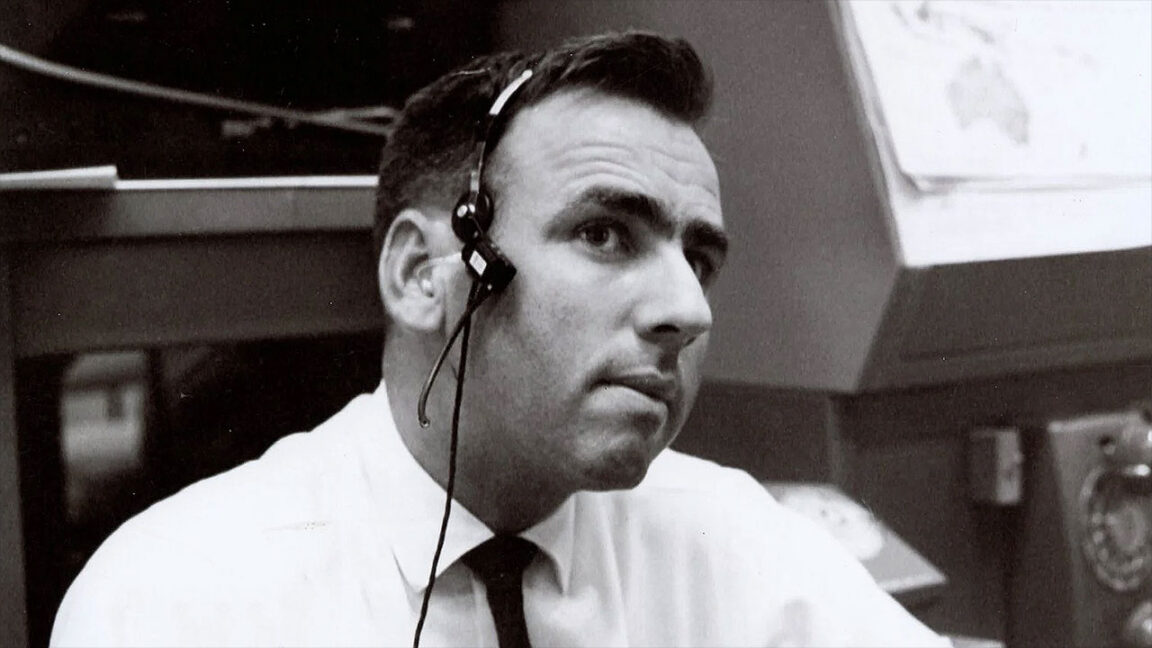

In a remarkable career that spanned some of NASA’s most historic missions, Milton Windler, a key figure in the Apollo program, has passed away at the age of 94. Windler was renowned for his role in mission control during the challenging Apollo 13 mission, where his adeptness at real-time flight planning played a crucial part in bringing the astronauts home safely.
Reflecting on his innovative contributions, Windler explained how he and his team devised a system to plan flight operations in real time. “We had to come up with a system that would allow us to plan in real time and accommodate the science people,” he noted in 2006. This flexible approach was particularly beneficial during moments of solar activity that required immediate attention and could alter scheduled objectives for the Apollo Telescope Mount (ATM) work.
After concluding his work on the Skylab missions, Windler transitioned to the space shuttle program, where he was instrumental in developing the remote manipulator system, commonly known as “Canadarm.” Following his retirement from NASA, he ventured into private industry, contributing to the operational frameworks for what would eventually evolve into the International Space Station.
A Lifetime of Service
Born on January 10, 1932, in Hampton, Virginia, Windler earned a degree in aeronautical engineering from Virginia Tech in 1954. His aerospace career began with the National Advisory Committee for Aeronautics (NACA), the precursor to NASA, before he served four years in the U.S. Air Force. He rejoined NACA at the Langley Research Center and witnessed its evolution into a NASA facility, ultimately relocating to Houston as the Manned Spacecraft Center (now the Johnson Space Center) was being set up.
During his tenure with NASA, Windler, alongside fellow flight directors, was awarded the Presidential Medal of Freedom by President Richard Nixon in 1970 for their extraordinary efforts during the Apollo 13 crisis. His accolades also included NASA’s Exceptional Service Medal, reflecting his dedication and impact in the field of space exploration.
Windler is remembered not just for his professional accomplishments but also for his family life, leaving behind his wife, Betty, and their three children, alongside eight grandchildren. Plans for a memorial service are in motion at the family’s former church in Friendswood, Texas.
In reminiscing about his time in the mission control room, Windler expressed a poignant reflection: “If I did it again, I’d probably try to do something more about trying to pay more attention.” He emphasized the fast-paced nature of mission operations, which left little room to enjoy the moment during such groundbreaking times in space exploration.
Editor’s Take
The legacy of Milton Windler is a testament to the human ability to innovate under pressure, particularly in the face of adversity during the Apollo 13 mission. His approaches to real-time flight planning demonstrate the importance of adaptability in high-stakes environments, a principle that resonates beyond space exploration into modern tech and AI industries. Windler’s story serves as an inspiration for future generations of engineers and science professionals.
Source: arstechnica.com