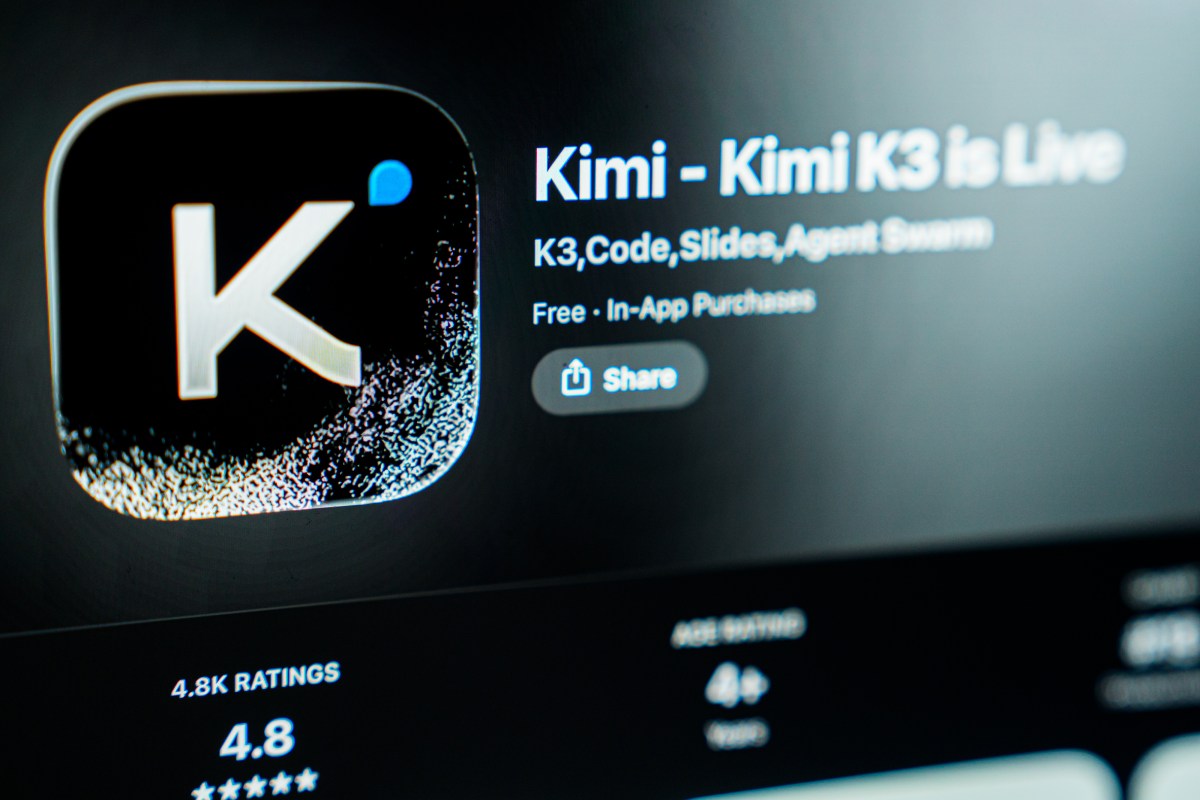

Moonshot AI, one of China’s leading artificial intelligence laboratories, has ambitious plans to significantly increase its revenue. According to a recent report from Bloomberg, the company aims to achieve $2 billion in annual revenue by the end of 2026. This target is double the revenue rate reported in August and reflects the growing success of their popular K3 model released earlier this summer.
Although the activity surrounding the K3 model has seen a slight decline recently, OpenRouter data indicates that 300 billion tokens continue to be generated daily by K3 models on their platform.
Despite these projections, Moonshot AI remains far behind its competitors, such as OpenAI and Anthropic. Recent evaluations estimate OpenAI’s revenue at $40 billion, while Anthropic’s has surged to $65 billion. One reason for Moonshot’s lower revenue potential is that its model weights are freely available, leading to narrower profit margins compared to the proprietary models of its competitors. Nevertheless, these forecasts suggest that there is still a viable market for open-weight AI models, even if they do not offer the same financial returns as their closed-weight counterparts.
The development practices at Moonshot AI have sparked controversy and raised legal questions. Just this past week, Anthropic accused the firm of executing a protracted model distillation initiative that allegedly redirected nearly 300,000 requests from its own Kimi model directly to Claude Opus, thereby utilizing Anthropic’s capabilities in place of Kimi’s native models. Overall, more than 23 million responses were reportedly collected from Anthropic’s models to aid in training Moonshot’s AI.
Editor’s Take
The ambitious revenue target set by Moonshot AI signals a growing market interest in open-weight AI models. As these models gain traction, they could offer developers and businesses more flexible solutions compared to closed-weight models. However, the ethical implications of their development practices raise important questions about the sustainability of this approach in the competitive landscape of AI.
Source: techcrunch.com