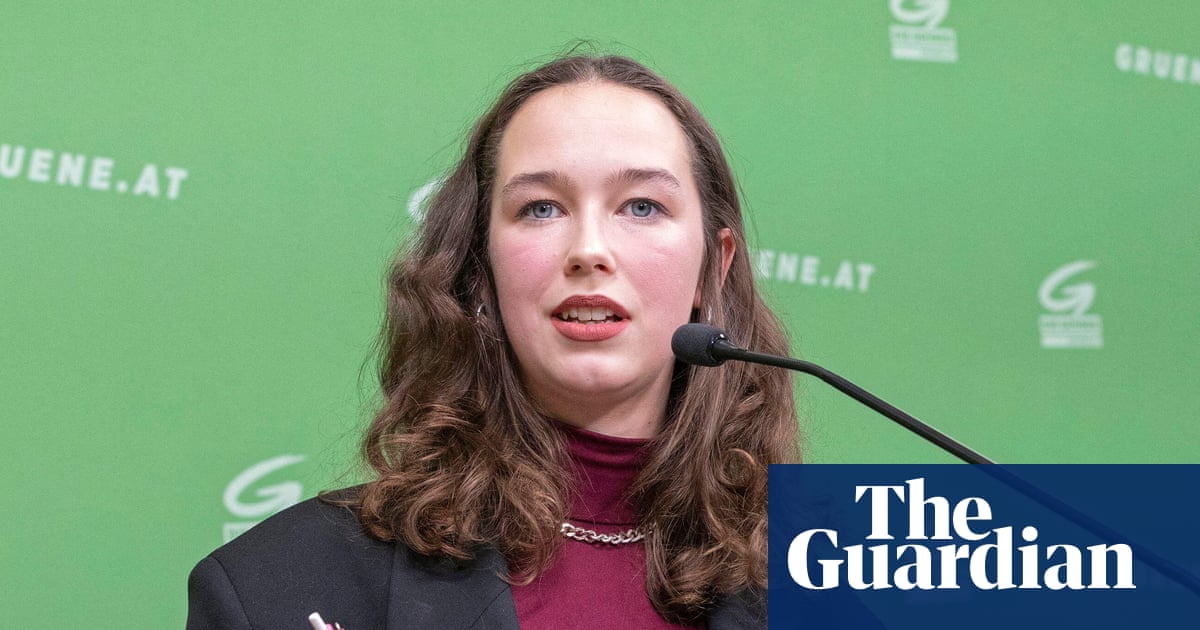

In a disturbing revelation, Austrian Member of the European Parliament Lena Schilling has spoken openly about being victimized by non-consensual online deepfake pornography, urging the European Union to take decisive action against this emerging threat. A recently published report indicates that approximately one in six female MEPs have fallen prey to sexualized AI-generated content.
Schilling, a member of the Green Party, discovered this distressing reality last month when she encountered nude deepfakes of herself circulating online. The altered images manipulated moments from one of her early press conferences, digitally stripping away her clothing. “I felt disgusted,” she recounted. “It was a shocking twist on a pivotal moment in my career. To see someone exploit this image to harm and humiliate me was incredibly hard to comprehend.”
According to a report from Agora Digitale Transformation (ADT), 50 MEPs, 46 of whom are women, have been targeted with such harmful deepfakes. The findings shed light on how deepfake pornography represents a “systemic threat to women in European politics.”
The ADT report also revealed that among 138 female parliamentarians across 22 EU nations, women were documented as being 33 times more likely than their male counterparts to be depicted in deepfake pornography. This trend adds another layer of digital violence that women in politics already face, alongside widespread sexism and harassment.
Schilling emphasized that images like these exacerbate the difficulty faced by women in entering and navigating political landscapes. “Just consider what might happen to our society if more and more women are driven away from public office,” she warned.
Schilling has conversed with other affected female MEPs, many of whom are hesitant to come forward. “There’s nothing to be ashamed of. You did nothing wrong,” she asserted. “This must stop.”
The urgency of this issue is also reflected in a letter initiated by Schilling and Terry Reintke, a fellow MEP from Germany’s Green Party. Signed by 119 MEPs, the letter calls for robust enforcement of an upcoming ban on AI technologies designed to undress women. This ban is set to take effect across the EU on December 2, yet the letter insists that proper enforcement mechanisms must accompany it. “A ban on paper protects no one until it is enforced,” it cautions, noting the rampant use of “nudifier” apps that can undress photos with a single click.
“The aim of these technologies is humiliation and to exert control over women’s bodies,” the letter details. “This makes public life increasingly hostile for female politicians, and any young woman contemplating a political career now must consider this possibility.”
Schilling aims to pressure national authorities to close any gaps that may allow such apps to persist in the EU. “We were stripped naked without our consent. This cannot become the new normal,” she stressed.
Her decision to publicly share her experience highlights her hope that revealing these vulnerabilities will prompt member states to hold tech companies accountable for enabling digital violence as a potential business model. “It’s quite simple,” she concluded. “Every woman aspiring to public office should be able to do so without the fear of being undressed against her will.”
Editor’s Take
This alarming trend of non-consensual deepfake pornography poses significant implications for women’s participation in politics and public life. As AI technologies evolve, the urgency for effective regulations and enforcement mechanisms has never been greater. Both users and lawmakers must collaborate to ensure a safer digital environment where individuals are shielded from such invasive abuses.
Source: www.theguardian.com