

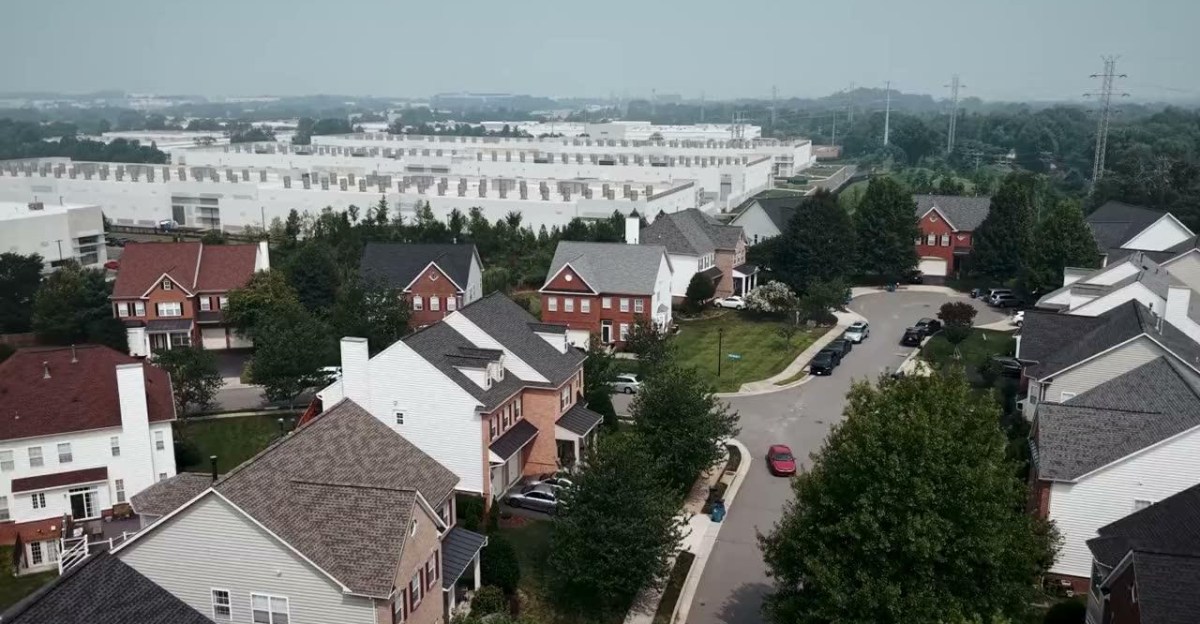

A Transformation in Loudoun County: From Housing Dependence to Data Center Dominance
In 2007, as the United States teetered on the brink of an economic downturn, Buddy Rizer found himself at the forefront of revitalizing Loudoun County, Virginia. With a background as a radio DJ, Rizer’s initial role at the county’s economic development authority did not predict the sweeping changes he would help orchestrate.
The urgency in Rizer’s mission stemmed from the collapse of the housing market, where over 80% of the county’s revenue relied on residential real estate. The objective was to increase the commercial tax base from approximately 19% to 23%. Fast forward to today, and commercial sources now account for just over half of the county’s tax revenue, ushering in a new economic landscape.
Loudoun County had once been a bustling hub for AOL, recognized as the nation’s largest internet provider by 2000. Its geographical proximity to Washington, D.C., combined with the existing infrastructure, positioned Loudoun as a critical point for internet connectivity—reportedly channeling 70% of the globe’s online traffic.
However, the burst of the dot-com bubble in 2000 left behind abandoned buildings and a surplus of fiber optic cables. While many viewed these remnants as liabilities, Rizer recognized them as opportunities. “If we can fill those, that would be a good start,” he said, envisioning a future where the same elements that once attracted AOL would once again drive technological growth.

Today, Loudoun County is prominently nicknamed “Data Center Alley,” featuring around 250 data centers within a fraction of its 515 square miles—the highest concentration globally. For years, the rapid growth of this sector was often overlooked by residents, who benefited from lower property taxes and improved local schools due to the influx of commercial revenue.
As the expansion of data centers coincided with a broader shift towards cloud services, the community experienced significant improvements: 22 new schools were established over a decade, and tax revenues from data centers exceeded operational budgets by $35 million in 2024. Property tax rates even declined from about $1.29 to 80 cents per $100 assessed value since 2008.
However, this development has not come without its challenges. While many residents had only a vague awareness of the data centers’ impact, the growing national backlash against such facilities has begun seeping into daily life in Loudoun. Noise, light pollution, and the encroachment of infrastructure have raised concerns about the sustainability of the current growth model.
The need for data centers has surged in recent years, particularly with the growth of generative AI technologies, necessitating extensive processing power. As Rizer now finds himself managing rising local opposition, he notes that the community’s awareness of inconveniences is exponentially higher than in past years.
Rizer himself acknowledges that the backlash is heavier than he has encountered in his career. “I have never seen, in my entire career, the vitriol, the hate that is associated with this,” he remarked, likening the situation with the current cultural climate surrounding technology to a Taylor Swift song.
Community Dynamics and Changing Perspectives
While data centers have brought substantial economic advantages to Loudoun, residents are increasingly questioning the long-term costs. For those who appreciate the county’s prior tranquility and natural beauty, the looming presence of data centers and associated infrastructure, such as transmission towers, presents a new chapter in the local narrative.
Loudoun’s experience serves as a blueprint for other communities considering the entry of data centers. As the technology industry evolves, the ongoing challenge will be to balance community interests with economic development.
Ongoing Developments
The emerging debate has led to strange alliances across political lines, with some municipalities opting to halt new data center constructions to assess the toll on local energy grids. For Rizer and Loudoun County, public sentiment may ultimately redefine their approach to data center expansion.
Editor’s Take
This development in Loudoun County highlights the complexities of technological growth juxtaposed against community well-being. As data centers proliferate across the U.S., it raises critical questions about sustainability, quality of life, and the role of local governance in balancing economic opportunity with community health. Users and businesses will need to navigate these changing landscapes carefully.
Source: www.theverge.com