

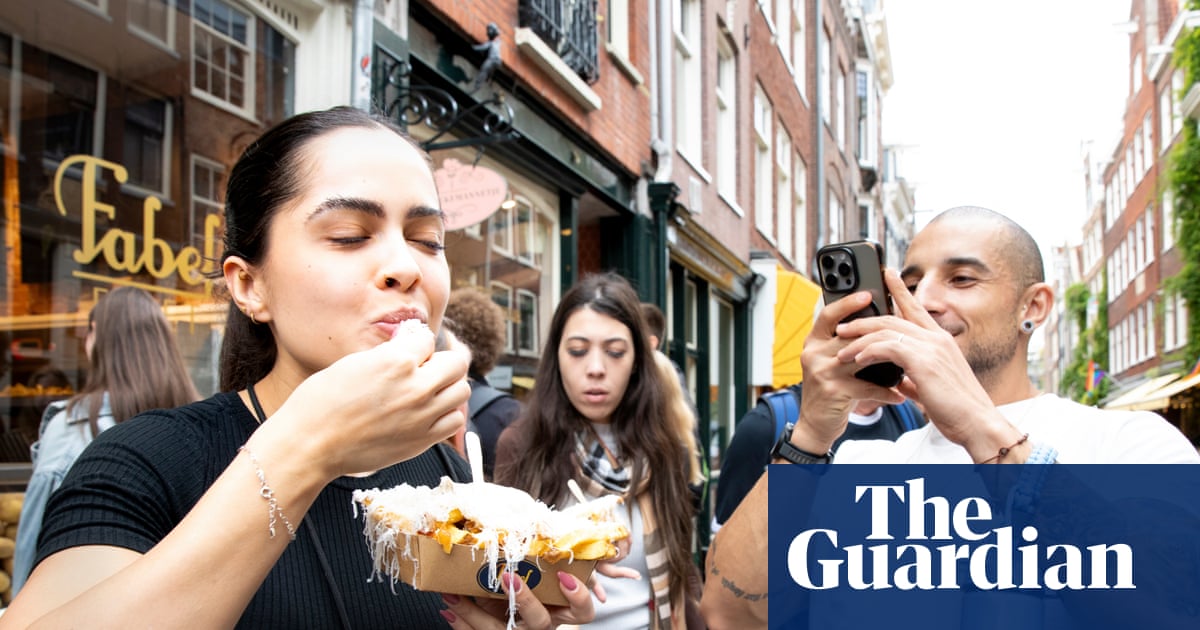

Residents of one of Amsterdam’s prestigious neighborhoods have initiated legal action against the city for granting a license to a popular chip shop, Fabel Friet, which has seen a surge in fame on TikTok.
During a recent court hearing, it was revealed that on busy days, the line for Fabel Friet spills onto a bridge overlooking the Keizersgracht, one of Amsterdam’s iconic canals. Tourists queue daily, creating a bustling scene along the narrow street, while seagulls congregate, waiting to scavenge leftovers.
Thomas van Leeuwen, a nearby resident, expressed his frustrations, stating, “We are in a kind of war where a very unwelcome chip shop has polluted the whole area. Eating in the street is shameful; it leaves food remnants on our doorsteps and mayonnaise stains on our historic stonework. The influx of herring gulls and the rise in rat populations have worsened our living conditions.”
Nineteen complainants have formally protested the takeaway’s business license, raising concerns about its limited size. Lead plaintiff, Niek van der Heijden, emphasized that the influx of customers creates significant disturbances, remarking, “The so-called ‘TikTok queue’ creates an environment where people are constantly on the street: ordering, waiting, and dining. We believe the shop needs a more spacious venue to serve its patrons.”
In a crowded courtroom session, an attorney representing the city noted that Amsterdam’s mayor, Femke Halsema, has the authority to deny business licenses if they negatively impact the local living environment.
Despite adhering to license requirements for queue management and cleanliness, the impact of the chip shop’s operations remains contentious. The city’s attorney argued, “While measures are in place, the persistence of the issues prompts a reevaluation of what should be tolerated.” The city’s ruling on the current license will be influenced by the court’s judgement.
Owners Abel Klatser and Floris Feilzer stated they maintain daily cleaning services and reported a 23% drop in visitor numbers this August following the opening of four additional outlets. Their lawyer, Gertjan Teeuwen, defended the shop, saying, “While some neighbors have expressed concerns, many others appreciate our food. Yes, there are busy periods, but they fluctuate.”
In a joint statement, Klatser and Feilzer expressed distress over the negative perceptions surrounding their business, declaring, “Fabel Friet is our child; we have poured our hearts into it. Hearing negative comments about it is painful.”
This case extends beyond mere annoyances related to so-called performative tourism, where visitors flock to locations primarily for social media content. Lisa-Bobbie Kamp, representing the residents, stated, “While charming, these small streets aren’t built for the overcapacity of people. This raises important questions about public space ownership and usage.”
Marije Peute, a PhD candidate from the University of Amsterdam, called for local governance to reassess management of public spaces. She noted, “Many older business areas have lost local clientele as they feel increasingly unwelcoming.”
Local councilor Rogier Havelaar acknowledged that although Fabel Friet might benefit from relocating to a more suitable area, the importance of tourism to Amsterdam, contributing to 70,000 jobs, cannot be neglected. “Without tourism, Amsterdam would face a colossal financial crisis,” he asserted.
As some German tourists sampling the shop’s fries acknowledged their activities’ impact on local mobility, they remarked on the challenge of navigating the crowded streets. “We didn’t intend to disturb anyone, but we see how the crowding can be an issue,” said visitor Natalie Stübben.
With a court decision expected on November 12, some residents remain hopeful for a verdict that could alter the chip shop’s future. Van Leeuwen warned, “There’s something deeply concerning about how we are influenced by social media, turning people into followers. It’s an Orwellian situation. This case highlights the parasitic economic practice surrounding tourism.”
Editor’s Take
This legal dispute highlights the growing tensions between local communities and the pressures of viral tourism fueled by social media. As businesses adapt to the demands of popularity, the impact on neighborhoods raises questions about the sustainability of such growth. Balancing community needs with the benefits of tourism is essential for the long-term health of urban environments.
Source: www.theguardian.com