
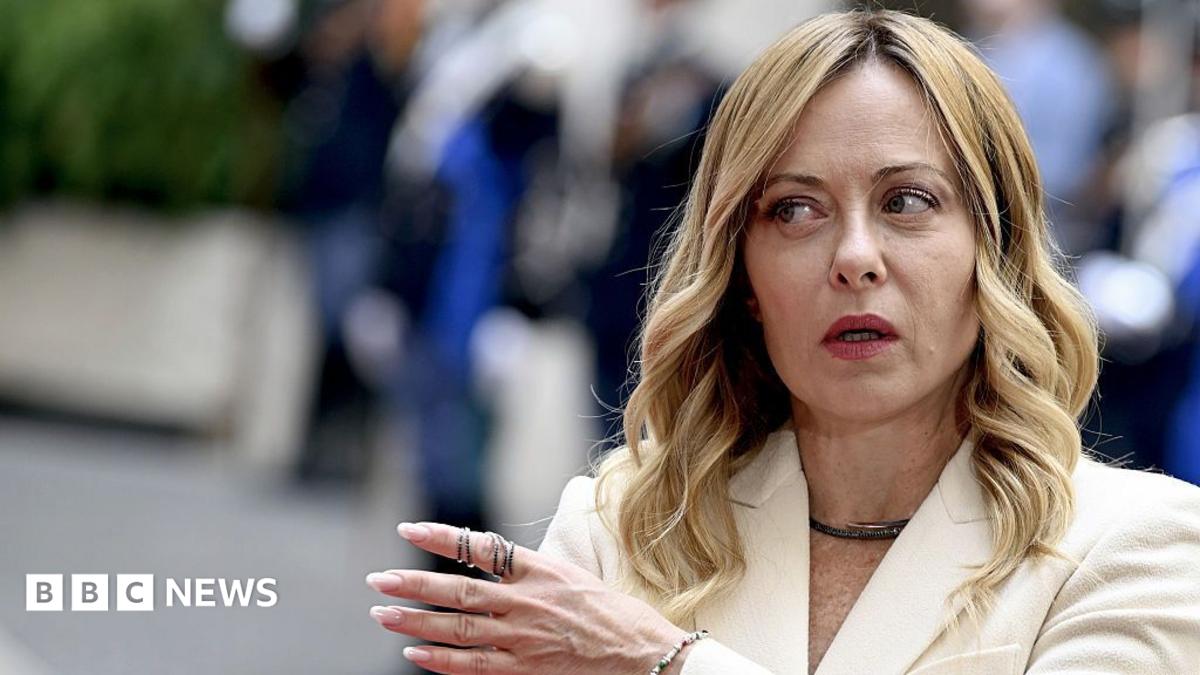

Giorgia Meloni, the Prime Minister of Italy, has moved to protect her voice by applying for a trademark, aiming to safeguard herself against the misuse of artificial intelligence (AI) deepfakes.
The trademark application was submitted to the European Union Intellectual Property Office (EUIPO) on Monday, as confirmed by her office. The submission can be viewed on the EUIPO’s official site.
As part of this application, Meloni recorded a brief audio clip lasting four seconds, in which she states, “Io sono Giorgia,” or “I am Giorgia Meloni” in Italian, repeating the phrase twice.
Meloni is not the only public figure taking this step. In January, American actor Matthew McConaughey initiated a similar effort by trademarking his likeness and voice. Following that, in April, singer Taylor Swift filed three trademark applications in the United States, featuring one using an image of herself from her Eras Tour and others comprising audio clips promoting her latest album.
Earlier in August, a group of over 80 performers urged British Prime Minister Andy Burnham to create legislation that would grant individuals in the UK the legal right to claim ownership over their voices.
Prominent entertainers including Matt Lucas, Hugh Bonneville, and Nicola Coughlan have advocated for heightened protection against unauthorized use of their voices through AI technology.
AI-generated voice clones are produced by training systems on actual recordings of individuals. While quick imitations can be derived from a few seconds of audio, more refined replicas typically require hours of training data.
Meloni’s initiative comes ahead of Italy’s impending general elections next year. The phrase “Io sono Giorgia” was also the title of her 2021 autobiography and has become synonymous with her political identity.
In 2024, Meloni sought €100,000 (approximately £84,920) in damages after explicit deepfake videos featuring her image surfaced online.
Deepfake technology, which allows for the digital placement of one person’s face onto another’s body, has proliferated in recent years, particularly in the realm of non-consensual explicit content, causing significant distress to its victims.
In May, Meloni once again raised concerns about the threats posed by deepfakes, citing instances of AI-generated images depicting her in compromising scenarios.
In a social media post, she emphasized, “The point, however, goes beyond me. Deepfakes are a dangerous tool, because they can deceive, manipulate, and strike anyone. I can defend myself. Many others cannot.”
Editor’s Take
The move by Prime Minister Meloni to trademark her voice highlights growing concerns regarding the manipulation of digital identities through AI. As technology evolves, the protection of personal likenesses will likely become a critical issue for individuals and businesses alike. This could set a precedent for future regulations in AI, ensuring that celebrities—and everyday users—are shielded from unauthorized exploitation of their identities.
Source: www.bbc.co.uk