
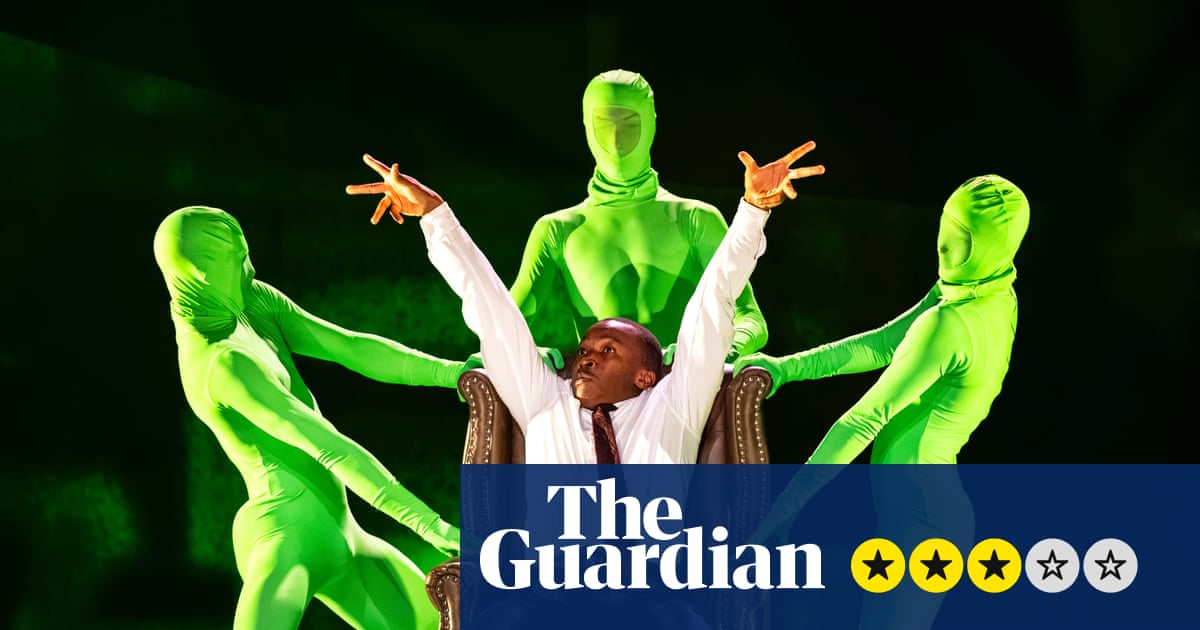

In a compelling examination of the dynamics between political interviews and performance art, Kennedy Muntanga takes center stage as the Prime Minister in a thought-provoking piece titled Deepfake. As he prepares for an interview with Rebecca Bassett-Graham, styled much like the well-known broadcaster Emily Maitlis, a voiceover offers insight into what resonates with viewers: the subtleties of tone and body language often weigh heavier than the dialogue itself. Muntanga’s expressive gestures—his sweeping arms, flickering fingers, and inviting hand movements—paint a vivid picture of a man navigating a web of probing questions.
This innovative setup forms the core of a collaboration between creative duo Jess and Morgs (Jessica Wright and Morgann Runacre-Temple). Partnering with writer Jeff James, they delve into uncharted territories of truth in a surreal narrative involving the Prime Minister. The plot, rife with bizarre imagery—ranging from yellow paint splatters to the unsettling sight of a deer’s head—creates a surreal backdrop for the interview.
What unfolds is perhaps less about the actual events and more about how they are presented. The staging employs green screens, live relays, and other cinematic techniques to create a layered narrative. The performance features not just the lead characters but also a team of seven dancers clad in green bodysuits who seamlessly integrate into the background, enhancing the visual dialogue.
Initially, the atmosphere is thick with paranoia and conspiracy. The dancers synchronize with voiceovers, which cleverly glitch—a hallmark of styles akin to the work of Crystal Pite and Jonathon Young. The choreography flirts with ambiguity, suggesting that both interviewer and interviewee might share an unexpected camaraderie. As the performance progresses, it shifts through various tones, embracing farce and parody, while also paying homage to 19th-century ballet in delightful and innovative ways.
This piece is a testament to creativity and precision; however, some critics argue its scattered tone leaves it feeling less substantial than its ambitious premise surrounding deepfakes might suggest. Ultimately, this production raises questions about authenticity and perception in the modern age of media.
Editor’s Take
This performance highlights significant issues surrounding media representation and the manipulation of truth, pertinent in an era increasingly influenced by digital misinformation. For audiences, it prompts critical reflection on how narratives are crafted in both performance and politics. The implications are vast, impacting not only consumers but also creators in the AI and media industries as they navigate this evolving landscape.
Source: www.theguardian.com