


Groundbreaking Research Reveals Memory Preservation Amid Synaptic Loss
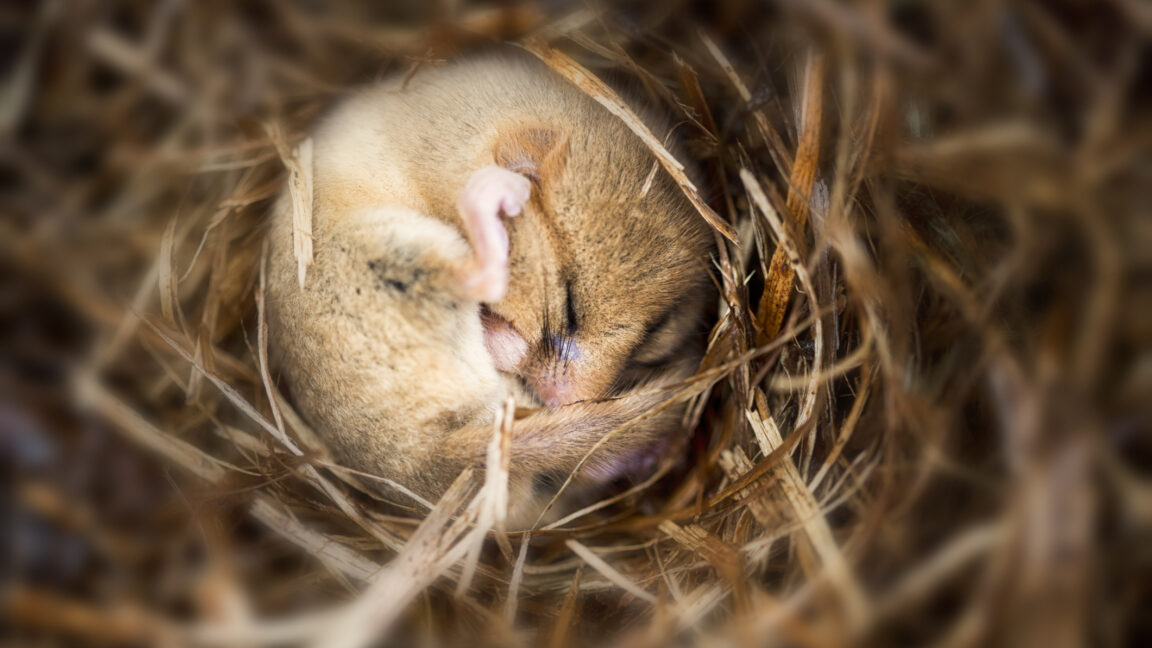
Recent studies led by Tanaka and his team have unveiled a fascinating capability known as QIH (quiescent induced hibernation), which allows certain animals, particularly mice, to enter a hibernation-like state at will. Remarkably, after a period of 48 hours in this state, the mice can awaken and seemingly retain their memories intact.
Investigating Synaptic Changes
To gain insights into the effects of QIH on neural connections, researchers implanted tetrodes—packs of delicate electrodes—into the hippocampus of freely moving mice. This setup enabled the tracking of neuron activity, revealing a significant reduction of about 70% in neuronal firing during the hibernation phase.
Advanced imaging techniques, specifically serial block-face scanning electron microscopy, were employed to analyze brain tissues from some test subjects before, during, and after their hibernation period. The results indicated a startling loss of more than 50% of synapses during hibernation; theoretically, this magnitude of synaptic loss should correlate with severe memory impairment. “If we accept that memory is tied to the effectiveness of individual synapses, losing more than half should logically lead to memory defects,” Tanaka stated.
Preceding the hibernation, the mice had undergone training on two standard memory tests: one involved contextual fear conditioning, where the animals learned to associate a specific environment with mild electric shocks, and the other was a plus-maze task, where they navigated toward a reward. Performance on both tasks significantly relies on hippocampal memories, a fact confirmed by subsequent lesions made to the hippocampus, which erased their memories.
Remarkably, upon awakening, the mice that experienced QIH exhibited performance levels equal to those that had not undergone hibernation in both memory tasks. “Our findings across these diverse behavioral assessments indicate that their memory remained remarkably intact,” Tanaka explained.
This memory retention was further verified through brain activity tracking. The so-called place cells, specialized hippocampal neurons responsible for spatial navigation, continued to fire in the same locations upon re-arousal. A decoder utilized to interpret this collective activity could effectively reconstruct the mice’s locations, matching accuracy levels observed prior to their hibernation.
Editor’s Take
This research highlights a breakthrough in understanding memory and synaptic function, opening avenues for exploring how memory retention could occur even with significant synaptic loss. For the fields of neuroscience and artificial intelligence, these findings could lead to novel approaches in memory preservation techniques, with potential implications for cognitive health and AI models inspired by biological functions.
Source: arstechnica.com