
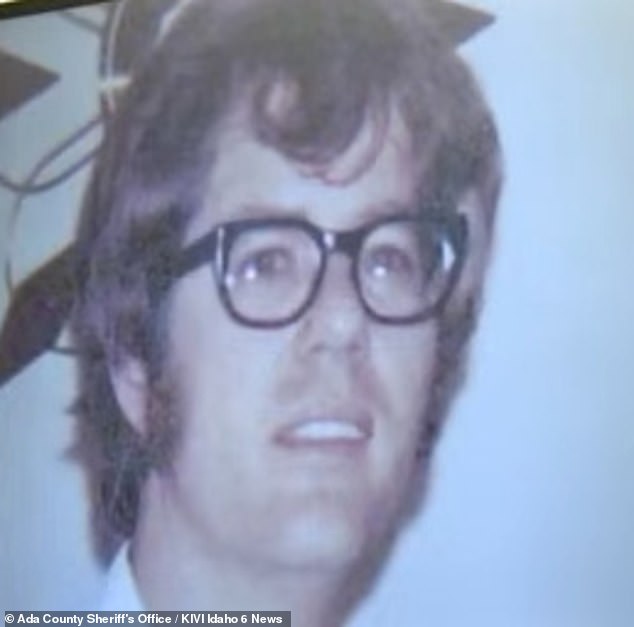

Authorities have identified a man who was poisoned in a church in Idaho in 1982, revealing significant links that suggest he could have been the infamous Tylenol murderer responsible for the deaths of seven people due to cyanide-laced pills. The Ada County Sheriff’s Office (ACSO) disclosed in a press conference that the unidentified victim was Dr. Mathew Francis Betkouski.
Dr. Betkouski, a resident of California, was discovered dead beneath a pew at the Sacred Heart Catholic Church on December 4, 1982, shortly after attending a confessional service. According to Sheriff Matt Clifford, he succumbed to cyanide poisoning—a method identical to that which claimed the victims in the notorious Tylenol incidents the previous September.
The investigation progressed when authorities found one of 30 keys on his body, which ultimately led them to identify him. Tim Cooper, a Cold Case Detective with ACSO, presented several pieces of evidence tying Betkouski to the motive behind the killings, though he noted they could not conclusively establish him as a prime suspect.
While employed at the classified White Sands testing facility in New Mexico, Betkouski reportedly mentioned that injecting poison into capsules would be an effective method of murder. He was dismissed from his post following an incident at a nearby pharmacy.
Tragically, during his tenure at the lab, another woman died from cyanide poisoning, a case that still remains unsolved. Years later, police revisited his childhood home and uncovered a small, likely homemade bottle of cyanide along with a map of Chicago, although the cyanide’s composition differed from that used in the Tylenol murders.
Detective Cooper also pointed out unverified rumors suggesting that Betkouski may have made a potential confession in the church shortly before his death. When authorities found him, a suicide note was discovered alongside a filled keychain and $1,900. The note expressed his wish for the money to fund his funeral and was signed ‘Wm. L. Toomey.’
Despite never being reported missing, police traced Betkouski through a single key to Jacksonville, Florida, and eventually connected with a relative who confirmed his identity. Cooper noted that Betkouski often discussed cyanide, referring to it as “a less messy way of taking a person’s life.”
The notorious Tylenol murders occurred in Chicago, leading to seven fatalities after victims ingested contaminated capsules. The youngest among them was 12-year-old Mary Kellerman, who was the first to fall victim, with subsequent deaths occurring shortly after, including three members of the same family in one house. These shocking events prompted a nationwide recall of Tylenol and initiated the requirement for tamper-evident seals on consumer products. Nearly 44 years later, the case remains unresolved.
Editor’s Take
This revelation sheds light on a long-cold case that has haunted many, raising questions about unsolved crimes in history. As the public revisits the Tylenol murders narrative, the need for enhanced forensic and investigative techniques becomes evident. There is a possibility that advancements in technology could provide new dimensions to such cold cases in the future.
Source: www.dailymail.com